


More news on this day
Austin–Bergstrom International Airport endured a fresh wave of disruption on Saturday as at least 80 delayed departures and two cancellations rippled through the aviation network, straining key routes to major hubs in the United States, Canada and Germany across multiple airlines including Southwest, American, Delta and United.
Get the latest news straight to your inbox!
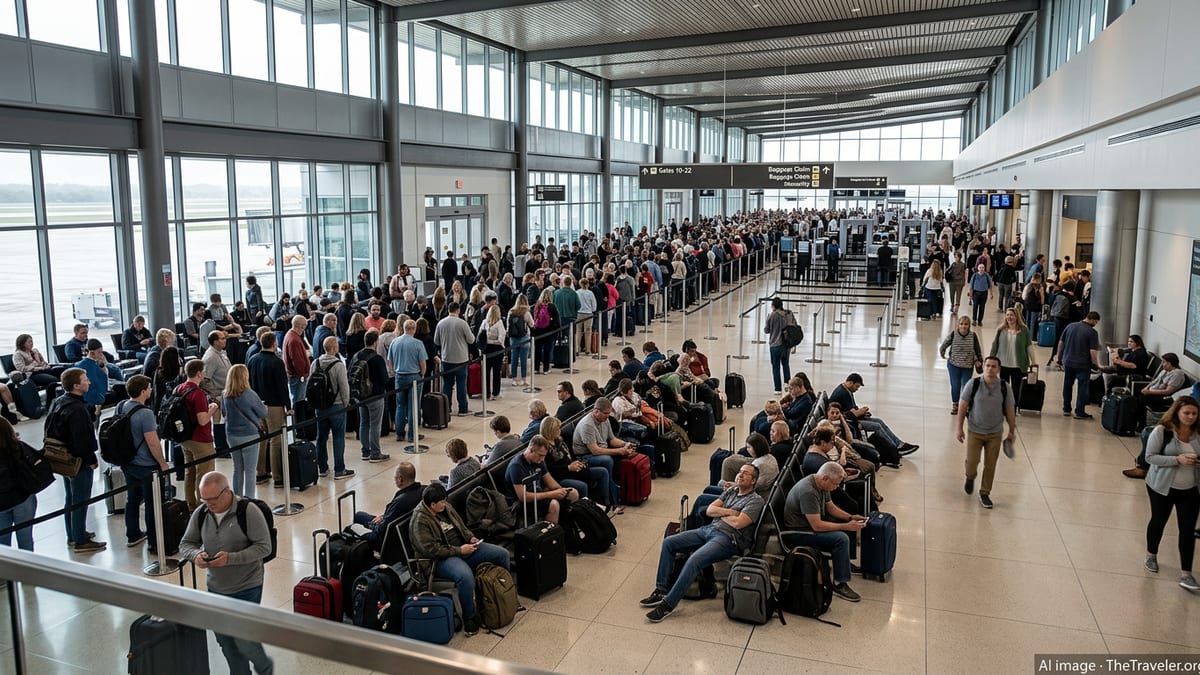
Ripple Effect Spreads From Austin Across North America and Europe
Tracking data for May 23 indicates that a cluster of late departures from Austin–Bergstrom quickly cascaded through the day’s schedule, affecting connections at major hubs such as Dallas Fort Worth, Chicago O’Hare, Denver, Toronto Pearson and Frankfurt. Although only two flights from Austin were ultimately cancelled, the combination of late pushbacks and extended ground holds translated into missed connections and rolling disruption for passengers downline.
Publicly available flight-status boards show that the majority of the 80 affected departures were delayed between 30 and 90 minutes, with a smaller number slipping beyond two hours. Even moderate delays on high-demand trunk routes can upset carefully timed aircraft rotations, and Saturday’s pattern appears to have pushed already tight schedules past their limits on several high-frequency links.
The knock-on effects were particularly visible on routes linking Austin with fortress hubs operated by the largest U.S. carriers. Flights feeding into Dallas Fort Worth and Chicago for American Airlines, Denver and Houston for United, and Atlanta and Minneapolis for Delta carried delays forward into evening bank structures, where missed slots forced additional schedule adjustments. Services into Toronto and Frankfurt, which serve as important transborder and transatlantic gateways, also showed extended delays as aircraft and crew arrived late from earlier segments.
By late afternoon, national dashboards tracking U.S. air traffic were still listing Austin as a source of outbound delays, even as its local airport status alternated between normal operations and brief capacity constraints. The relatively low number of outright cancellations contrasted with the higher volume of late-running flights, suggesting that airlines were attempting to preserve as much of the schedule as possible at the cost of punctuality.
Major Carriers See Key Routes Disrupted
The day’s problems were concentrated on the networks of Southwest, American, Delta and United, which together account for a significant share of Austin’s domestic traffic. Southwest’s point-to-point model, with dense schedules to cities such as Dallas Love Field, Denver and Las Vegas, meant that early delays risked echoing across multiple turns of the same aircraft. Industry analyses often note that when an originating station falls behind, high-utilization aircraft can carry those minutes of delay through every subsequent leg.
American and United, both reliant on tightly banked hub operations, faced challenges as late arrivals from Austin compressed connection windows at Dallas Fort Worth, Chicago O’Hare, Houston and Denver. Passengers heading onward to smaller regional destinations in the Midwest, Mountain West and Southeast were among those most vulnerable, as their options for same-day rebooking were limited once early afternoon flights went out full.
Delta’s services from Austin into Atlanta and other focus cities also registered schedule pressure. Data-driven reviews of recent operational performance have highlighted that when weather, traffic management initiatives or staffing constraints intersect at major hubs, even a modest number of inbound delays from secondary markets can trigger gate conflicts, longer taxi queues and additional airborne holding.
Internationally, Austin’s links to Canada and Germany underscored the global reach of a disruption that began at a single U.S. field. Toronto Pearson, a primary hub for Canadian and transatlantic traffic, and Frankfurt, an important European gateway, both rely on precise timing of long-haul connections. As aircraft originating in Texas arrived behind schedule, connecting passengers faced tightened transfer times, with some forced into overnight stays or rerouting through alternate hubs.
Why Austin Keeps Appearing in Delay Statistics
The latest episode arrives as Austin–Bergstrom continues to attract scrutiny in industry analyses of punctuality. Recent data-driven rankings have placed the airport among the most delay-prone major U.S. fields for long disruptions, citing a combination of rapid passenger growth, infrastructure constraints and its position within several large carriers’ networks.
Studies of U.S. aviation performance compiled from federal datasets show that delay causes typically fall into several broad categories, including factors within airlines’ control, such as maintenance and crew availability, and those classified as national aviation system issues, such as air-traffic flow programs and non-extreme weather. Austin’s experience over the past year has included episodes tied to both buckets, including periods in which staffing strain in air-traffic control prompted temporary ground delays.
Local reports and traveler accounts have also described recurring terminal congestion, lengthy security lines and pressure on gate capacity during peak travel periods. While these conditions do not always translate directly into flight delays, they can complicate recovery from even minor schedule disruptions and limit the ability of airlines to swap aircraft or crew quickly when problems arise.
Austin’s growing portfolio of transborder and long-haul services amplifies the impact when things go wrong. New and existing routes to Canada’s largest hubs, along with nonstop connections to European gateways such as Frankfurt, mean that operational issues in Central Texas can now disrupt itineraries spanning multiple continents within a single travel day.
System Strain Meets Holiday Travel Surge
Saturday’s disruption unfolded at the start of the busy Memorial Day travel period, when passenger volumes across the United States traditionally climb sharply. Aviation forecasters had already warned of elevated risk for delays during the holiday window, citing a combination of seasonal thunderstorms, ongoing construction at some major airports and persistent staffing challenges in segments of the air-traffic system.
Published coverage of recent holiday travel seasons has documented a trend in which airlines attempt to operate fuller schedules with thinner buffers, in part to meet demand and in part to rebuild margins after several years of volatility. When traffic peaks and capacity is tightly scheduled, isolated events at a mid-size hub can more easily trigger the sort of ripple effect that played out from Austin.
In addition to weather and airspace constraints, operational practices also play a role. Analyses of national delay statistics show that late-arriving aircraft remain a significant driver of downstream disruption, as an initial delay propagates through each subsequent sector flown by the same plane. On a day like Saturday, when many aircraft were scheduled for multiple legs touching different hubs across the United States and Canada, that propagation effect became visible in evening departure boards far from Texas.
For travelers, the practical result was a familiar pattern of rolling gate changes, revised boarding times and missed connections at hubs from Chicago and Denver to Toronto and Frankfurt. Even where airlines avoided widespread cancellations, the cumulative impact of hundreds of delayed minutes translated into extended travel days and, in some cases, unplanned overnight stays.
What Travelers Can Do as Networks Remain Fragile
The situation at Austin and its downline hubs highlights how fragile airline networks can remain during peak periods, even in the absence of a single extreme weather event or large-scale shutdown. Publicly available performance reports suggest that when demand is high and resources are stretched, there is less slack in the system to absorb routine disruptions such as minor maintenance issues, short-staffed ground crews or temporary airspace restrictions.
Travel specialists who monitor airline reliability often recommend that passengers transiting through secondary hubs with known congestion risks build in additional connection time, especially when traveling internationally or on itineraries involving multiple carriers. Early departures are generally favored on days with elevated delay risk, as they provide more options for same-day recovery if something goes wrong.
Digital tools have also become central to navigating volatile operations. Airline mobile apps and text alerts typically provide the earliest notice of schedule changes and may offer self-service rebooking options before airport agents are able to assist everyone in line. Third-party flight-tracking platforms can help travelers understand whether a disruption is localized to a single airport like Austin or part of a broader pattern affecting several hubs simultaneously.
With the busy summer season approaching, the latest wave of disruptions linked to Austin–Bergstrom serves as another reminder that even short, localized slowdowns can echo for hours across an interconnected global network. For passengers planning to pass through major hubs in the United States, Canada or Germany in the coming weeks, building flexibility into travel plans remains one of the few reliable defenses against the next chain reaction of delays.