


More news on this day
A concentrated wave of schedule disruption at Austin-Bergstrom International Airport on Saturday sent a fresh shock through airline networks, with around 80 delayed departures and at least two cancellations rippling out to major hubs in the United States, Canada and Germany on key routes for Southwest, American, Delta, United and other carriers, according to live flight-tracking dashboards.
Get the latest news straight to your inbox!
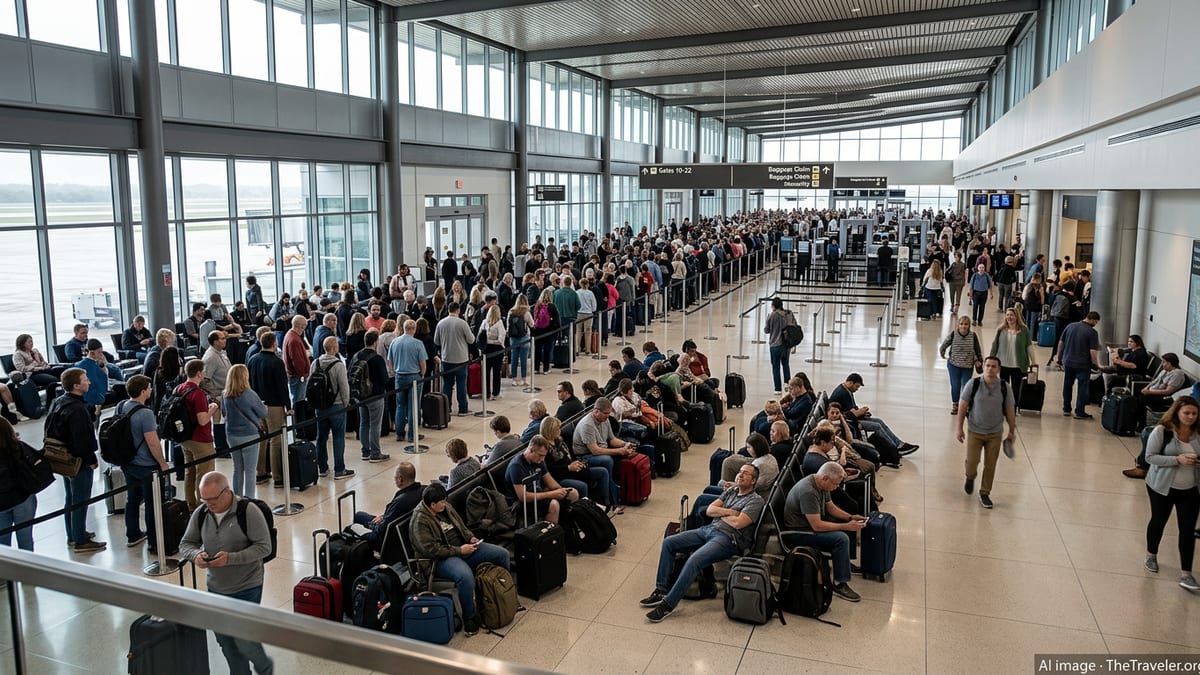
Delays at Austin Turn Into a Network-Wide Snarl
Publicly available departure boards and flight-tracking tools for Austin-Bergstrom showed a cluster of late-running services through the morning and early afternoon period, with dozens of flights posting pushback times well beyond their scheduled departure. The affected services spanned the largest domestic network airlines and their regional partners, with Southwest, American, Delta and United all operating flights that left Austin behind schedule.
Live operational summaries indicated that, taken together, roughly 80 departures from Austin were tagged as delayed within the same operating window, alongside at least two flights shown as canceled outright. While the airport’s overall on-time rate remained high enough to keep traffic flowing, the concentration of delays on busy bank times created a sharp mismatch between schedule and reality for passengers trying to make onward connections.
Data reviewed for late May shows that such spikes are becoming a familiar feature of the national system, with days that look relatively routine at first glance still producing thousands of late flights once minor holds, ground delays and gate constraints are accounted for. Austin’s role as a fast-growing origin and connecting point for Central Texas means that disruptions there can now ripple more widely than in earlier years when the airport handled fewer departures.
Recent financial and traffic reports for the airport highlight that passenger volumes and aircraft movements have continued to climb, reinforcing Austin’s importance within the broader U.S. network. The same growth underpins an expanding slate of domestic and international routes, raising the stakes when disruption flares during peak periods.
Major U.S., Canadian and German Hubs Absorb the Shock
Because many of Austin’s departures feed tightly timed banks at larger hubs, the local disruption quickly translated into missed slots and late arrivals at airports across the United States, Canada and Germany. Flight-tracking maps showed affected services from Austin heading into major U.S. connection points including Dallas Fort Worth, Chicago, Denver, Los Angeles and Atlanta, along with cross-border routes linking Austin to Canadian gateways and transatlantic flights routed onward to Germany via key hubs.
Published national summaries for Saturday pointed to a familiar pattern: concentrated patches of heavy delay at hub airports that already manage dense schedules, meaning even a modest inbound disruption can throw off gate assignments, crew rotations and departure waves for hours. When delayed Austin flights joined other constrained arrivals, the result was additional congestion for airlines already juggling high summer-season loads.
Canadian and German airports connected to the disrupted services were also listed among locations experiencing punctuality challenges, as late-arriving aircraft from the United States narrowed the turnaround windows available for onward departures. In some cases, publicly accessible tracking data showed aircraft arriving from Austin with less than the planned ground time before their next scheduled leg, prompting holding patterns at the gate or small delays that then propagated further along the route network.
These effects are magnified on long-haul and international services, where border controls, catering, maintenance checks and crew changeovers all reduce the flexibility to make up time. A late departure from Austin feeding an evening departure bank in a German hub, for example, can leave passengers with shortened or missed connections, and can force airlines to rebook travelers across multiple partners at already busy airports.
Carriers Confront Compounding Operational Pressures
The disruption at Austin unfolded against a backdrop of elevated nationwide flight delays in May 2026. Recent days have seen multiple instances in which U.S. carriers collectively faced several thousand delayed flights and hundreds of cancellations in a single 24-hour period, according to aggregated aviation data dashboards and industry reporting.
Operational pressures include seasonal thunderstorms across key regions, chronic air-traffic control constraints in certain sectors, and ongoing runway and terminal construction at some of the system’s largest hubs. FAA construction impact summaries identify reduced capacity periods at various airports during the late spring and summer, a factor that can push delay numbers higher whenever weather and traffic peaks coincide.
For airlines serving Austin, these conditions translate into difficult trade-offs. When one leg of a multi-segment rotation incurs heavy delay, network planners must decide whether to hold subsequent flights in the hope of recovering the schedule or cancel selected segments to preserve aircraft and crew positioning for later in the day. The pattern seen on Saturday, with dozens of Austin departures delayed but only a small number canceled, reflects an apparent effort to keep as many itineraries intact as possible even as punctuality eroded.
Publicly available financial and traffic updates for Austin-Bergstrom further show that the airport is in the midst of a significant expansion phase, including a planned new midfield concourse that will add additional gates. While those projects are designed to reduce congestion and improve resilience over the longer term, construction activity and transitional facility changes can create short-term pinch points that complicate airline operations during peak travel seasons.
Passengers Face Missed Connections and Uncertain Recovery
For travelers, the real-world effects of Saturday’s disruptions were felt less in Austin itself and more at the other end of their journeys. Because many of the delayed departures were early-day flights intended to feed connection banks, passengers arriving late into large hubs often found their onward options narrowed, especially on transcontinental and international routes where available seats were already tight.
Recent travel-industry guidance shaped by similar delay episodes emphasizes that even when an originating airport appears to be functioning relatively smoothly, systemic issues across the network can still create cascading problems for individual itineraries. A single late pushback from Austin can mean a missed connection in Chicago or Toronto, followed by overnight accommodation and rerouting that add many hours to an originally straightforward trip.
Public information from previous high-impact travel days indicates that recovery from such events can take more than one operating cycle, particularly when aircraft and crews end up out of position across multiple hubs. Travelers connecting through affected airports on Sunday and Monday may therefore encounter residual delays, swapped aircraft and rebooked crews as airlines attempt to realign schedules and restore normal patterns.
The situation also underlines how vulnerable tight connection windows can be, especially at busy hubs where inbound flights must contend with both local weather and national airspace constraints. Passengers planning complex itineraries through the summer are being encouraged by consumer advocates and travel experts to build in additional buffer time wherever possible, particularly when transatlantic or long-haul segments are involved.
Growing Demand at Austin Highlights Need for Resilience
Austin-Bergstrom’s recent traffic and financial reports show a steady increase in passenger volumes and aircraft movements compared with the previous year, reinforcing the airport’s status as one of the country’s faster-growing mid-sized hubs. New and expanded services to major U.S. cities and international destinations in Canada and Europe have broadened the range of one-stop itineraries available to Central Texas travelers.
At the same time, the airport has faced repeated scrutiny over long security lines and congestion in terminal areas during peak travel periods. Local reporting and traveler accounts from earlier months in 2026 described security queues stretching outside the terminal and recommendations for domestic passengers to arrive well ahead of departure, particularly during major events in the city and holiday travel windows.
Planned infrastructure projects, including a substantial new concourse to add gates and supporting facilities, are intended to address these bottlenecks. Federal infrastructure funding allocations published in May outlined support for the expansion, with the goal of increasing capacity and improving the flow of passengers and aircraft once the work is completed.
Until that additional capacity comes online, however, episodes like Saturday’s serve as a reminder that rapidly growing airports can be especially sensitive to periods of broader network stress. With Austin now tightly woven into the schedules of Southwest, American, Delta, United and other carriers, localized disruption in Central Texas can reverberate across multiple countries within a few operating cycles, underscoring the importance of continued investment in both physical infrastructure and system-wide air traffic management.