


More news on this day
Severe disruption at Atlanta’s Hartsfield–Jackson International Airport has rippled across domestic and international networks, as Delta Air Lines and Southwest Airlines passengers faced more than 180 delays and at least 13 cancellations in one chaotic travel window, according to live tracking data and local media reports.
Get the latest news straight to your inbox!
Storms, Congestion and Knock-On Delays Converge at ATL
Hartsfield–Jackson Atlanta International Airport, the primary hub for Delta and a key focus city for Southwest, saw operations buckle under a combination of summer storms, intense traffic and ongoing staffing and equipment constraints. Publicly available flight-tracking dashboards on June 17 and June 18 indicated that Delta alone accounted for more than a hundred delayed departures and arrivals into and out of Atlanta, with a smaller but significant number of outright cancellations. Additional disruptions involving Southwest and several smaller carriers pushed the total number of impacted flights linked to the airport well past 180.
Weather alerts referencing severe conditions across the U.S. Southeast were circulated to customers in advance, warning that Atlanta could become a bottleneck for both originating and connecting travelers. While conditions at the field improved at times, the wave of schedule changes, gate swaps and rolling delays left aircraft and crews out of position, complicating recovery efforts through the afternoon and evening periods.
Travel industry commentary notes that Atlanta’s role as one of the world’s busiest passenger hubs makes it particularly vulnerable to network-wide knock-on effects. When operations slow at Hartsfield–Jackson, connecting banks across the country can quickly absorb the shock, with aircraft arriving late, crews timing out and incoming flights unable to secure gates.
Delta and Southwest Bear Brunt of Operational Strain
According to aggregated delay counts compiled from live tracking platforms and aviation news outlets, Delta flights represented the majority of the disruption during the latest episode, consistent with the carrier’s dominant presence at Atlanta. One recent breakdown of Atlanta operations cited more than 100 delayed Delta flights and over a dozen cancellations tied to the hub within a single day, highlighting how even modest weather systems can translate into large-scale disruption when traffic levels are high.
Southwest, which operates a smaller but strategically important schedule at Atlanta, also reported dozens of delayed departures and arrivals, along with a handful of cancellations. Travel blogs and consumer-rights sites tracking the meltdown described a pattern of repeated short delay extensions, in some cases stretching into several hours, as carriers tried to work around congestion, crew-rest rules and regional weather variability.
Observers emphasize that the raw numbers understate the true impact for travelers. A single cancellation can strand hundreds of people, especially on peak-time mainline flights, while a cascading sequence of 30- to 60-minute delays can cause missed connections and force many passengers into unplanned overnight stays.
Passengers Face Crowded Gates, Rebooking Scramble and Long Lines
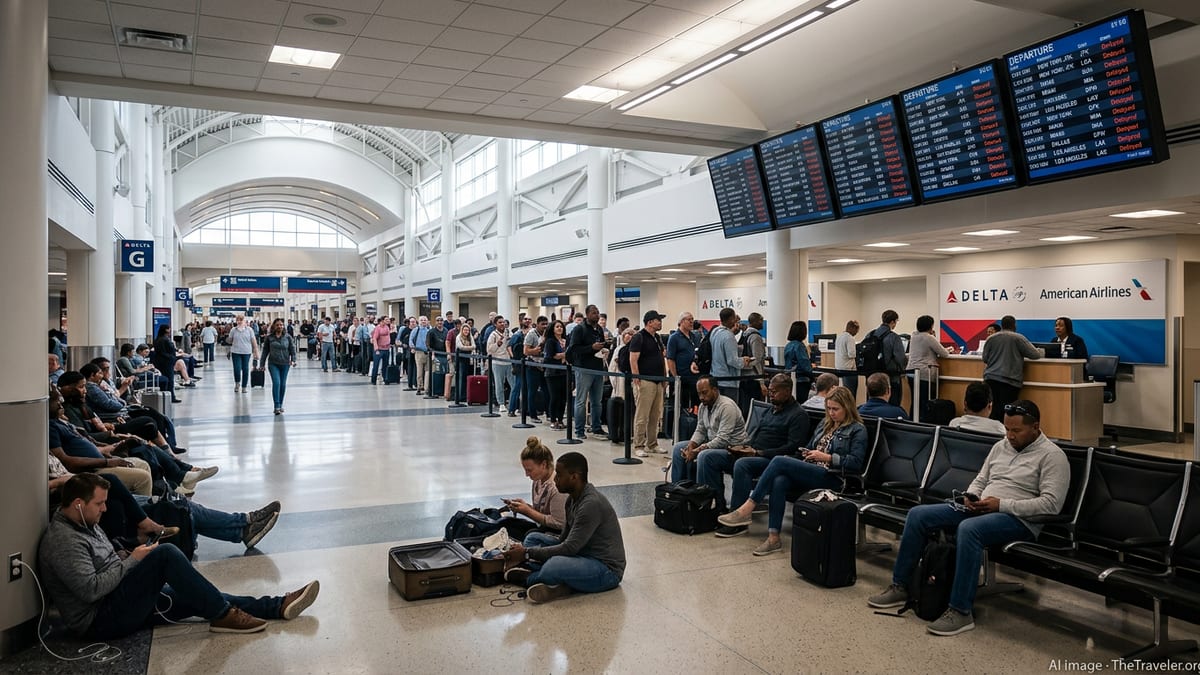
Reports from travelers using social media and online forums described packed concourses, dense gate-area crowds and snaking customer-service lines as the disruption unfolded. Many passengers trying to reach smaller cities through Atlanta saw their connecting flights delayed multiple times before eventually being canceled, forcing them to negotiate scarce seats on later departures or reroute through alternative hubs.
Those stuck in the airport reported challenges securing same-day rebooking options, particularly in the late evening wave when remaining flights were already heavily booked. With limited hotel availability near the airport during peak conventions and summer travel, some travelers described preparing to spend the night in the terminal rather than risk leaving the secure area and being unable to clear long security lines for early-morning departures.
Travel advisors note that such conditions can be especially difficult for families, older travelers and those with tight onward connections to cruises or international itineraries. In many cases, missed connections out of Atlanta forced passengers to lose nonrefundable reservations at their final destinations, adding financial stress to an already disruptive experience.
Broader Impact Across Domestic and International Routes
Because Atlanta serves as a central hub for flights across North America and to Europe, Latin America and the Caribbean, the disruption extended far beyond Georgia. Publicly available flight-status logs showed delays spreading to transcontinental routes, as well as to major international destinations such as Amsterdam and key Latin American gateways. Even flights that ultimately departed close to on time in the following days often did so with aircraft or crews that had been repositioned after earlier disruptions.
Regional and commuter services feeding Atlanta were also notably affected. Aircraft arriving late from smaller markets compressed already crowded departure banks and limited opportunities to swap equipment when mechanical or crew issues arose. Aviation analysts point out that when a hub like Atlanta experiences large-scale schedule irregularities, the effects can persist for 24 to 48 hours or longer as airlines work flights and crews back into normal rotations.
The Atlanta-area public transit system experienced strain at points during the disruption, as travelers used rail connections between the airport and hotels or downtown to manage missed flights and unexpected overnight stays. Service advisories referenced intermittent delays on some lines during the same period, adding an additional layer of complexity for passengers trying to reach or leave the airport.
What Travelers Can Do When Atlanta Meltdowns Hit
Consumer advocates and travel-planning resources recommend several strategies for passengers facing similar events in Atlanta. First, monitoring flight status through airline apps and independent trackers in the days leading up to departure can provide early warning of emerging storm systems or infrastructure issues at the hub. When carriers begin issuing weather waivers, travelers often gain the option to change flights without additional fees, potentially shifting to earlier departures or alternative routing before the peak of the disruption.
Second, travelers connecting through Atlanta are urged to build in generous layover times during seasons of frequent storms, particularly for evening flights. A longer planned connection can reduce the risk of misconnecting if inbound flights encounter moderate delays. For those already at the airport when delays mount, rebooking via airline apps or web portals may be faster than waiting in line at service desks, especially when large numbers of flights are affected at once.
Finally, passenger-rights information suggests that travelers should retain documentation of delays and cancellations, including boarding passes and any written notifications of schedule changes. While compensation rules vary by airline and jurisdiction, maintaining a clear record can help when seeking vouchers, refunds or reimbursement for out-of-pocket expenses after severe disruption at hubs like Atlanta’s Hartsfield–Jackson.