


More news on this day
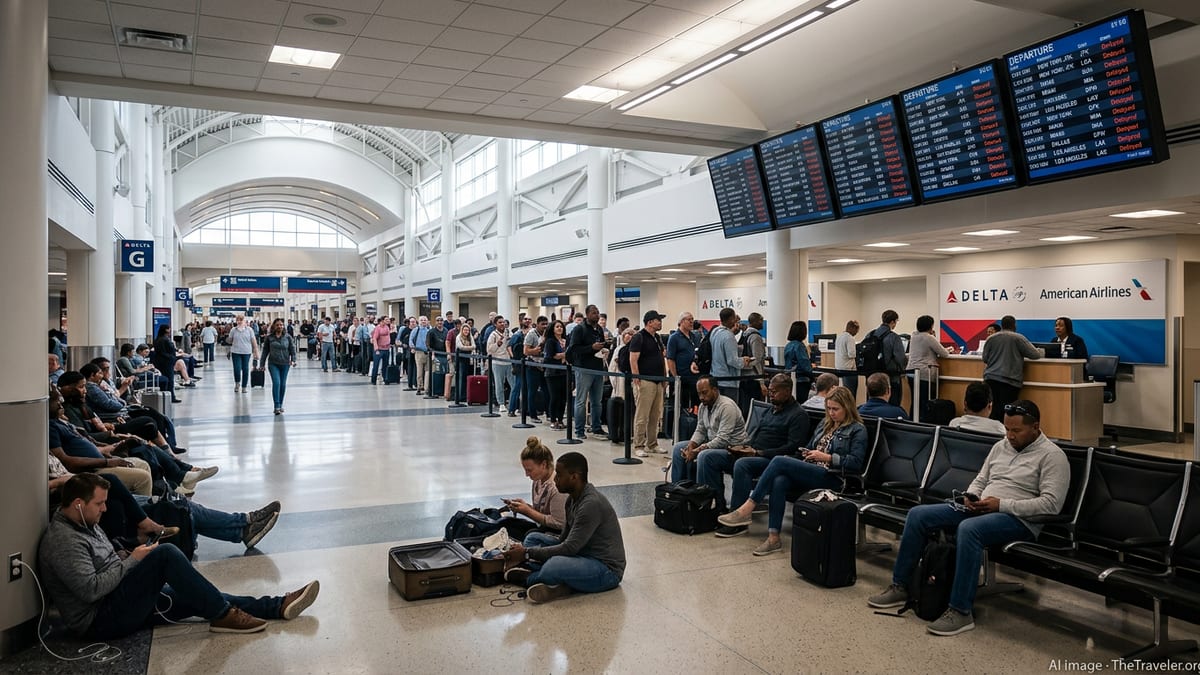
Travelers at Hartsfield-Jackson Atlanta International Airport faced another bruising travel day as hundreds of passengers were left in limbo when major U.S. carriers logged 301 delays and 10 cancellations on routes linking Atlanta with New York, Chicago, Dallas and other key hubs.
Get the latest news straight to your inbox!
Ripple Effects From Atlanta Across Major U.S. Hubs
Publicly available tracking data and media coverage on Sunday indicated that operations at Hartsfield-Jackson Atlanta International Airport remained fragile after a new wave of disruptions affected flights throughout the morning and early afternoon. Delta Air Lines, JetBlue, Southwest Airlines and United Airlines were among the carriers reporting significant delays on services into and out of Atlanta.
The latest tally pointed to at least 301 delayed flights and 10 outright cancellations tied to routes serving Atlanta and connecting cities such as New York, Chicago and Dallas. The figures reflected a combination of late-arriving aircraft, rolling schedule changes and tight turnaround times that left aircraft and crews out of position across airline networks.
Passengers reported missed connections and extended waits in terminals as aircraft that were due to depart Atlanta for key business and leisure markets were repeatedly pushed back. The disruption came at the height of the busy summer travel period, when schedules are already running close to capacity and even small operational issues can quickly cascade.
Although some flights eventually departed with long delays, the knock-on effects spread through the day, particularly for travelers booked on multi-leg itineraries that relied on Atlanta as a connecting hub to or from northern and midwestern cities.
Atlanta’s Role as a Critical National Hub
Hartsfield-Jackson Atlanta International Airport is one of the world’s busiest passenger hubs and the primary base for Delta Air Lines, which operates an extensive domestic and international network from the facility. The airport also hosts significant operations by Southwest, JetBlue and United, linking Atlanta to major population centers across the United States.
When irregular operations strike at a hub of this size, the impact often extends far beyond the local market. Disruptions in Atlanta can quickly ripple to airports in the Northeast, Midwest and Texas as aircraft scheduled to fly onward segments are delayed or held at gates, and crew rosters fall out of alignment.
Recent reports on airline performance have highlighted that Atlanta, Chicago and New York rank among the most delay-prone large airports in the United States, with roughly one quarter of departures in a typical year arriving late and a smaller share cancelled outright. On peak travel days, those averages can rise quickly when storms or congestion affect multiple regions at once.
For many travelers, Atlanta functions as the linchpin of complex itineraries connecting smaller U.S. cities to major hubs such as New York, Chicago and Dallas. As a result, even a modest number of cancellations or lengthy ground delays in Atlanta can lead to overnight strandings and missed events hundreds or thousands of miles away.
New York, Chicago and Dallas Routes Hit Hard
On Sunday, routes linking Atlanta with New York area airports, Chicago O’Hare and Dallas-Fort Worth were among the most visibly affected, according to flight boards and tracking platforms. These high-frequency corridors, normally served by multiple daily departures on Delta, JetBlue, Southwest, United and their partners, saw clusters of flights running well behind schedule.
Publicly available data showed that some services between Atlanta and New York departed more than an hour late, while certain flights to Chicago and Dallas were either cancelled or delayed long enough to force passengers to be rebooked onto later departures. In several cases, those later options were already heavily booked due to summer demand, leaving limited flexibility for stranded travelers.
The situation was complicated by earlier weather and air-traffic constraints in multiple regions, which left airlines managing a backlog of displaced passengers. Even after severe conditions ease, carriers often need hours, and sometimes a full operating day, to reposition aircraft and crews and restore their schedules to normal.
Travelers connecting through New York and Chicago reported particularly tight margins as inbound aircraft from Atlanta arrived late into already congested terminals. That dynamic increased the likelihood of missed connections onto evening transcontinental and international departures.
Stranded Passengers Confront Long Lines and Limited Options
The operational issues translated into crowded gate areas, long customer service lines and packed concourses at Atlanta and other affected airports. Social media posts and local reporting from Atlanta described passengers camped out near charging stations, scrambling for scarce hotel rooms and seeking alternative routings to reach their destinations.
Some travelers within driving distance of their final destination chose to abandon their itineraries entirely and complete the journey by car, a pattern that has become increasingly common during large-scale disruption events. Others attempted to rebook through secondary hubs or nearby airports in the hope of bypassing the heaviest bottlenecks.
Airlines typically respond to days like this by issuing travel waivers, allowing affected passengers to change flights without additional fees, and by adding extra staff at call centers and airport desks. However, high demand and a limited number of open seats on later flights can restrict how many people can be accommodated quickly, especially on heavily traveled routes like Atlanta to New York, Chicago and Dallas.
For those unable to secure same-day alternatives, overnight stays in airport hotels or terminal seating areas often become unavoidable, particularly when disruptions extend into the late evening hours and ground transportation options are limited.
Ongoing Challenges for U.S. Airline Reliability
The latest disruptions at Atlanta add to a broader pattern of operational strain across the U.S. airline system. Recent seasons have brought repeated episodes of widespread delays and cancellations linked to severe weather, air-traffic control constraints, staffing pressures and maintenance issues.
Industry analyses covering 2025 and early 2026 indicate that major U.S. hubs, including Atlanta, New York and Chicago, continue to experience elevated levels of delay compared with pre-pandemic norms. While overall cancellation rates remain relatively low as a proportion of total flights, the absolute numbers can still impact tens of thousands of passengers on a single busy travel day.
For travelers, the prospect of yet another day of cascading delays is prompting renewed calls for more robust contingency planning and clearer communication about the causes and likely duration of disruptions. Consumer advocates often recommend that passengers build longer connection windows, particularly when traveling through large hubs during summer and holiday peaks.
As airlines work through the backlog from the latest operational crunch at Hartsfield-Jackson and its connected hubs, passengers booked on upcoming flights are being urged by publicly available advisories and travel industry reporting to monitor their flight status frequently, allow extra time at the airport and be prepared for schedule changes with backup plans where possible.