


More news on this day
Seattle-Tacoma International Airport has reached a new milestone in its long-running terminal modernization program, with publicly available information showing that the multi-year SEA Gateway Project with Alaska Airlines is now substantially complete.
Get the latest news straight to your inbox!
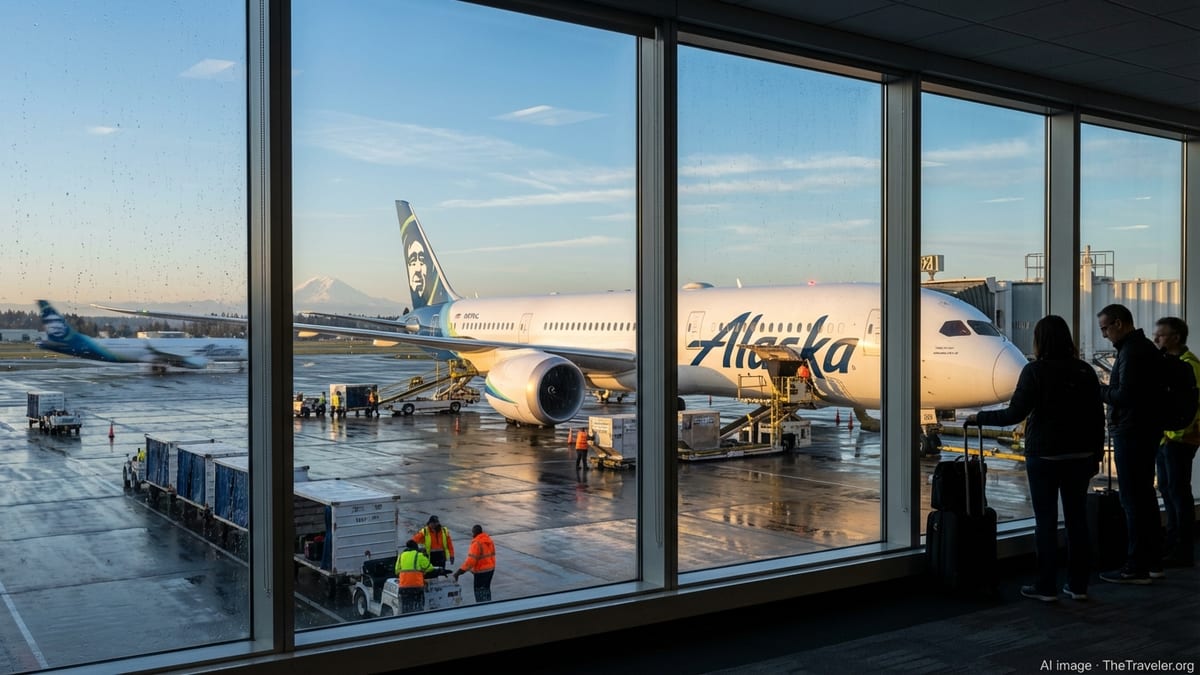
A New Front Door for Alaska Airlines at SEA
The SEA Gateway Project focuses on the north end of the main terminal, where Alaska Airlines concentrates much of its operation at Seattle-Tacoma International Airport. According to project updates from the Port of Seattle and industry coverage, the initiative reconfigures the departures hall, ticketing functions, security access, and passenger circulation to create a more coherent home hub for the carrier.
Reports indicate that the scope includes a redesigned check-in lobby for Alaska customers, expanded bag-drop capacity, and a refreshed curb-to-gate journey intended to relieve chronic congestion at one of the airport’s busiest entry points. The work is described as one piece of a broader Upgrade SEA capital program that is reshaping multiple concourses and passenger touchpoints across the airport.
The joint effort is structured so that Alaska Airlines delivers significant portions of the build-out through a tenant reimbursement arrangement, while the Port of Seattle oversees integration with the rest of the terminal. Industry publications note that this model has been used to accelerate improvements tailored to the airline’s operational needs while maintaining alignment with the airport’s long-term master plan.
Completion of the main construction phase gives SEA a more unified identity at the north end of the terminal, where Alaska has steadily grown its presence over the past decade and established Seattle as its largest hub.
Key Features of the Completed Gateway
Publicly available project materials describe a significantly reworked departures experience for Alaska Airlines customers. The check-in area has been reimagined with additional space for self-service kiosks and bag-tagging, as well as higher-capacity bag-drop positions intended to reduce queues during peak morning and evening banks of flights.
Another visible change is the circulation pattern between ticketing, security, and the concourses. The project brings back a dedicated Security Checkpoint 6 on the far north end of the terminal, a facility that reopened during the final stages of construction and is designed to handle a larger share of Alaska’s origin traffic. This addition aims to relieve pressure on central checkpoints and shorten walking distances for travelers headed to concourses C, D, and the North Satellite.
Inside the secure area, the Gateway work ties into earlier upgrades at the North Satellite, which was expanded and modernized over several years to serve primarily Alaska flights. Together, these improvements expand the airport’s gate capacity and offer a more consistent architectural and wayfinding language from curb to gate.
Industry reports also point to upgrades in lighting, acoustics, and finishes to create a brighter, more legible terminal environment. Although exact sustainability metrics vary by project phase, previous SEA modernization efforts have emphasized efficient systems and responsible materials, and the Gateway work appears to mirror those priorities.
Timeline, Cost and Partnership Structure
Construction timelines published across public documents indicate that major Gateway work at SEA has been underway for roughly two years, with phased openings to keep the terminal operational. Early milestones included structural modifications, temporary relocation of some check-in functions, and progressive activation of new lobbies and checkpoint facilities as they were completed.
Industry coverage has characterized the project as a roughly half-billion-dollar investment in the airport’s front-of-house infrastructure for Alaska passengers, forming one of the marquee elements of SEA’s multi-billion-dollar capital improvement pipeline. The financial structure blends Port of Seattle funding with Alaska Airlines’ tenant-led investment, reflecting shared interest in improving throughput and reliability at a constrained urban airport.
According to publicly accessible planning documents, the SEA Gateway work has been coordinated with other airside and landside projects, including roadway improvements and concourse expansions. This sequencing is intended to avoid bottlenecks that could arise if new gate capacity came online without corresponding growth in check-in and security capacity, or if new curb facilities were not aligned with updated passenger flows.
Completion of the Gateway contract closes out one of the most visible pieces of the airport’s current capital portfolio, freeing construction resources to shift toward ongoing concourse upgrades and technology enhancements across the broader terminal complex.
What the Project Means for Travelers
For passengers, the most immediate impact of the completed SEA Gateway Project is expected to be felt in reduced congestion and more straightforward navigation on the north side of the terminal. With Alaska’s check-in and security functions better aligned to its gate footprint, travelers should encounter fewer choke points at peak periods when multiple banked departures leave within short time windows.
Travel industry analysis suggests that the redesigned lobby, expanded self-service options, and the restored northern checkpoint are all steps toward a more predictable journey. By separating some Alaska-origin traffic from shared central checkpoints, the airport is seeking to balance loads more evenly across the security system and minimize long lines that can cascade into delays at boarding gates.
For connecting passengers, the integration between the main terminal and the modernized North Satellite is likely to be a notable improvement. Clearer wayfinding, more open sightlines, and a consistent design language may help travelers moving between concourses feel less disoriented, particularly during tight connections that are common in a hub operation.
While the overall impact will depend on day-to-day demand and staffing levels, the Gateway completion gives both the airport and Alaska Airlines additional tools to manage growth in passenger volumes at a time when Seattle continues to see robust domestic and international demand.
Positioning SEA in the West Coast Airport Landscape
The finish of the SEA Gateway Project arrives as major West Coast airports race to modernize aging terminals and respond to shifting airline strategies. In parallel with SEA, airports in Portland, Los Angeles, and San Diego have invested heavily in new or reconfigured main terminal spaces, often in close partnership with dominant carriers.
Analysts view the Seattle project as part of Alaska Airlines’ broader strategy to reinforce Seattle-Tacoma International Airport as its primary hub, even as it builds capacity and facilities in other West Coast markets. The Gateway improvements provide a more tailored front door for the airline’s largest operation at a moment when competition for connecting traffic and premium leisure travelers remains intense.
For the airport, the completed work burnishes SEA’s position among large U.S. hubs that are rethinking how passengers move from curb to gate. Modernized lobbies and targeted security facilities are increasingly seen as essential infrastructure to support both growth and resilience when travel demand surges.
With the Gateway construction now substantially complete, attention is likely to turn to how effectively the new facilities perform under real-world traffic conditions, and how they integrate with future concourse expansions and technology upgrades that are still to come at SEA.