


More news on this day
Paper boarding passes, once as essential to air travel as rolling suitcases, are rapidly disappearing as airlines lean into digital-only boarding. But a wave of technical glitches, accessibility complaints and regulatory pushback suggests the quiet retreat from paper is already causing turbulence for some travelers.
Get the latest news straight to your inbox!
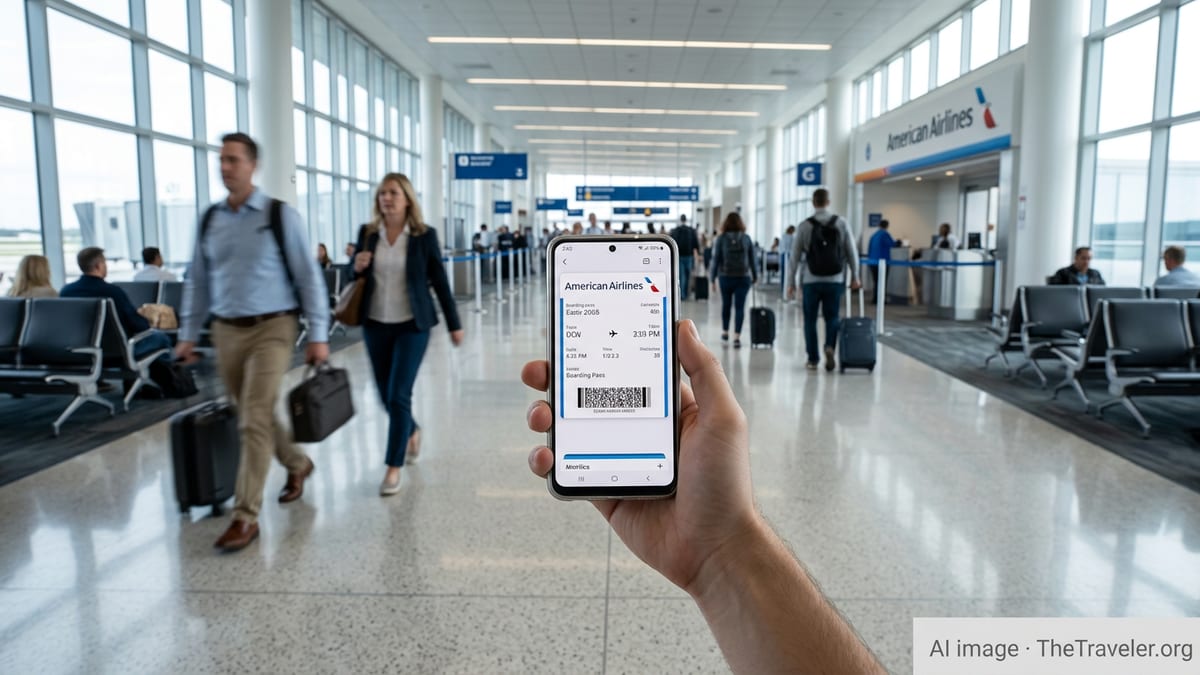
A Rapid, Low-Profile Shift Toward Digital-Only Boarding
Over the past two years, many carriers have overhauled airport check-in and boarding systems, encouraging or effectively requiring passengers to rely on mobile boarding passes. Industry reports indicate that large network airlines in North America and Europe now see a decisive majority of customers checking in on apps or websites and boarding directly from smartphones or wearables.
New airport lobby designs reinforce this shift. Hawaiian Airlines, for example, recently introduced self-service bag tag stations that require travelers to arrive with a digital boarding pass already in hand, explicitly noting that the new kiosks will not print boarding passes. Publicly available information describes the change as a way to streamline lobbies, reduce agent interaction and cut paper use.
Other major airlines are testing or deploying electronic boarding gates that rely entirely on digital credentials, often tied to mobile passes or biometric verification. American Airlines is rolling out electronic boarding gates at Dallas Fort Worth International Airport following a pilot that boarded travelers using scanners and automation rather than traditional document checks.
For airlines and airports, the economic case is straightforward. Maintaining kiosks and printers, buying paper and ink, and staffing counters for basic check-in all carry costs. Industry trend surveys and airline statements point to lower operating expenses, faster boarding and reduced paper waste as key motivations for the digital push.
Ryanair’s 100 Percent Digital Plan Puts Pressure on Regulators
Nowhere has the move away from paper been more visible than at Ryanair. The low-cost carrier began a step-by-step transition toward what it calls 100 percent digital boarding passes, culminating in a November 12, 2025 switch to app-based passes as the default. The airline’s help materials emphasize that passengers must use the Ryanair app to generate a digital boarding pass during online check-in and that the policy will save roughly hundreds of tonnes of paper a year.
The strategy quickly drew scrutiny from consumer advocates and regulators, especially in Europe. A Portuguese civil aviation authority notice from 2025, referencing Ryanair’s plans, underscored that carriers must not impose mandatory fees for issuing paper boarding passes. More recent working papers in negotiations among European Union institutions reiterate that passengers should retain the right to choose between a digital or paper boarding pass and that any paper issuance should be offered at no more than the actual cost of the service, if not free.
In practice, Ryanair and other budget airlines have continued to state that paper passes remain available in certain circumstances, particularly for travelers who cannot access the app. However, reports from passengers and travel media show confusion at airports about when and where paper alternatives can be obtained and whether additional charges may apply.
The Ryanair case has become a reference point for wider debates in Europe over whether airlines can effectively nudge travelers into digital-only boarding while still complying with emerging passenger-rights language that explicitly protects access to paper documents.
When Phones Fail, So Does the Boarding System
For frequent travelers, digital passes often work smoothly, but recent incidents shared in public forums highlight what happens when apps or systems fail at the worst possible moment. Posts on airline-focused discussion boards describe situations in which updated mobile apps no longer display boarding passes, connectivity drops at security checkpoints or gate scanners reject properly issued mobile passes.
In one widely discussed case earlier this year, a U.S. passenger recounted discovering at the airport that their airline’s app would not generate any boarding passes after a software update. With security lines already growing, the traveler had to backtrack to the check-in counters to obtain paper boarding passes before racing back to the checkpoint. In another report, a system problem during boarding forced gate staff to abandon digital verification entirely and handwrite paper passes for every passenger on the flight.
Similar stories appear across multiple carriers, including rebooked travelers whose digital passes failed to clear train-style checkpoints connecting terminals, or passengers temporarily removed from aircraft because their digital boarding records did not update correctly even after bags were dropped. In many of these accounts, printed or handwritten paper passes became the only practical workaround to get flights boarded and departed.
These operational hiccups point to a structural risk in relying on phones as the sole proof of the right to board. Battery failures, cracked screens, incompatible wallet apps, and real-time synchronization issues between booking systems and gate scanners can all undermine the promise of a frictionless digital journey.
Accessibility, Inclusion and the Digital Divide
Digital-only boarding also raises questions about equity and accessibility. International aviation bodies have been working on accessibility plans that encourage carriers to anticipate passenger needs, from mobility and sensory disabilities to limited access to smartphones or mobile data. At the same time, industry commentaries on digital travel have promoted a vision of seamless, contactless journeys in which identity, health and travel documents are stored in encrypted digital wallets.
Yet not all travelers are equally equipped to navigate that landscape. Older passengers, those with limited digital literacy, and travelers with visual or cognitive impairments may struggle to download apps, manage two-factor authentication or interpret small QR codes on bright screens. Passengers from lower-income backgrounds or certain regions may not own compatible smartphones or may rely on prepaid plans that make roaming data prohibitively expensive.
Advocacy groups and accessibility experts cited in policy discussions argue that removing paper as a reliable default burdens precisely those passengers who already face barriers in air travel. While airlines often state that assistance is available at airports and that digital passes are designed to meet accessibility standards, the practical experience can vary widely from one airport or carrier to another.
Recent European policy drafts explicitly recognize the right to choose paper or digital boarding passes as a core consumer protection issue. Observers note that similar debates are likely to emerge in other jurisdictions as airports and airlines adopt biometric and app-only systems that risk sidelining travelers who cannot or prefer not to engage with fully digital processes.
Regulators Seek Balance as Digital Travel Accelerates
The broader shift is taking place against a backdrop of rapid innovation in travel technology. The International Air Transport Association has promoted contactless travel frameworks and digital identity initiatives that envision passengers moving through airports with minimal document checks, using mobile or biometric credentials for security, immigration and boarding.
Regulatory bodies now face the challenge of supporting modernization while ensuring that essential travel rights are preserved. Recent documents from European Union working groups suggest a compromise model in which airlines are free to prioritize digital solutions but must still offer paper boarding passes upon request, either free of charge or at a cost directly tied to printing.
Industry analysts say that approach could become a template for other regions, particularly if high-profile disruptions or legal challenges highlight the downsides of abandoning paper too quickly. Airports and carriers may also see value in maintaining paper as a resilient fallback during system outages, cyber incidents or infrastructure upgrades.
For now, travelers are navigating an uneven landscape. On some routes, paper boarding passes are becoming rare, with kiosks repurposed for bag tagging only. On others, agents still routinely offer printed cards without question. As airlines quietly scale back their reliance on paper, the experiences of those caught out by failing phones and rigid policies are drawing attention to a simple premise: in an industry built on contingency planning, having a physical backup may still matter.