


More news on this day
Alaska Airlines is adding nonstop Boeing 787-9 Dreamliner flights from Seattle to Athens and Paris in 2027, a high-profile step in its push to transform Seattle into a global long-haul hub.
Get the latest news straight to your inbox!
New 787-9 Routes Extend Alaska’s European Reach
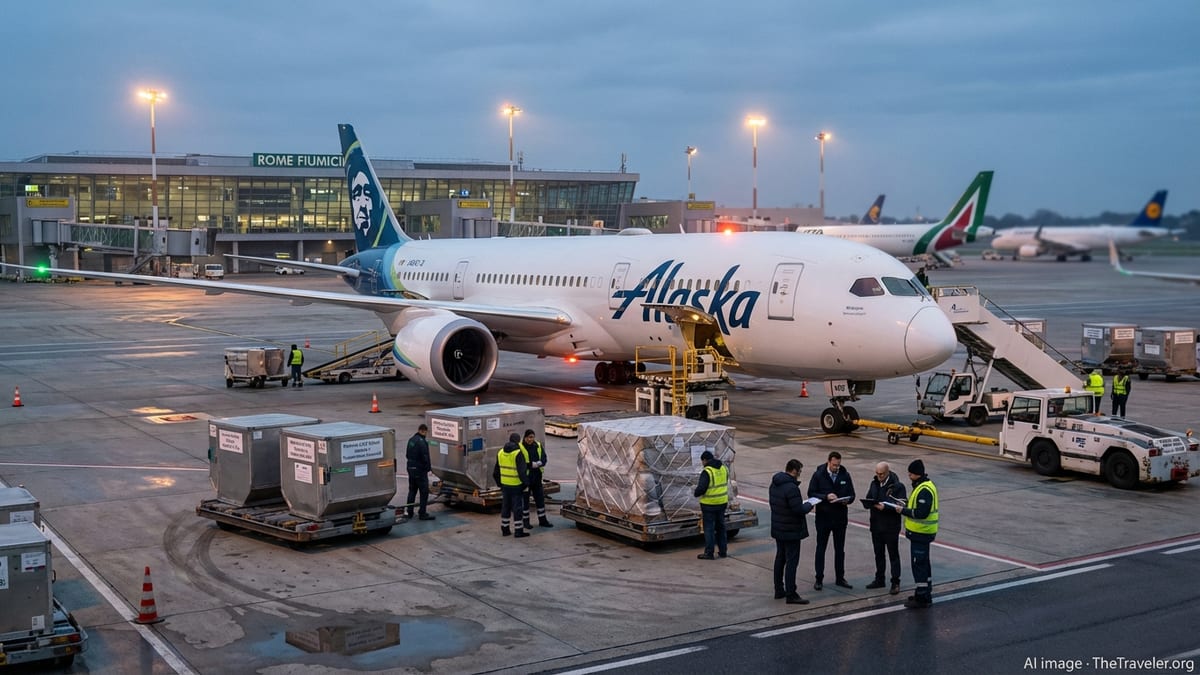
Publicly available announcements indicate that Alaska Airlines will launch new nonstop services from Seattle to Athens and Paris in 2027, both operated by its Boeing 787-9 Dreamliner fleet. The flights will add two marquee European capitals to the carrier’s growing list of long-haul destinations from its Seattle-Tacoma International Airport base.
Reports suggest that Seattle to Athens is planned as a three-times-weekly, seasonal route beginning in May 2027, aimed at peak leisure demand to Greece. Seattle to Paris Charles de Gaulle is expected to start around the same period with five weekly flights through the high season, positioning Alaska directly in one of the most competitive transatlantic markets from the Pacific Northwest.
Both services are slated to use Alaska’s new long-haul 787-9 configuration, which the airline has been rolling out on routes to Rome, London and other intercontinental destinations. The aircraft introduces lie-flat business-class suites, redesigned premium and economy cabins, and upgraded inflight entertainment and connectivity, representing a step change from the narrowbody-focused network that defined Alaska’s international footprint only a few years ago.
By layering Athens and Paris on top of existing and announced European flying, Alaska continues to move beyond its traditional West Coast and Hawaii focus. The decision to place the 787-9 on these routes underscores how central widebody long-haul flying has become to the airline’s future network plans.
Seattle Global Strategy Moves Into a Higher Gear
Alaska has repeatedly described Seattle as the cornerstone of its long-term growth, and the Athens and Paris announcements fit squarely within that narrative. Company investor presentations and public comments outline an ambition to develop at least a dozen intercontinental routes from Seattle by 2030, using a mix of 787-9s and inherited widebodies from its acquisition of Hawaiian Airlines.
Recent milestones show that strategy taking shape. Alaska has already launched or announced nonstop services from Seattle to Rome, London Heathrow and Reykjavik, along with expanded flying to Tokyo and Seoul. The addition of Athens introduces a summer-focused Mediterranean destination, while Paris provides a major European gateway that is considered essential for any airline with global aspirations.
Industry analysis notes that Sea-Tac has been steadily building its international profile with new links to Europe and Asia. Alaska’s long-haul expansion adds a second U.S. carrier with a strong local identity to a market where Delta and a variety of foreign airlines have traditionally dominated long-haul traffic. The move reflects a belief that there is sufficient demand from the broader Pacific Northwest region to sustain more nonstop international options without forcing travelers through East Coast hubs.
The Athens and Paris flights therefore serve as a prominent test case for how far Alaska can stretch its Seattle franchise into truly global territory. If the routes mature as planned, they strengthen the argument that the city can support a widebody hub anchored by a primarily domestic carrier.
Dreamliner Cabin Experience as a Differentiator
Alaska is relying heavily on the inflight experience of its 787-9 fleet to stand out on competitive long-haul sectors such as Seattle to Paris. According to the airline’s product reveals, the Dreamliners feature a new international business cabin with fully flat suites, privacy doors on most seats, and upgraded soft products designed for overnight flying.
In premium economy and main cabin, Alaska has emphasized mood lighting, larger windows, improved cabin pressurization and quieter interiors as key advantages of the 787 platform. Amenities such as refreshed amenity kits, upgraded catering and an evolving entertainment offering aim to signal that the carrier can compete with established transatlantic players, even as it builds its long-haul track record.
Industry observer reports indicate that Alaska is also in the process of rolling out Starlink-based Wi-Fi across its long-haul fleet, with installation progressing through 2027. Reliable high-speed connectivity is viewed as critical for attracting business travelers and high-yield leisure passengers on flights that can exceed ten hours between Seattle and Europe.
The Athens and Paris services will be among the clearest tests yet of whether Alaska’s new cabin concept resonates with travelers who are accustomed to the products offered by European network airlines, joint ventures and alliance partners already entrenched in these markets.
Competitive Pressure in a Crowded Transatlantic Market
Launching Seattle to Paris, in particular, places Alaska in direct competition with Delta and Air France, which already link the Pacific Northwest to the French capital through joint venture operations. Aviation industry commentary points out that Paris is one of the most in-demand European destinations for Seattle-area travelers, but also a market with well-established incumbents and significant connecting traffic beyond France.
Analysts suggest that Alaska’s success will depend on its ability to feed these new flights with traffic from across its extensive West Coast and domestic network. Its membership in the oneworld alliance and partnerships with European carriers are expected to play a role in extending connectivity beyond Paris to Southern Europe, North Africa and parts of Western Europe that are popular with U.S. travelers.
Athens presents a different competitive profile. While the Greek capital is a strong summer tourism draw, it typically supports fewer year-round long-haul services compared with hubs such as London, Paris or Frankfurt. By offering a seasonal schedule from Seattle, Alaska appears to be targeting peak leisure demand and cruise traffic while managing the risk of weaker off-season loads.
Observers note that Alaska’s initial transatlantic performance has been mixed, with some European routes reported to have lower load factors than its Asia services. The new Athens and Paris flights will therefore be watched closely as indicators of whether Alaska can fine-tune frequencies, pricing and partnerships to build sustainable transatlantic demand out of Seattle.
Fleet Utilization and Future Route Possibilities
The decision to allocate 787-9 flying to Athens and Paris also reflects Alaska’s evolving widebody fleet plan. Public filings and conference presentations show that the airline has been building a modest but growing Dreamliner fleet, supplemented by additional widebodies acquired through the integration of Hawaiian’s long-haul aircraft.
Analysts have noted that long-haul routes typically require several aircraft to provide reliable multiple-weekly or daily service, especially when factoring in maintenance and operational buffers. Using the 787-9 on a mix of European, Asian and Hawaii services allows Alaska to balance seasonal demand swings while keeping its widebodies productively deployed.
Industry speculation continues about where Alaska might fly next from Seattle as more Dreamliners arrive. Markets in Asia and additional European capitals feature prominently in those discussions, though factors such as Russian airspace restrictions, aircraft delivery schedules and competitive responses from rival carriers will influence the timing and shape of further expansion.
For now, the upcoming launches to Athens and Paris mark a pivotal phase in Alaska’s effort to reframe itself as more than a West Coast specialist. The performance of these routes will help determine how aggressively the airline can pursue its stated goal of turning Seattle into a fully-fledged global gateway anchored by its 787-9 Dreamliner fleet.