


More news on this day
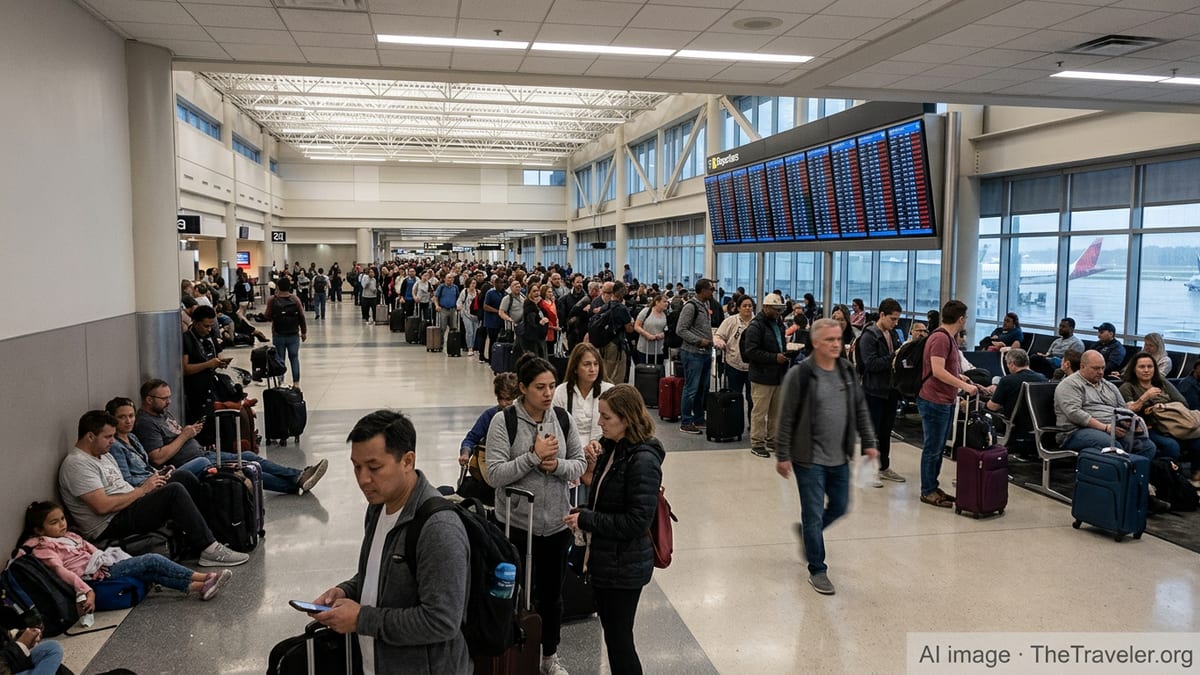
Hartsfield-Jackson Atlanta International Airport experienced another bout of travel disruption on Saturday as 187 flights were delayed and nine were cancelled, snarling connections on JetBlue, Southwest, Endeavor Air and other carriers across the United States, Europe and the Caribbean.
Get the latest news straight to your inbox!
Fresh Turmoil At The World’s Busiest Hub
Tracking data compiled on June 27 indicates that Atlanta once again ranked among the most affected airports in a wider national aviation slowdown, with delays and cancellations concentrated during peak morning and early afternoon departure banks. Publicly available information shows that the 187 delayed operations and nine cancellations at Hartsfield-Jackson formed a notable share of the 4,525 delays and roughly 100 cancellations reported across the U.S. network.
JetBlue, Southwest and Endeavor Air, along with several other domestic and international carriers, all reported disrupted operations at the airport. Endeavor Air, which operates regional services on behalf of a major legacy carrier, saw knock-on effects across its feeder network, while JetBlue and Southwest flights struggled to keep to schedule on key leisure and business routes.
Operational data and recent airport performance reports underscore how quickly pressure can build at Hartsfield-Jackson. The hub handles tens of thousands of flights each month and serves as a primary connecting point for traffic moving between smaller U.S. cities and major long haul gateways in Europe and Latin America. Even a relatively modest cluster of cancellations can therefore translate into hundreds of missed connections.
Historically, the airport has maintained a high proportion of on-time departures, but studies of its delay patterns highlight the role of weather, congestion and late-arriving aircraft in triggering rolling disruption. Those same factors appeared to be present again on Saturday, with delays building as the day progressed rather than being confined to a single incident.
Wide Reach: Disrupted Links To Europe, The Caribbean And Latin America
Although the disruption began in Atlanta, its impact was quickly felt far beyond Georgia. Departure boards and airline status tools showed delayed services touching major U.S. destinations, including New York, Chicago, Orlando and Los Angeles, along with long haul routes into and out of Europe and the Caribbean.
Flights connecting Atlanta with Denmark, France, Germany and Italy experienced schedule pressure as aircraft and crews arrived late from earlier segments. According to published aviation data, services to major European hubs are particularly exposed when delays develop in the southeastern United States, as narrow connection windows can force rebookings onto later overnight departures.
Jamaica and Colombia were also among the international markets affected, reflecting the airport’s role as a transfer point for sun destination and Latin American travel. Disruptions on these routes typically hit weekend leisure travelers hardest, as many itineraries are built around fixed resort check-in times or cruise departures.
The pattern on Saturday mirrored broader national conditions. Aggregated delay statistics for the day point to Southwest, JetBlue and regional carriers such as Endeavor appearing prominently in nationwide tallies, a sign that congestion at a few major hubs can reverberate across scattered point-to-point and regional networks.
JetBlue, Southwest And Endeavor Air Under Strain
JetBlue’s Atlanta operations, while smaller than those of the dominant legacy carrier, link the city to key coastal and leisure destinations. Publicly available flight-status information for Saturday showed JetBlue contending with late departures on several routes, aligning with a wider pattern of delays the airline has faced during periods of national airspace congestion.
Southwest, which maintains a significant presence at Hartsfield-Jackson, was also listed among the busiest and most affected airlines nationally on June 27. Recent coverage from Atlanta-based outlets has highlighted how even isolated maintenance issues or taxiway returns for Southwest flights at the airport can push back departure queues during peak hours, compounding delays for later services.
Endeavor Air, operating regional jets under a major partner brand, plays a critical role feeding passengers from smaller markets into Atlanta’s long haul banks. When Endeavor’s short-haul flights run late or are cancelled, travelers bound for Europe or Latin America frequently misconnect, resulting in unexpected overnight stays or diversions through alternative hubs.
Monthly traffic reports from Hartsfield-Jackson’s operator list all three carriers among those with steady throughput in 2026, underscoring the scale at which even a single day of disruption can impact passenger volumes. With multiple airlines vying for runway slots and gate space, irregular operations for one can quickly spill into shared infrastructure and push schedules further off track.
Passengers Face Missed Connections And Long Waits
For travelers moving through Atlanta on Saturday, the statistics translated into long lines, rolling gate changes and uncertainty about onward journeys. Published accounts from recent disruption episodes at the airport describe passengers facing extended waits on tarmacs, crowded concourses and difficulty securing new itineraries when large numbers of flights are affected at once.
Hartsfield-Jackson’s passenger information channels emphasize that customers should closely monitor airline apps, departure boards and carrier communications for real-time updates. In past periods of heavy disruption, wait times at security have also lengthened as delayed passengers converge on checkpoints during compressed travel windows, although early indications on Saturday suggested the main pinch points were at the gates and on arrival of inbound aircraft.
For those connecting internationally, missed flights to Europe, the Caribbean and Latin America often meant same-day alternatives were limited or unavailable. Travelers heading to Denmark, France, Germany, Italy, Jamaica and Colombia faced the prospect of overnight rebookings, last-minute hotel arrangements or complex rerouting through other major hubs.
Consumer advocates generally advise affected passengers to document delays, retain boarding passes and track any additional expenses incurred as a result of missed connections. While compensation frameworks differ between domestic and international itineraries, having clear records can be important when seeking vouchers, refunds or assistance after a disruption of this scale.
Ongoing Vulnerability In A Strained U.S. Aviation System
The latest wave of disruption at Hartsfield-Jackson comes amid a year in which the broader U.S. aviation system has struggled to absorb weather shocks, staffing constraints and high summer demand. National data for June 27 show thousands of delays distributed among major legacy, low cost and regional airlines, with no single carrier or airport solely responsible for the turbulence.
Analyses of how delays propagate across the National Airspace System suggest that problems at a large connecting hub like Atlanta can quickly spread. When flights depart late from key nodes, subsequent rotations arrive behind schedule at downline airports, forcing air traffic managers and airlines to adjust flows, hold departures or cancel lightly booked services to protect the remainder of the schedule.
Hartsfield-Jackson’s own traffic figures for 2026 reflect sustained growth in passenger numbers and flight operations, as airlines continue to rebuild networks and add capacity. That expansion, while positive for connectivity, also increases the system’s sensitivity to disruption. With more flights packed into each bank of departures, small disturbances can cascade into a daylong challenge.
As the busy summer travel period continues, publicly accessible guidance from the airport and aviation agencies reiterates the importance for passengers of checking flight status frequently, arriving early for departures and preparing for potential schedule changes. Saturday’s 187 delays and nine cancellations at Atlanta underscore that, even on days without headline-making storms, the world’s busiest passenger hub remains a critical pressure point for global travel.