


More news on this day
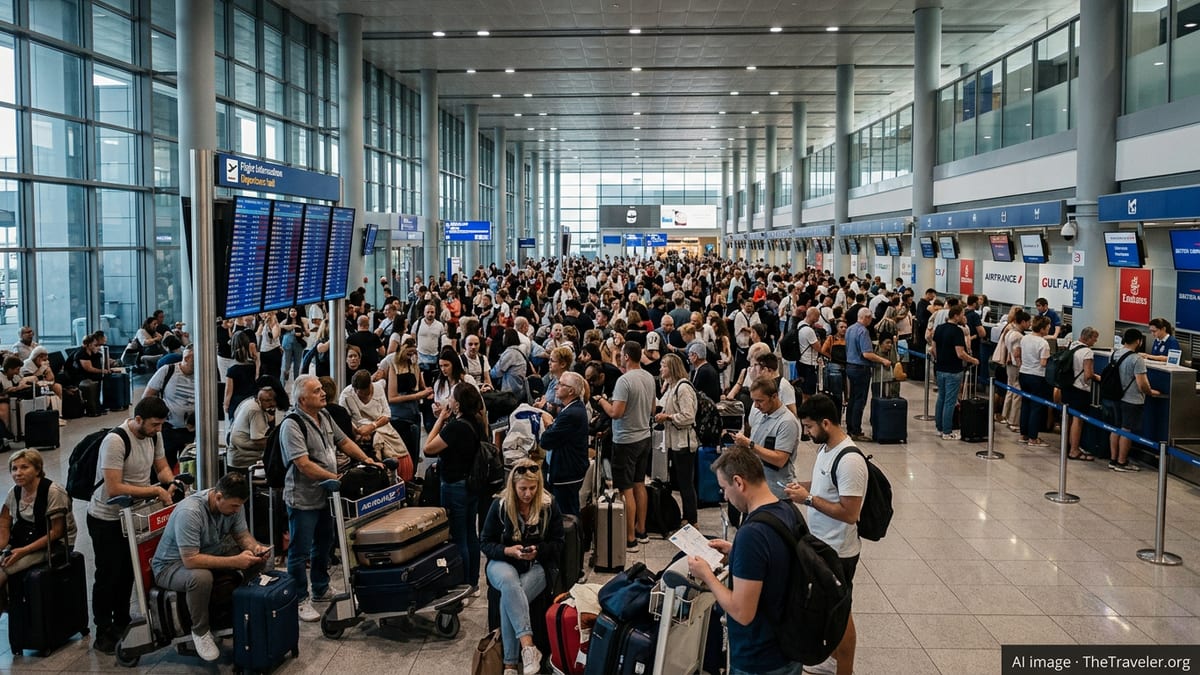
Greece’s busiest airports are entering the 2026 peak travel season under heavy strain, with a surge in passengers, staffing gaps and aging systems combining to produce mounting delays and congestion.
Get the latest news straight to your inbox!
Record Passenger Volumes Meet Limited Capacity
The summer squeeze is emerging against a backdrop of record traffic across Greece’s aviation network. Published data for 2025 indicate that the country’s commercial airports handled more passengers than ever before, with Athens International Airport and major island gateways such as Heraklion and Rhodes driving the increase. Early figures for 2026 point to continued growth, suggesting that demand is outpacing the pace of infrastructure and staffing upgrades.
Regional airports operated by Fraport Greece, which include key holiday destinations such as Santorini, Mykonos and Corfu, have reported steady increases in passenger numbers through the first months of the year. Reports on February, March and April activity show year on year rises ranging from just over 3 percent to more than 9 percent in aggregate, underscoring a strong start to the tourism season and hinting at even heavier volumes in July and August.
Athens International Airport is also reporting robust growth. Recent financial and traffic disclosures show millions of passengers passing through the capital’s hub in the first quarter alone, lifting it to new records ahead of the core summer months. With airlines adding more direct routes from long haul markets and regional hubs, arrivals are becoming more concentrated into peak hours, intensifying pressure on airside and terminal operations.
Industry analyses highlight that much of this growth is driven by leisure demand and by a widening spread of seasonal routes into smaller island airports. While this broadens access for visitors, it also creates complex traffic patterns that must be managed through a relatively constrained airspace and a ground network that in many cases reflects earlier generations of aviation planning.
Air Traffic Control Struggles and Radar Failures
The most visible pinch point so far has been in the skies rather than in the terminals. Recent Greek media coverage describes a growing mismatch between the number of summer flights and the capacity of the country’s air traffic management system to handle them efficiently. Reports point to an insufficient number of fully qualified air traffic controllers and to limitations in the aging systems used to manage the dense flows above Athens and key regional hubs.
The vulnerability of that system was exposed this week when a malfunction at an approach radar serving Athens International Airport triggered long delays. Domestic coverage notes that one of the radars operated by the Civil Aviation Authority near the capital suffered a failure on June 26, resulting in extended holding patterns and disruptions across the network during an already busy evening wave of flights.
European network monitoring data place Greece among the continent’s significant delay hotspots. Eurocontrol’s latest summer briefing attributes a notable share of regional en route delays to capacity and staffing constraints at Athens and Macedonia area control centers. These issues, combined with heightened traffic linked to Middle East reroutings, have pushed Greek airspace closer to its operating limits at the very time seasonal tourist demand is peaking.
Aviation analysts note that addressing these constraints requires both recruitment and training of additional controllers and investment in modern air traffic management technology. However, such measures take years to implement, suggesting that bottlenecks in Greek airspace are likely to persist across several summer seasons even as demand continues to grow.
New EU Border Checks Add to Terminal Queues
While the airspace struggles with flow management, travelers are also encountering longer lines on the ground. The European Union’s new Entry/Exit System, which uses biometric checks for many non EU visitors, moved into full operation at major hubs this spring. Travel industry reports indicate that Athens is among the airports where the rollout has been accompanied by episodes of congestion at passport control.
Coverage of recent incidents describes non Schengen departure queues stretching long enough for some passengers to miss flights, particularly on busy days when several departures to the United Kingdom and other non Schengen destinations overlap. Airlines and passenger rights groups have warned that the additional time needed to capture fingerprints and facial images can quickly create backlogs if staffing levels or the number of working kiosks are not sufficient.
Concerns about the readiness of smaller regional airports are also emerging. Travel forums and consumer reports cite uncertainty about how quickly biometric infrastructure and procedures are being harmonized across the country, raising the risk of uneven experiences for travelers connecting through multiple Greek airports on a single trip.
Airport operators and government agencies are under pressure to balance security and border control requirements with the need to keep passenger flows moving during the short but intense Mediterranean summer season. Industry commentary suggests that flexible staffing plans, expanded use of automated gates and clear passenger information will be crucial in avoiding severe bottlenecks during peak holiday weekends.
Island Gateways Face Peak Season Stress Test
Beyond Athens, the impact of summer gridlock is likely to be felt most acutely at island airports that were designed for far lower volumes. Fraport Greece’s concessions include several gateways that have seen double digit growth in tourism over recent years, driving terminal expansions and runway works but also exposing limits in landside access, apron space and baggage handling capacity.
Local media and travel community accounts from airports such as Mykonos, Santorini and Rhodes describe crowded departure halls, queues forming out into the terminal entrance and pressure on ground transport links during peak arrival and departure banks. While recent upgrades have improved facilities at some locations, the surge of short stay visitors on tight schedules means that even minor disruptions can ripple quickly into missed ferries, hotel check in delays and lost touring time.
Operational data show that summer traffic at several island airports is highly concentrated into a few hours each day, reflecting airline optimization of slots and aircraft utilization. This concentration can produce sudden spikes that overwhelm security checkpoints and baggage systems, particularly when compounded by late arriving aircraft from previous legs affected by air traffic control or weather related delays elsewhere in Europe.
Tourism industry observers note that the summer of 2026 will serve as a significant stress test for both the upgraded facilities and the coordination between airport operators, airlines and local authorities. How well the system copes is expected to shape traveler perceptions and booking patterns for subsequent seasons, especially among visitors with a wide choice of Mediterranean destinations.
What Travelers Can Expect This Summer
For passengers planning trips to Greece in the coming weeks, the emerging pattern points to a season characterized by crowded terminals, occasional long queues and a higher probability of schedule disruptions, particularly on peak travel days and at the busiest hubs. Publicly available information from European aviation agencies and recent news coverage both suggest that delays linked to airspace capacity and staffing are likely to recur throughout July and August.
Travel experts recommend allowing extra time at the airport, especially for flights to or from non Schengen destinations subject to biometric checks, and for tight connections involving transfers between Athens and island airports. Afternoon and evening departures, when accumulated delays often peak, may be more vulnerable to knock on effects from earlier disruptions in the network.
There are also indications that airlines and airports are adjusting operations where possible, including by spreading some flights into shoulder periods and deploying larger aircraft on high demand routes to reduce the number of individual movements. However, with demand remaining strong and structural constraints slow to resolve, many of the underlying pressures fuelling Greece’s summer gridlock are expected to persist throughout the 2026 holiday season.