

More news on this day
Australian travellers heading to Europe this northern summer are being urged to brace for airport queues stretching up to six hours, as the European Union’s new biometric border system struggles under peak-season demand and reports emerge of “nuts” delays at major hubs.
Get the latest news straight to your inbox!
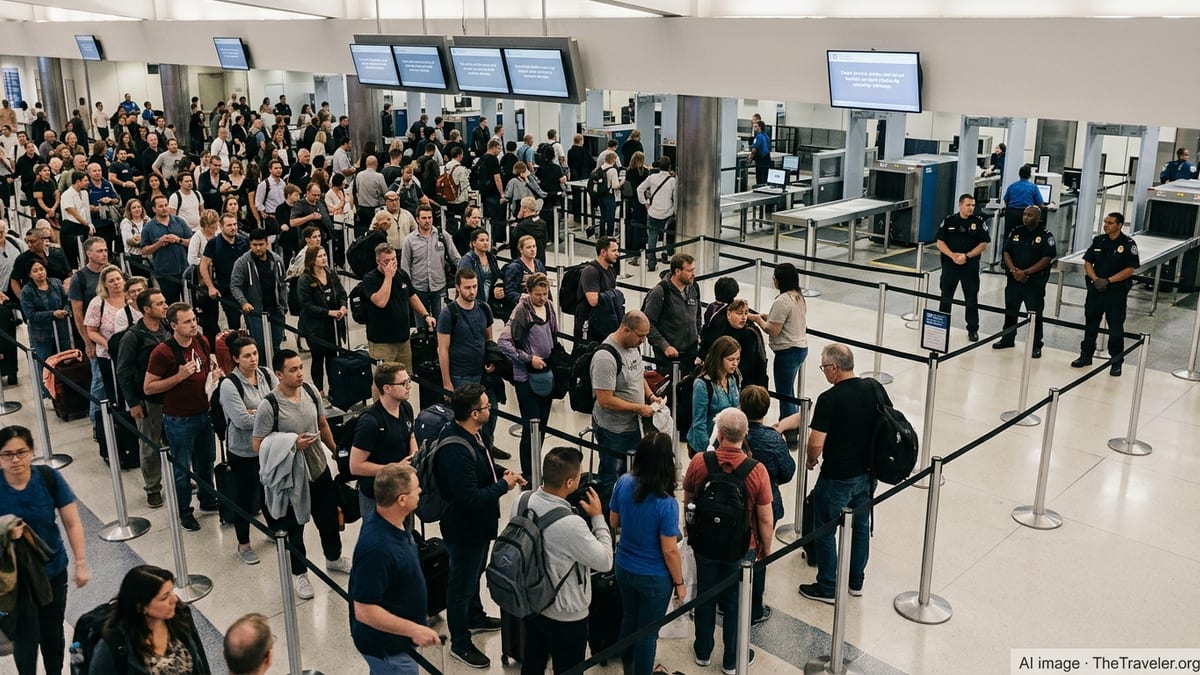
New border rules collide with peak Aussie travel season
Reports from Australian and international travel publications indicate that the European Union’s new Entry/Exit System, known as EES, is driving lengthy waits at passport control for non-EU visitors, including Australians. The digital scheme, which became fully operational in April, replaces traditional passport stamping with biometric checks that capture fingerprints, facial images and travel details for every short-stay arrival from outside the bloc.
Coverage this week in Australian media describes some passengers facing queues of up to six hours at busy airports as the northern summer holiday season ramps up. One report characterised the experience of an Australian traveller negotiating the new process as “nuts,” citing confusion over procedures, malfunctioning kiosks and long, static lines as thousands of people arrive in short bursts following long-haul flights from Asia and the Pacific.
The timing is particularly challenging for Australians, who typically book extended European trips between June and September. Long-haul itineraries that can already exceed 24 hours from door to door are now being stretched further as travellers confront bottlenecks at border control before they can collect their bags or make onward connections.
Travel industry commentary notes that while queues are fluctuating by day and airport, the worst pinch points are being reported at large hubs that handle heavy volumes of non-EU leisure traffic. Airports in Italy, Belgium and parts of Eastern Europe have all featured in recent accounts of gridlocked arrivals halls.
How the EU’s Entry/Exit System is slowing the lines
Publicly available information on the EES rollout explains that every non-EU passenger entering the Schengen area now requires a one-off biometric registration at the border. Industry analysis suggests this initial enrolment can extend processing times from under half a minute to around a minute and a half per traveller, magnifying delays when several wide-body aircraft arrive within a short window.
Reports from European aviation outlets describe ground staff struggling to balance the new checks with existing facilities and staffing levels. Self-service kiosks and manual booths are reportedly prone to technical glitches, forcing some passengers to repeat scans or switch to slower, fully staffed counters. In some terminals, queues have been described as snaking through arrivals halls and back towards the gates, with passengers expressing concern about missed trains, tours and connecting flights.
Industry groups representing airports and airlines in Europe have warned that without rapid adjustments, peak summer volumes could overwhelm border-control capacity. Recent commentary has floated options such as temporarily relaxing some elements of the system at the busiest times, increasing staffing or opening overflow checkpoints to prevent what one trade body has characterised as a risk of systemic gridlock.
Despite these challenges, EU authorities have continued to present EES as a security and efficiency upgrade that should eventually shorten processing once the majority of frequent visitors are enrolled. For now, however, travel coverage from multiple outlets notes that the transition period is proving far more disruptive than initially forecast.
Australians caught in the crossfire of a wider border crunch
Although much of the early public debate focused on British travellers in the post-Brexit era, the same procedures apply to Australians, Americans, Canadians and other non-EU nationals who previously enjoyed relatively swift manual passport stamping. Travel reports aimed at the Australian market now warn that antipodean visitors, who typically arrive after very long flights and often with tight intra-European connections, are particularly exposed to the knock-on effects of bottlenecks.
Australian travel trade publications have highlighted cases in which holidaymakers have missed onward flights or long-distance train services after spending hours in arrival queues. Given the high cost of peak-season airfares from Australia to Europe, the prospect of losing a day of a carefully planned itinerary in an immigration hall has become a growing concern among would-be travellers.
Commentary from aviation analysts suggests that secondary effects may ripple through airlines that rely heavily on connecting traffic. When passengers are delayed at the border, aircraft may depart with empty seats or be held at the gate while crews wait for late-arriving customers. This in turn can feed into wider schedule disruption, adding another layer of uncertainty for Australians attempting multi-leg journeys across the continent.
Some observers have also pointed out that Australian travellers are accustomed to highly automated border controls at home, where extensive use of e-gates can keep lines moving even at busy times. The contrast with congested manual or semi-automated checks in parts of Europe is contributing to a perception that the EU has underestimated the complexity of switching to a biometric regime at scale.
Which European airports are under the most pressure
Recent regional coverage and on-the-ground accounts point to several airports emerging as trouble spots as the new system beds in. Brussels Airport has featured repeatedly in international reporting for waits reportedly stretching to three or four hours at passport control, with some passengers describing near-stationary queues and limited information about likely processing times.
In Italy, media and traveller accounts have cited queues at airports serving popular tourist regions, including hubs for Florence and Pisa, where a combination of EES checks and high seasonal demand has tested terminal layouts. Local reporting notes that Italian airport operators have even publicly threatened to scale back or suspend some elements of the system if congestion worsens through July and August.
Elsewhere, reports from travel and aviation outlets list episodes of extended delays at other major European gateways as they adjust to the new rules. While not every airport has experienced the worst-case scenarios, there is a consistent theme of strain wherever a high proportion of non-EU passengers arrives in concentrated waves, such as on weekend leisure flights from long-haul destinations.
Analysts caution that conditions can change quickly depending on the time of day, staffing levels and technical performance of the biometric equipment. A smooth transit for one flight may be followed by hours of disruption for the next, making it difficult for travellers to predict their exact exposure to delays at any given airport.
What Aussie travellers can do to protect their trips
In response to the evolving situation, airlines and travel experts quoted in recent coverage are encouraging Australians to adjust their plans when flying into the Schengen area this year. Common advice includes allowing significantly more time for border processing, particularly on the first entry into the zone when biometric data must be captured, and avoiding tight connections on separate tickets.
Many commentators suggest that travellers build in extra buffers between arrival and onward domestic flights, cruises or rail departures, especially in airports already associated with long queues under EES. Booking flexible or refundable fares where possible, and ensuring travel insurance policies cover missed connections and delays attributable to border-control issues, are also emerging as standard recommendations.
Travellers are being urged to complete any carrier-specific pre-arrival information requirements in advance, have passports and documentation ready, and follow airport signage closely to streamline their passage through the new checkpoints. Some reports also note that arriving earlier for departure flights from European airports may help mitigate the risk of missing services if exit controls are similarly congested.
For Australians still weighing up European travel, the developing picture is one of heightened inconvenience rather than outright impossibility. While accounts of “nuts” queues and frayed tempers are likely to persist over the peak months, observers expect that as more passengers are enrolled and systems stabilise, the worst of the delays should gradually ease. Until then, careful planning and realistic expectations will be essential companions for long-haul journeys from Australia to Europe.