


More news on this day
Major disruptions swept across SEPTA’s Regional Rail network on Wednesday morning after an overnight derailment at a critical junction in North Philadelphia halted trains and forced widespread service suspensions.
Get the latest news straight to your inbox!
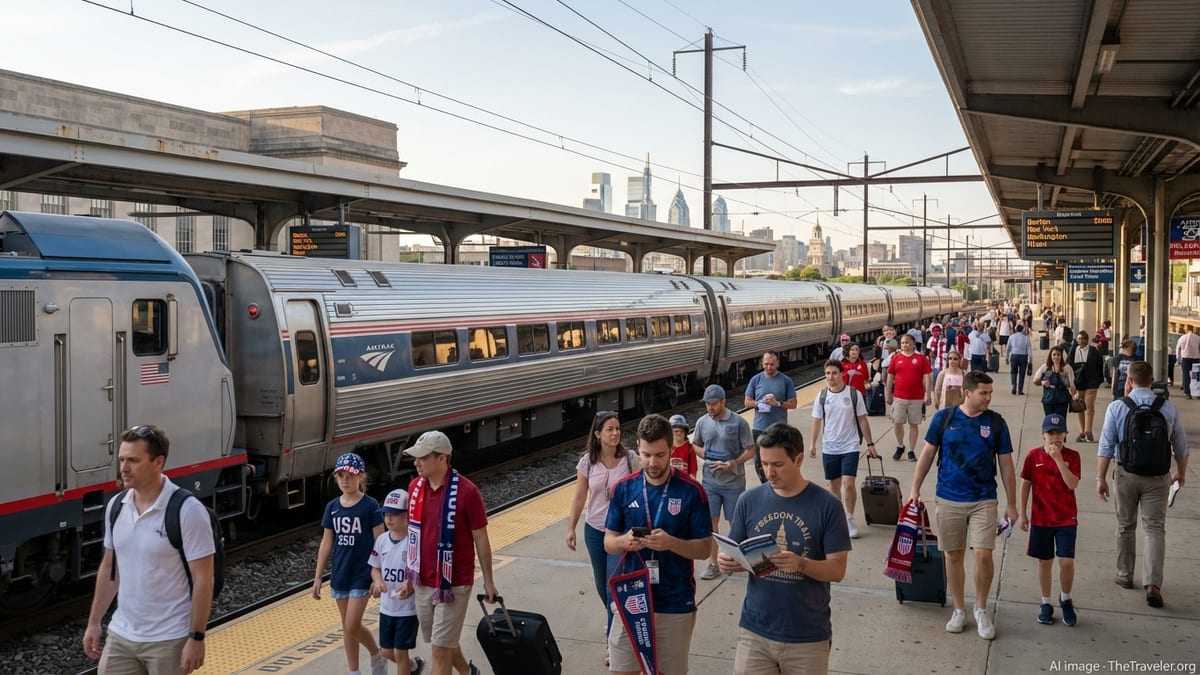
Derailment at key North Philadelphia junction
According to published coverage from local outlets, the incident occurred shortly after midnight on Wednesday, July 1, when a Manayunk/Norristown Line train left the tracks near the 16th Street interlocking just north of North Broad and North Philadelphia stations. The location is a complex web of switches where several Regional Rail routes converge, making it one of the most sensitive points in the system.
Initial reports indicate that the train was outbound on the Manayunk/Norristown Line when several cars derailed, blocking multiple tracks used not only by that route but by other lines accessing Center City. Publicly available information shows that there were no immediate reports of life threatening injuries, but the incident caused extensive infrastructure damage and required an emergency response through the early morning hours.
Rail operations data and rider accounts shared on social platforms describe a complete standstill around the junction as overnight crews assessed the scene. Heavy equipment was brought in to stabilize and re-rail affected cars while inspectors evaluated track, signal equipment and overhead power lines for damage.
Network monitoring sites that aggregate train movements showed an abrupt halt in Regional Rail traffic through North Philadelphia in the early hours, with subsequent gaps in scheduled services radiating across the region as the morning rush approached.
Multiple Regional Rail lines suspended or curtailed
By daybreak, SEPTA’s service alerts and media reports described a patchwork of suspensions, diversions and severe delays across the Regional Rail network. The Manayunk/Norristown Line, where the derailment occurred, was fully suspended between Norristown and Center City, with some trains turning back at intermediate points or canceled altogether.
Publicly available notices indicated that at least two additional lines using the same North Philadelphia junction were suspended in both directions during the height of the morning commute, while others were forced to operate on reduced schedules or skip key stations to avoid the blocked tracks. Riders on trunk routes into Center City reported gaps of 45 minutes or more between trains, with some peak departures removed from the timetable at short notice.
Reports from commuter rail platforms in neighborhoods such as Manayunk, Norristown, Jenkintown and along the Trenton and Chestnut Hill corridors described crowded platforms and limited information as dispatchers attempted to thread a small number of trains through remaining open tracks. Some trains that did run were reported to be standing room only well before reaching Center City.
Regional travel patterns were further complicated for those connecting from outlying suburbs to long distance services. Rail tracking communities noted knock on effects for riders planning to transfer to intercity trains in Philadelphia, with some choosing to drive to alternative stations or postpone trips entirely.
Alternative routes strain subways, buses and highways
With substantial portions of the Regional Rail grid disrupted, many commuters turned to the Broad Street Line subway, the Market Frankford Line and key bus routes as fallback options. Local coverage described heavy crowding on early morning subway trains into Center City, particularly at Fern Rock Transportation Center, where passengers arriving from suspended Regional Rail services were funneled onto the rapid transit network.
Bus corridors that mirror parts of the affected rail lines, including routes serving Manayunk, East Falls, Norristown and lower Bucks County, experienced spikes in ridership. Travelers reported longer dwell times at intermediate stops as buses quickly filled to capacity and bypassed additional passengers waiting along the route.
Highways into central Philadelphia also felt the impact. Traffic maps and commuter reports pointed to slower than usual speeds along segments of the Schuylkill Expressway and routes paralleling the Manayunk/Norristown corridor, as regular rail users opted to drive into the city or to park and ride stations not directly affected by the derailment.
For visitors and occasional travelers, the combination of rail suspensions, crowded buses and heavier road congestion created a complex landscape to navigate. Travel planners and tourism resources in the region advised building in extra time, checking multiple modes before departing and, where possible, shifting nonessential trips to off peak hours.
Ongoing repairs and uncertainty about full restoration
By late morning on Wednesday, publicly available information suggested that crews were still working at the North Philadelphia junction to clear derailed cars and repair track and signal damage. The complexity of the interlocking, combined with the constrained work area and overhead electrification, appeared to be slowing the pace of restoration.
Service alerts circulated through the day indicated that some lines might see limited or partial service return once at least one track through the junction could be reopened, but that full regular service on the Manayunk/Norristown Line and several connecting routes was unlikely before the evening peak. Some reports suggested that residual delays and schedule changes could extend into Thursday as equipment is repositioned and inspections are completed.
Travelers planning near term trips into Philadelphia by rail were urged through public messaging and media coverage to closely monitor real time advisories and to be prepared for rapidly changing conditions. In several cases, what began as delays of unknown duration early in the morning evolved into full day suspensions as the scale of the damage became clearer.
For regional tourism, conferences and events scheduled in Center City on Wednesday and Thursday, the continuing uncertainty created additional challenges, with organizers encouraging guests to consider a wider range of arrival options and to remain flexible about meeting times.
What travelers should do in the coming days
Given the central role of the North Philadelphia junction in SEPTA’s Regional Rail network, transportation analysts quoted in published coverage noted that the ripple effects of the derailment are likely to be felt for several days, even after an initial resumption of limited service. Equipment displacement, altered crew schedules and ongoing speed restrictions through the repaired area can all contribute to continued delays and crowding.
Regular riders and visitors alike are advised to check Regional Rail status repeatedly before travel, rather than relying on a single early morning update. Consulting station specific information and recent rider reports can help reveal local bottlenecks, such as platforms where trains are more likely to be short turned or bypassed.
For those who have flexibility, shifting to the subway, trolley or bus network for trips that remain entirely within the city may be more reliable in the near term, even if journeys require additional transfers. Travelers coming from outer suburbs might consider park and ride locations on unaffected lines, or coordinating shared rides to reduce the number of vehicles converging on Center City.
As repairs progress and more details become available about the cause of the derailment, attention is likely to turn to the resilience of key junctions in the Regional Rail system and the need for additional investment in aging infrastructure. For now, however, the priority for riders is to allow extra time, verify routes carefully and prepare for a period of disrupted rail travel across the Philadelphia region.