

More news on this day
A SEPTA Regional Rail train derailment at a critical junction in North Philadelphia shortly after midnight on July 1 has caused widespread service disruptions across the commuter rail network, leaving thousands of riders scrambling for alternative ways to reach Center City and the suburbs.
Get the latest news straight to your inbox!
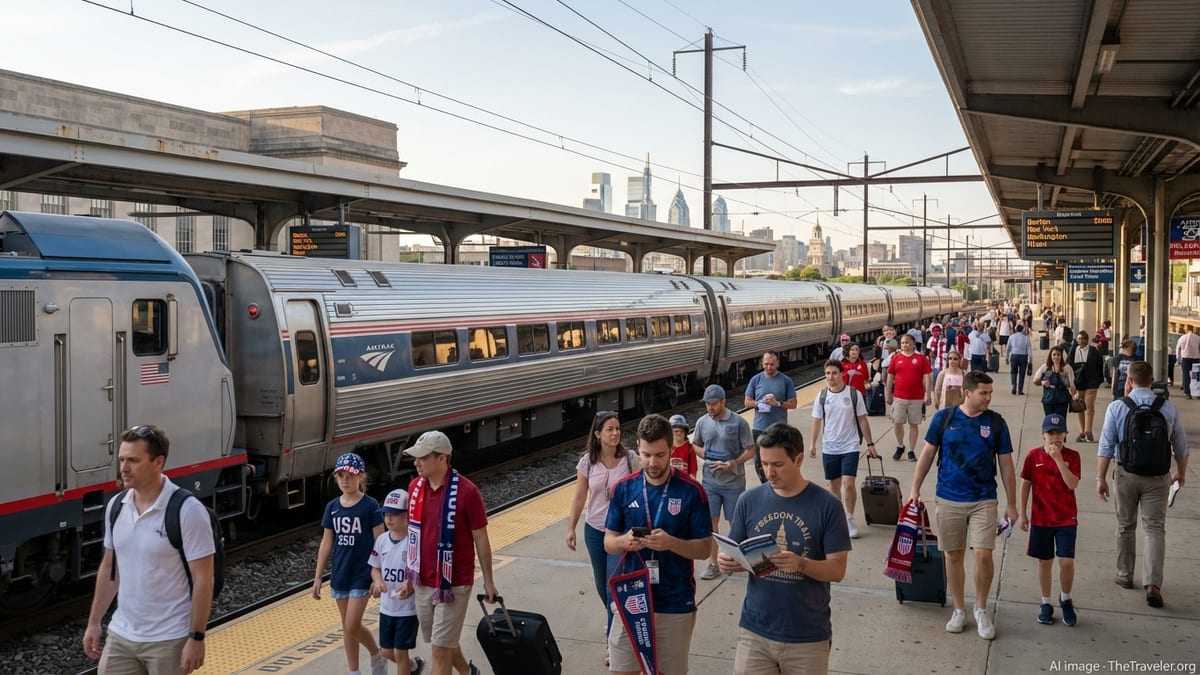
Derailment at North Philadelphia junction halts key corridor
Publicly available information indicates the incident involved an outbound Manayunk/Norristown Line train that left the tracks around midnight at the 16th Street Interlocking, a complex web of switches and crossovers near North Broad Street where multiple Regional Rail lines converge. Reports describe the location as a vital link in SEPTA’s rail network, funnelling trains toward Center City from the northwest suburbs and beyond.
Initial coverage notes that roughly 50 passengers were aboard the derailed train. No injuries were reported, and riders were escorted off and provided alternate transportation, but the disabled equipment effectively blocked several tracks at the interlocking. The low casualty toll contrasts sharply with the scale of the operational impact, as even a single fouled switch in this area can ripple across much of the system.
Early images from local outlets show multiple railcars tilted at angles on the ballast with crews inspecting the site in the predawn hours. The derailment appears to have occurred at low speed as the train negotiated a crossover, but enough wheels left the rail to require heavy equipment for rerailing and track repairs, an effort that is expected to consume much of the day.
According to published coverage, investigators and maintenance teams are focusing on the condition of the track and switch components at the junction. While no official cause has yet been identified, the complex nature of the interlocking, with its dense array of turnouts and signals, is drawing renewed attention to the vulnerability of critical chokepoints in aging commuter rail systems.
Suspensions and short turns across Regional Rail
SEPTA service alerts and news reports describe a patchwork of suspensions, short turns, and delays affecting multiple Regional Rail routes on Wednesday. The Manayunk/Norristown Line, where the derailment occurred, is fully suspended for the day, with riders directed to the Norristown High Speed Line and local buses as substitutes.
Coverage from local broadcasters indicates that at least two additional lines, including some Chestnut Hill and Fox Chase services, are suspended in whole or in part because they rely on the blocked junction to reach Center City. Trains that would typically run through North Philadelphia are turning back at outer terminals or intermediate stations, forcing riders to transfer to the Broad Street Line subway or bus routes to complete their trips.
Other lines that remain in operation are seeing substantial delays and altered stopping patterns. Some outbound trains are bypassing certain inner-city stops in order to maneuver around the affected area, while inbound trips are operating less frequently and arriving significantly behind schedule as dispatchers thread them through limited available tracks.
For travelers bound for the region’s major destinations, including 30th Street Station and Philadelphia International Airport via connecting services, the disruptions are particularly acute during the morning and evening rush periods. Commuters are being advised through media reports and social channels to allow extra time, consider flexible work arrangements, or shift to subway and trolley lines where possible.
Ripple effects for commuters and visitors
The timing of the derailment, at the height of the summer travel season and just days before the July 4 holiday weekend, is compounding the impact for both daily commuters and visitors. According to local coverage, Regional Rail park and ride lots quickly filled with confused riders seeking information at dawn, while station ambassadors and posted notices directed them to shuttle buses and rapid transit alternatives.
Travelers heading into Center City for business or onward connections face longer, more complex journeys, often involving a transfer to the Broad Street Line at Fern Rock or North Philadelphia. Reports from the field describe crowded platforms and bus stops as Regional Rail passengers spill over onto other parts of the transit network, intensifying peak loads on subway and bus routes that were already busy due to ongoing construction-related diversions elsewhere in the system.
For leisure travelers and tourists staying in the suburbs, the disruption presents an unexpected logistical challenge. Many rely on direct Regional Rail access to reach Philadelphia’s historic core, museums, and sports venues, and may be unfamiliar with navigating the subway, streetcar, or bus network. Local news segments are emphasizing the importance of checking trip planners and live service alerts before setting out.
The situation is also affecting reverse commuters who travel from the city to suburban employment centers along the Manayunk/Norristown and Trenton corridors. Some employers are reportedly encouraging remote work on Wednesday and potentially later in the week if full service cannot be restored promptly, underscoring how closely regional job markets are tied to the reliability of the rail network.
Recovery work and timeline for restoring service
Published information from SEPTA advisories and local reporting suggests that recovery from the derailment will be a multi-stage process. The first priority is removing the derailed cars from the right of way using cranes and specialized rerailing equipment, a delicate operation that must be completed before track and signal inspections can begin in earnest.
Once the equipment is cleared, track crews will assess damage to rails, ties, ballast, and switch components at the 16th Street Interlocking. Any bent rails or misaligned switches must be replaced or repaired, followed by detailed geometry checks and signal system testing. Even if physical repairs progress quickly, the interlocking’s complexity means that ensuring safe, reliable operation can take many hours.
Reports indicate that SEPTA is cautioning riders to expect significant disruption throughout Wednesday, with a gradual return to more normal service possibly extending into Thursday or beyond. Additional service updates are expected as crews make progress and more information becomes available on the condition of the infrastructure.
Observers note that the incident comes as SEPTA is rolling out new Regional Rail schedules and investing in fleet and infrastructure upgrades. The derailment is likely to intensify scrutiny of maintenance practices at high-traffic junctions and may prompt renewed calls for targeted capital spending on track, signals, and interlockings that form the backbone of the region’s commuter network.
What riders should know for the coming days
For travelers planning trips over the next several days, publicly available guidance highlights flexibility and preparation as key. Riders are being urged through media coverage and transit alerts to check service status frequently, particularly before early morning and evening peak periods when operating plans may be adjusted based on overnight repair progress.
Regular Regional Rail users are advised to identify backup routes using the Broad Street Line, Market-Frankford Line, and key bus corridors such as Broad Street and Roosevelt Boulevard. In some cases, driving to park and ride facilities on unaffected lines or using rideshare to connect to subway stations may provide a more predictable journey than attempting a full rail trip through the impacted junction.
Visitors arriving in the Philadelphia area by intercity rail or air may wish to factor in additional transfer time between Center City and suburban destinations. Hotel concierges, convention organizers, and campus administrators are likely to play a role in communicating updated transit information to guests, conference attendees, and students navigating the disruptions.
As the cleanup and investigation continue, travel professionals and local stakeholders are watching closely for any long term implications for Regional Rail reliability. For now, the North Philadelphia derailment stands as a reminder of how a single incident at a critical junction can reverberate across an entire metropolitan transit system, reshaping daily routines for thousands of people in a matter of hours.