


More news on this day
Travellers planning trips through Australia’s busiest airports this spring are being warned to brace for higher incidental costs, as a web of rising aeronautical charges, parking prices and new forecourt rules begins to filter through to airfares and on-the-ground expenses.
Get the latest news straight to your inbox!
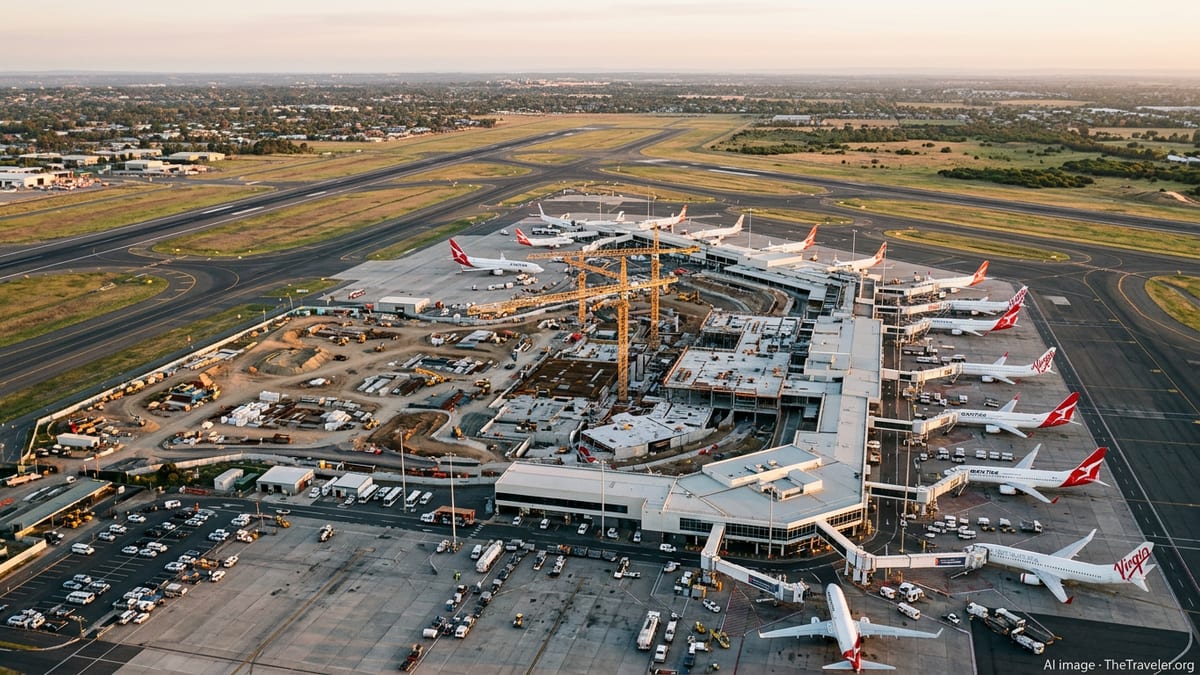
Higher airport charges feed into post‑pandemic fare pressures
Australia’s four largest airports Brisbane, Melbourne, Perth and Sydney are emerging from the pandemic with a renewed pipeline of investment and a sharper focus on recouping costs, and that is setting the stage for a new round of price pressure on passengers. The latest monitoring by the Australian Competition and Consumer Commission (ACCC) indicates airport infrastructure spending jumped by more than 40 percent in 2024–25, with airports expected to recover those outlays by lifting the fees they charge airlines over the coming years.
Publicly available information shows that aeronautical charges the per-passenger fees paid by airlines to use runways, terminals and security services are a key lever in this recovery. These fees are typically embedded in ticket prices, meaning travellers rarely see them broken out but still pay the difference when they rise. Recent coverage of Australia’s aviation sector highlights growing concern from airlines and consumer advocates that airport market power, coupled with strong demand, is making it easier to pass higher costs through to end customers.
The ACCC’s airport monitoring framework, established under federal legislation, tracks prices, costs and profits for aeronautical and car parking services at the big four gateways. Recent reports indicate that as passenger volumes rebound toward pre-pandemic levels, margins at some airports have expanded faster than traffic, strengthening claims that airports are using their position to lock in richer yields per traveller. For passengers, this shows up less as a single headline fee increase and more as a gradual lift in total trip cost.
While each airport sets its own schedule of charges under confidential agreements with airlines, the broader pattern points in one direction: higher underlying costs feeding into domestic and international fares, with limited competitive pressure on the ground to rein them in before the peak spring travel period.
Car parks and pick‑up zones emerge as hidden money spinners
For many travellers, the most immediate price shock now occurs long before security. Airport car parks and kerbside pick-up zones have become major profit centres, with monitoring data showing some facilities generating margin levels well above typical commercial benchmarks. Recent ACCC analysis of airport financial performance points to car parking as one of the clearest examples of market power, given the scarcity of on-site alternatives and the time-sensitive nature of airport trips.
Media reporting on the latest ACCC Airport Monitoring Report notes that car parking profits have in some cases grown faster than the recovery in airline capacity, with Brisbane highlighted as particularly lucrative while Sydney continues to post some of the highest headline rates for short-stay parking. Travellers arriving for an hour of parking at Australia’s busiest gateways can face charges that rival a day’s parking in city centres, even before surcharges or booking add-ons.
At the kerbside, new rules are also changing the equation. Perth Airport, for example, has rolled out an “Express pick-up and drop-off” model at certain terminals, supported by a public information campaign that foreshadowed overstay fees for drivers lingering too long in forecourt areas. Public statements from the airport describe the charges as a way to discourage loitering and keep traffic flowing, but social media commentary reveals growing frustration from passengers who say congested layouts and delays are turning quick pick-ups into unexpectedly expensive stops.
With Australia’s major airports either owning or tightly controlling most on-airport parking capacity and access roads, off-site competitors can only partially discipline pricing. The result as highlighted in recent watchdog reporting is that parking and kerbside access charges are increasingly central to airport profitability, and therefore unlikely to ease as travel demand ramps up in September and October.
Security, processing and tax changes add to outbound costs
Beyond parking and airline charges, a series of less-visible fees tied to security, border processing and federal taxation is adding to the cost of leaving Australia just as international leisure demand returns. At the airport level, published plans by Sydney and other gateways show large multi-year investments in upgraded screening lanes, smart lanes and terminal refurbishments. Sydney Airport, for instance, has outlined a major upgrade of its T1 international screening area, with capacity projected to increase by close to a third once the project is completed.
These upgrades are marketed as improvements to passenger experience, promising faster throughput and fewer bottlenecks. Yet monitoring reports indicate that the underlying cost of delivering these services forms part of the aeronautical charges paid by airlines. As amortised capital and operating expenses flow through into per-passenger fees, the benefits of shorter queues are accompanied by an incremental lift in the security and processing component embedded in ticket prices.
On top of airport and airline charges, federal taxes are quietly moving higher. The Passenger Movement Charge, a long-standing tax levied on most travellers departing Australia, was increased to 70 Australian dollars from July 2024, according to government documentation. That rise directly adds to the cost of every eligible international booking, with airlines typically incorporating the charge into the “taxes and fees” portion of fares rather than absorbing the difference.
For outbound leisure travellers planning spring holidays, the stacking effect of higher airport security-related costs, refreshed infrastructure and a larger departure tax means that even when base fares appear competitive, the final price at checkout can be materially higher than in previous years.
Regulators flag market power as spring demand surges
Regulatory scrutiny of airport pricing is intensifying at the same time seasonal demand is set to climb. The ACCC’s airport monitoring program has, in recent years, repeatedly raised concerns about the potential for monopoly profits in segments where competition is limited, such as on-airport parking, landside access and certain terminal services. The watchdog’s consultation papers emphasise that while airports require strong investment to handle future growth, transparency about how costs are recovered is essential to protect travellers.
Broader public coverage of Australia’s aviation market has also highlighted tensions between airlines and airport operators over who bears responsibility for high fares. Industry commentary reported in national media describes airports as “monopolistic” suppliers of critical infrastructure, arguing that sharp increases in their charges constrain the ability of carriers to discount and also make market entry harder for new competitors. Airport operators contest that framing, citing their own cost pressures, but the debate underlines the structural imbalance that regulators are watching.
The timing is significant. Spring travel in Australia coincides with school holidays, warmer weather and the start of the peak events calendar, lifting both domestic and international passenger volumes. With capacity still adjusting and competition on some routes limited, the scope for travellers to avoid higher charges by switching carriers or airports can be narrow. In this environment, even modest fee rises can translate into noticeable differences for families or small businesses managing tight budgets.
Regulatory tools remain relatively light touch, relying largely on monitoring and public reporting rather than direct price control. That means upward trends highlighted in official data may continue into the spring period, unless competitive dynamics or public backlash prompt airports to moderate future increases.
What this means for travellers trying to hold the line on budgets
For passengers, the key impact of this fee boom is less about a single dramatic surcharge and more about the cumulative effect of many small increases. A slightly higher fare that bundles in raised aeronautical and security charges, a steeper hourly rate in the airport car park, a tighter free window at the pick-up zone, and a larger departure tax together erode the room in household travel budgets. In a cost-of-living environment already under strain, these increments can be the difference between travelling in peak periods or delaying plans.
Publicly available comparison data suggests that travellers who can substitute away from on-airport parking toward rideshare, public transport or off-site car parks may still find significant savings, especially at gateways where regulated rail links offer flat fares without airport surcharges. However, these options are not always practical for early-morning departures, regional travellers or families with bulky luggage, leaving many consumers exposed to the full force of airport-set prices.
Passengers booking international trips in particular are likely to feel the combined hit this spring, as higher Passenger Movement Charges and recovering long-haul capacity collide with elevated airport fees. Monitoring reports indicate that international passengers typically attract higher per-head charges than domestic flyers, reflecting additional processing and infrastructure needs, yet the final bill is largely indistinguishable to travellers scanning a single total fare.
Heading into the September and October rush, the emerging picture from regulators, airports and industry coverage is consistent. Australia’s major gateways are in an investment-intensive phase and are using a mix of aeronautical fees, parking charges and access rules to restore and grow revenue. Unless competitive or regulatory settings change, travellers should expect these charges to remain a prominent and growing feature of the cost of flying.
Sources: ACCC Airport Monitoring Report 2024–25; ACCC media release on airport investment and prices; Perth Airport Express pick-up and drop-off information; Sydney Airport T2 and security upgrade information; Australian Passenger Movement Charge overview