


More news on this day
A prominent Dutch safety assessment is reinforcing United Nations warnings that passenger jets should stay well clear of active conflict zones, even as current data indicates that Dutch travelers are largely flying on routes considered relatively safe.
Get the latest news straight to your inbox!
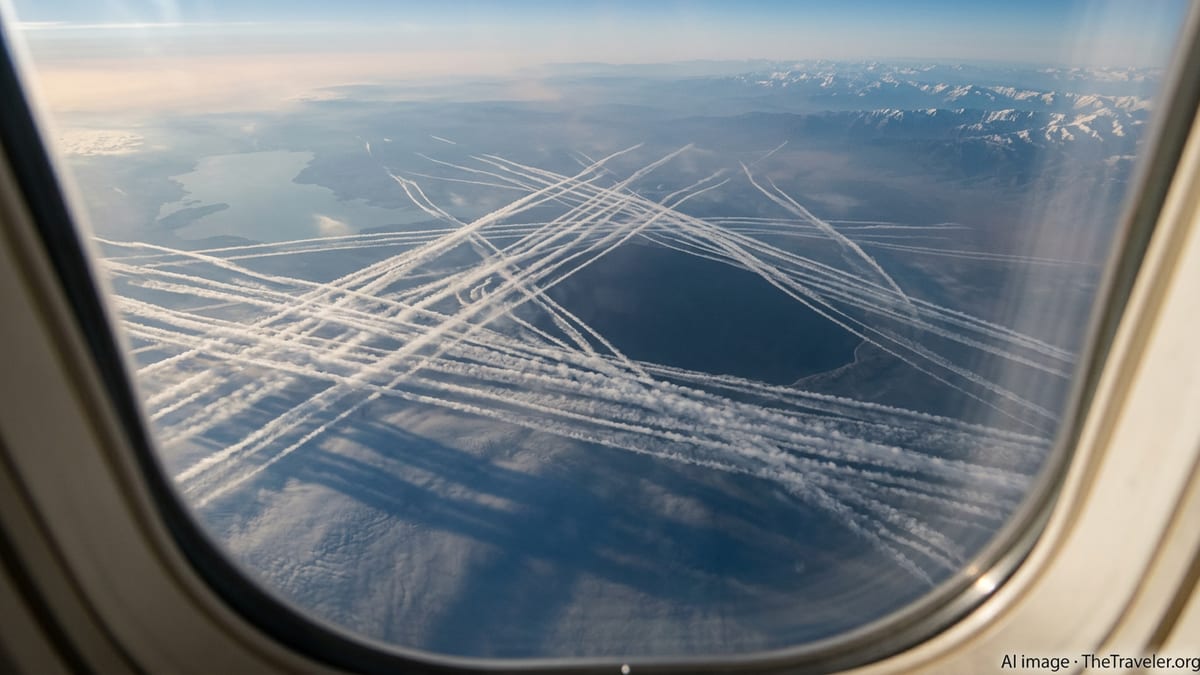
UN urges wider buffers between civil aviation and battlefields
The United Nations has repeatedly highlighted the vulnerability of commercial airliners operating near active hostilities, pointing to a series of incidents in which aircraft were struck by ground-based weapons while over or departing from conflict areas. The downing of Malaysia Airlines flight MH17 over eastern Ukraine in 2014 and Ukraine International Airlines flight PS752 near Tehran in 2020 remain central examples in current UN risk discussions.
In both disasters, passenger aircraft were flying through airspace that remained formally open at the time, underscoring a gap between airspace status and real-world threat levels. UN-affiliated aviation guidance now places greater emphasis on precautionary route planning, especially in regions where states involved in fighting continue to keep their skies available to civil traffic.
Recent tensions in the Middle East and elsewhere have prompted renewed UN-level calls for operators and states to factor in rapidly changing military dynamics, long-range missile capabilities and air defense activity when determining which skies are suitable for civil overflight.
Dutch Safety Board presses for stricter conflict-zone criteria
The Dutch Safety Board has become one of Europe’s most visible advocates for stronger protections for civil aviation in and around war zones. In follow-up work to its MH17 investigation and a later study on safe flight routes over escalating conflicts, the Board concluded that states rarely close their airspace pre-emptively, even when military activity increases significantly. ([onderzoeksraad.nl](https://onderzoeksraad.nl/onderzoek/veilige-vliegroutes-reageren-op-escalerende-conflicten/?utm_source=openai))
According to the Board’s published recommendations, international rules should be tightened so that states facing serious conflict have clearer obligations to shut all or part of their airspace to civil flights. The Dutch analysis also calls for improved risk assessment methods based on the precautionary principle, giving more weight to low-probability but catastrophic scenarios such as the use of powerful surface-to-air missiles. ([onderzoeksraad.nl](https://onderzoeksraad.nl/onderzoek/veilige-vliegroutes-reageren-op-escalerende-conflicten/?utm_source=openai))
Publicly available material from the Dutch investigation stresses that decisions on whether to keep flying should be revisited quickly when a conflict escalates. Reports indicate that current international processes for assessing danger, coordinating information and issuing advisories often move more slowly than the underlying security situation.
Improved information sharing keeps Dutch carriers away from hottest zones
Despite the broader global concerns, Dutch travelers currently appear to benefit from a comparatively robust system for monitoring risk and adjusting flight paths. The Netherlands has put in place a special arrangement to share threat information between government bodies and Dutch airlines, developed in response to the MH17 findings. ([onderzoeksraad.nl](https://onderzoeksraad.nl/en/onderzoek/flying-over-conflict-zones-follow-up-recommendations-mh17-crash/?utm_source=openai))
According to published summaries, this framework channels intelligence and security assessments toward operators so they can reconsider routes in light of new developments. The Dutch Safety Board notes that since its earlier recommendations, stakeholders no longer treat open airspace over conflict regions as an automatic guarantee of safety, and Dutch carriers have shown a greater willingness to reroute or suspend flights where risk is considered heightened. ([onderzoeksraad.nl](https://onderzoeksraad.nl/en/onderzoek/flying-over-conflict-zones-follow-up-recommendations-mh17-crash/?utm_source=openai))
The Board does, however, point out that Dutch law still focuses primarily on informing airlines rather than imposing binding flight bans above specific foreign territories. Some neighboring and allied states do issue mandatory prohibitions for their operators, and the Board has encouraged Dutch policymakers to consider similar statutory powers for extreme situations. ([onderzoeksraad.nl](https://onderzoeksraad.nl/onderzoek/veilige-vliegroutes-reageren-op-escalerende-conflicten/?utm_source=openai))
Security assessments depict high but managed threat environment
Broader Dutch security reporting depicts an elevated but actively managed threat climate. The National Coordinator for Security and Counterterrorism’s most recent terrorism threat assessment sets the national level at “substantial,” indicating that a realistic risk of an attack is present. At the same time, the document notes that many plots in Europe are disrupted at an early stage through the work of domestic and international partners. ([english.nctv.nl](https://english.nctv.nl/latest/news/2026/06/30/nctv-ongoing-threat-from-various-ideological-quarters-attacks-thwarted-at-an-early-stage?utm_source=openai))
The assessment highlights ongoing concerns tied to developments in and around Iran, jihadist networks, and newer forms of extremism. Yet the primary focus remains on land-based and urban targets rather than aviation, and there is no indication in the current public reporting of a specific, imminent plot against Dutch civil aircraft.
Government portals on counterterrorism and crisis response emphasize preparedness measures, early detection and international cooperation as the main lines of defense. This broader security posture also supports aviation, with intelligence streams feeding into the mechanisms that airlines and regulators use to judge the safety of particular routes. ([government.nl](https://www.government.nl/themes/justice-security-and-defence/counterterrorism-and-national-security/counterterrorism?utm_source=openai))
Dutch travelers advised to stay informed as routes adjust
For passengers, the main effect of the renewed caution is more likely to be schedule changes than direct exposure to danger. When conflicts flare or missile activity increases, carriers may lengthen flight times, add refueling stops or temporarily suspend certain destinations, reflecting the latest route assessments rather than an assumption of business as usual.
Official travel guidance platforms advise Dutch nationals abroad to register their details, follow updates from local authorities and monitor airline communications if the security situation deteriorates. In crisis scenarios, these channels are designed to help travelers understand whether flights will be diverted, consolidated or replaced with alternative evacuation options. ([netherlandsworldwide.nl](https://www.netherlandsworldwide.nl/crisis/what-to-do-crisis?utm_source=openai))
The current combination of UN-level warnings, Dutch investigative work and national security monitoring amounts to a layered system intended to keep passenger jets out of potential crossfire. While that framework cannot remove all risk from global aviation, available information suggests that Dutch airlines and regulators are now more inclined to steer well clear of the most volatile skies, leaving most Dutch fliers on routes considered comparatively safe.
Dutch Safety Board safe flight routes study
Dutch Safety Board conflict zones follow-up to MH17
National Coordinator for Security and Counterterrorism threat report 2026