


More news on this day
More than 150,000 air travelers were left stranded on Sunday after Indonesia temporarily shut its main international gateway in Jakarta and seven other airports, as ash from the erupting Anak Krakatau volcano drifted across key flight corridors.
Get the latest news straight to your inbox!
Airports Close as Ash Cloud Spreads Across Western Indonesia
Jakarta’s Soekarno Hatta International Airport suspended flight operations after volcanic ash from Anak Krakatau was detected in the surrounding airspace, triggering widespread disruption across one of Southeast Asia’s busiest aviation hubs. The decision extended to at least seven other airports in western Indonesia, according to published reports, as the ash plume spread hundreds of kilometers from the volcano’s location in the Sunda Strait.
Public information compiled by Indonesia’s transport ministry and cited in regional coverage indicates that more than 150,000 passengers were affected by at least 467 canceled flights. The tally includes both domestic and international services, with routes linking Jakarta to other Indonesian cities, as well as nearby regional destinations, among those most heavily disrupted.
Data from regional media and aviation trackers show that the ash column from Anak Krakatau climbed to altitudes of up to around 15,000 meters on the Sumatra side of the strait, high enough to intersect major jet airways. The ash cloud also reached parts of Banten and Lampung provinces, prompting precautionary measures across multiple airports as operators sought to prevent ash ingestion by aircraft engines.
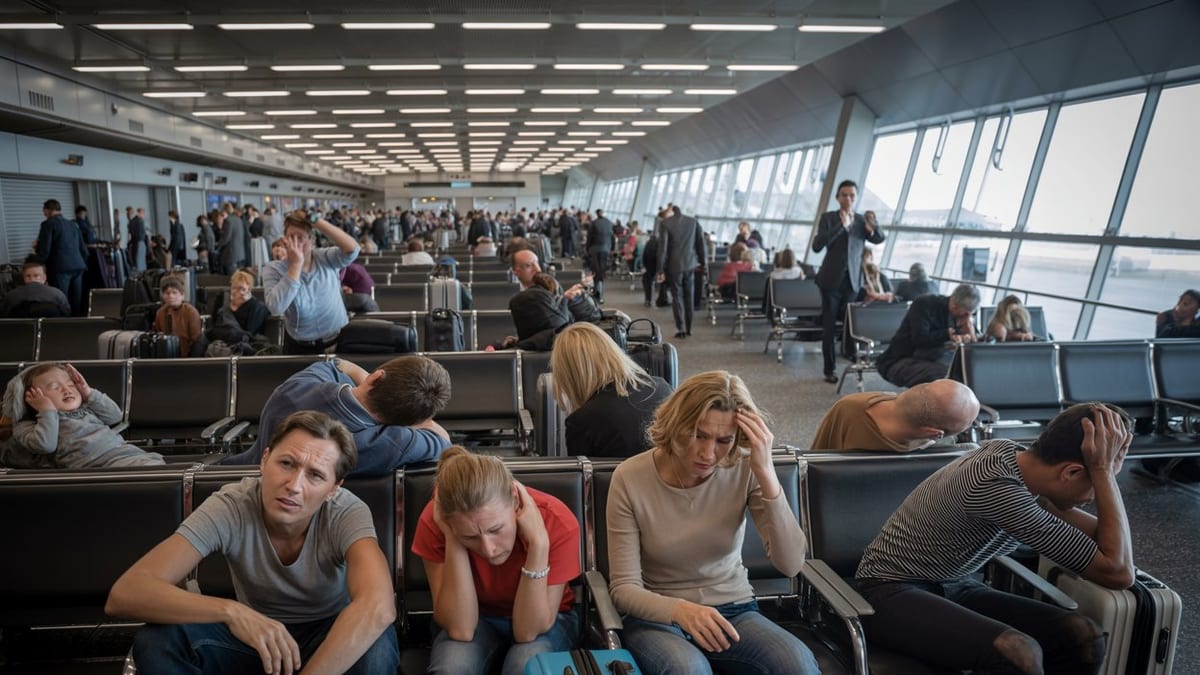
Reports from Jakarta’s main airport describe long lines forming at departure halls as travelers waited for updates, rebooking options and refunds. Airline websites and social channels advised passengers to check flight status and prepared customers for the possibility of extended delays as conditions continued to evolve.
More Than 150,000 Passengers Face Cancellations and Diversions
Figures released in public statements and carried by international news outlets indicate that the closure of Soekarno Hatta and other airports has stranded more than 150,000 travelers in a single day. Of the 467 affected flights, about 58 were international services, underlining the regional scale of the disruption beyond Indonesia’s domestic network.
According to published coverage, Jakarta’s main hub alone accounted for hundreds of cancellations by Sunday evening, impacting business travelers, tourists and residents returning home after the weekend. With western Indonesia functioning as a key connector between Southeast Asia, Australia and the Middle East, delays in Jakarta had a knock-on effect on connecting itineraries throughout the region.
Some flights already in the air were diverted or rerouted to avoid the ash, based on publicly available flight tracking data. Others were held on the ground in originating cities until operators could evaluate updated forecasts and volcanic ash advisories. Passengers reported via social media that they were offered hotel stays, meal vouchers or alternative dates in line with individual airline policies.
Travel industry analysts quoted in regional reporting noted that the incident underlines the continued vulnerability of dense Asia Pacific air routes to natural hazards. While many carriers and airports maintain contingency plans for volcanic activity, the concentration of traffic through a handful of large hubs means localized events can quickly cascade into wider operational challenges.
Jakarta Schools Shift Online as Ashfall Reaches Capital
The impact of Anak Krakatau’s eruption extended beyond aviation, with Jakarta’s city administration announcing that schools in the capital would move to online learning on Monday. According to official statements cited in local media, the step was taken as a precaution while authorities monitored air quality and potential ashfall over the metropolitan area.
Indonesia’s meteorological and geophysical agency indicated through public bulletins that ash had been detected at high altitude above parts of western Java, although near-ground conditions varied across the region. Residents were advised in local reports to monitor guidance from disaster management agencies and to limit outdoor activity if ashfall intensified.
Jakarta, a megacity of more than 10 million residents within the city limits and many more in the surrounding conurbation, lies to the east of the Sunda Strait but within reach of drifting ash clouds depending on prevailing winds. Episodes of reduced visibility and haze can affect ground transport and outdoor events in addition to air travel.
The education shift to online platforms reflects measures seen during previous volcanic and haze events in Indonesia and neighboring countries, where short periods of remote learning have been used to minimize disruption while maintaining class schedules. Authorities indicated in public notices that further decisions would depend on how the eruption evolved over the coming days.
Anak Krakatau’s Intensifying Activity Raises Monitoring Efforts
Geological agencies in Indonesia have reported in recent briefings carried by national media that Anak Krakatau’s activity has intensified since mid year, culminating in the current, more powerful eruptive phase. The volcano, which emerged from the sea in the early 20th century in the caldera left by the 1883 Krakatau eruption, has a long record of intermittent eruptions that periodically affect maritime and aviation routes.
Earlier analyses of satellite imagery and seismic data, shared on public monitoring platforms, had already indicated rising activity at the volcano. The current episode produced multiple eruption columns and visible lava emissions, captured in circulating photographs and closed circuit footage. Ash advisories issued to pilots and air traffic controllers helped guide decisions to suspend operations at affected airports.
Indonesia sits along the Pacific Ring of Fire and hosts more active volcanoes than any other country, making coordination between geological agencies and transport operators a recurring priority. Online dashboards maintained by national authorities, which provide real time updates on volcanic alert levels, are frequently referenced by airlines and travel advisories when assessing route risks.
Travel advisories from several foreign ministries, updated in recent months, already highlight Indonesia’s volcanic landscape and recommend that visitors monitor local news and official channels. The Anak Krakatau eruption and its impact on flights are likely to feature prominently in future updates, particularly for travelers planning multi stop itineraries through Jakarta and other western Indonesian airports.
Airlines and Travelers Weigh Next Steps as Disruptions Continue
Airlines operating in and out of Indonesia have responded with a mix of cancellations, schedule reductions and flexible rebooking policies, based on public notices posted on booking platforms and social media. Some carriers have opened temporary fee waivers for date changes on affected routes, while others are prioritizing passengers with imminent travel dates once flight operations resume.
Airport operators, drawing on experience from earlier volcanic events in the region, are preparing for a surge of rebooked travelers once airspace restrictions ease. Travel experts quoted across regional outlets recommend that passengers avoid heading to airports without a confirmed new departure time, monitor airline communication channels closely and consider alternative routings that bypass Jakarta if time sensitive.
For travelers yet to depart, publicly available guidance suggests purchasing comprehensive travel insurance that includes coverage for natural disasters and associated delays. Those already in Indonesia are encouraged by tourism and government portals to keep emergency contact details on hand, including consular numbers, while monitoring updates from local authorities.
With Anak Krakatau’s activity still under close observation, aviation stakeholders across Southeast Asia are expected to continue adjusting schedules in line with evolving ash forecasts. How quickly the backlog of more than 150,000 stranded passengers can be cleared will depend on both geological conditions and the capacity of airlines and airports to add extra services once skies are deemed safe.
Indonesia's main airport suspends operations after volcanic eruption
Volcanic island in Indonesia erupts, forcing flight cancellations