


More news on this day
Flights to and from Bali’s I Gusti Ngurah Rai International Airport were canceled and rescheduled on Sunday, September 6, 2026, after volcanic ash from Anak Krakatau drifted into Indonesian airspace used by services linking the resort island with Jakarta and other major cities.
Get the latest news straight to your inbox!
Volcanic Ash From Anak Krakatau Reaches Key Flight Corridors
Published coverage from Indonesia indicates that increased volcanic activity at Anak Krakatau in the Sunda Strait has triggered a chain of airspace restrictions across western Indonesia, with effects now clearly visible in Bali. The volcano began erupting over the weekend, generating ash clouds that spread hundreds of kilometers, affecting routes used by aircraft connecting Jakarta, Sumatra and Bali.
Reports from national and local media describe the eruption producing ash plumes high enough to threaten jet operations, prompting aviation authorities and airlines to reroute or cancel flights. Although Anak Krakatau lies far from Bali, the island’s air links are heavily dependent on corridors passing through the wider region now affected by the drifting ash cloud.
Separate coverage of the wider disruption notes that operations at Jakarta’s Soekarno Hatta International Airport were temporarily halted as ash spread over the capital region, leading to cascading schedule changes across the country. As airlines reworked rotations and aircraft positioning, knock-on effects were quickly felt on Bali-bound services as well as departures from the island.
Ngurah Rai Airport Confirms Cancellations and Schedule Changes
Information published by Indonesian news outlets shows that I Gusti Ngurah Rai International Airport recorded a growing number of disrupted flights through Sunday. Early updates cited “more than a dozen” cancellations and adjustments on routes linking Bali with Jakarta, particularly services operated by TransNusa and Indonesia AirAsia between Soekarno Hatta (CGK) and Denpasar (DPS).
By late afternoon local time, updated figures from airport data reported in several outlets indicated that at least 17 flights had been fully canceled, with additional services delayed or rescheduled. Later tallies published by local and national media raised the total number of affected movements at Ngurah Rai to about 42, combining both cancellations and timetable changes as airlines responded to evolving ash forecasts.
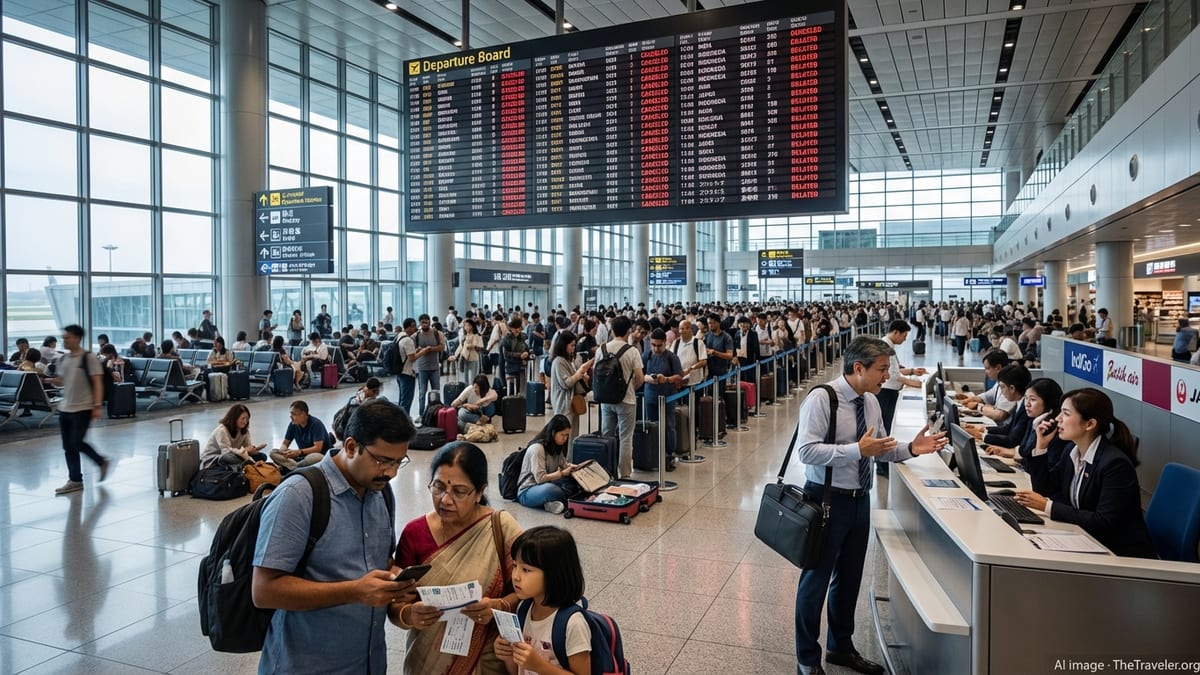
Despite the disruption, publicly available information from airport management emphasizes that terminal operations and essential services at Ngurah Rai remain functioning. Passenger processing, check in and security screening continued, although crowded waiting areas and longer queues were reported as travelers sought rebooking options or waited for revised departure times.
Domestic Routes Hit Hardest, With Focus on Jakarta–Bali Corridor
Data summarized in local aviation and general news coverage shows that the bulk of the disruption at Bali involves domestic services on the busy Jakarta–Bali corridor. Multiple TransNusa and Indonesia AirAsia flights from Jakarta to Denpasar scheduled throughout Sunday morning and early afternoon were listed as canceled, while additional departures faced delays as carriers reassessed weather and ash reports.
Some reports quantify the impact on specific routes, indicating that several dozen of the affected movements involve direct links between Soekarno Hatta and Ngurah Rai. With Indonesia’s main international gateway near Jakarta experiencing its own temporary suspension of operations, flight planners faced reduced flexibility in repositioning aircraft to serve Bali and other destinations.
International services to and from Bali appear less affected in the initial phase of the disruption, according to publicly available schedules and media summaries. However, observers note that prolonged ash emissions or further airspace restrictions around Jakarta and western Java could begin to affect more overseas routes, particularly those that rely on connection banks or shared fleets based in the capital.
Travelers Face Delays but Airport Remains Open
Images and on the ground reporting shared by Indonesian outlets show domestic and international passengers waiting inside Ngurah Rai’s terminals as airlines processed cancellations and rebookings. Travelers heading between Jakarta and Bali, as well as those connecting onward to other Indonesian cities, appeared to be among the most affected groups.
Publicly available statements from the airport operator highlight ongoing coordination with airlines and air navigation services to monitor the ash cloud and adjust operations as necessary. Reports stress that the airport itself has not been closed and that visibility and runway conditions in Bali remain suitable for flights that can be safely accommodated within the current airspace configuration.
Passengers holding tickets for travel on September 6 and in the coming days are being advised, via airline channels and media coverage, to check the latest flight status before departing for the airport. Many carriers serving the Jakarta–Bali market have begun updating websites and customer notifications to reflect cancellations and revised departure times as the situation develops.
Outlook for the Coming Days
As of Sunday evening local time, available scientific and aviation reporting suggests that Anak Krakatau remains active, and ash dispersion forecasts continue to influence planning for Indonesian airspace. The situation remains fluid, with the number of affected flights at Ngurah Rai and other airports subject to change as ash concentrations shift and authorities adjust advisories.
Travel industry observers note that Indonesia has extensive experience managing volcanic disruptions, with established procedures for rerouting aircraft and prioritizing safety while working to restore schedules. Recent events underline the country’s exposure to geophysical hazards, but also the resilience of its aviation system in handling short notice operational challenges.
For travelers bound for Bali in the near term, publicly available advisories recommend maintaining flexible plans, allowing extra time at the airport, and regularly checking airline communications. While Ngurah Rai remains open and many flights are still operating, the pattern of cancellations and schedule changes on September 6 suggests that further adjustments are possible if Anak Krakatau’s activity continues.
ANTARA News: Bali airport cancels flights amid Anak Krakatau volcanic activity
Detik Bali: 42 flights at Ngurah Rai affected by Anak Krakatau eruption
Al Jazeera: Anak Krakatau eruption halts flights at Indonesia’s main airport