


More news on this day
Volcanic ash from Indonesia’s Mount Anak Krakatau has forced Malaysia Airlines and Batik Air to cancel 20 flights between Malaysia and Jakarta on September 6, intensifying wider regional disruption after Jakarta’s Soekarno-Hatta International Airport temporarily halted operations.
Get the latest news straight to your inbox!
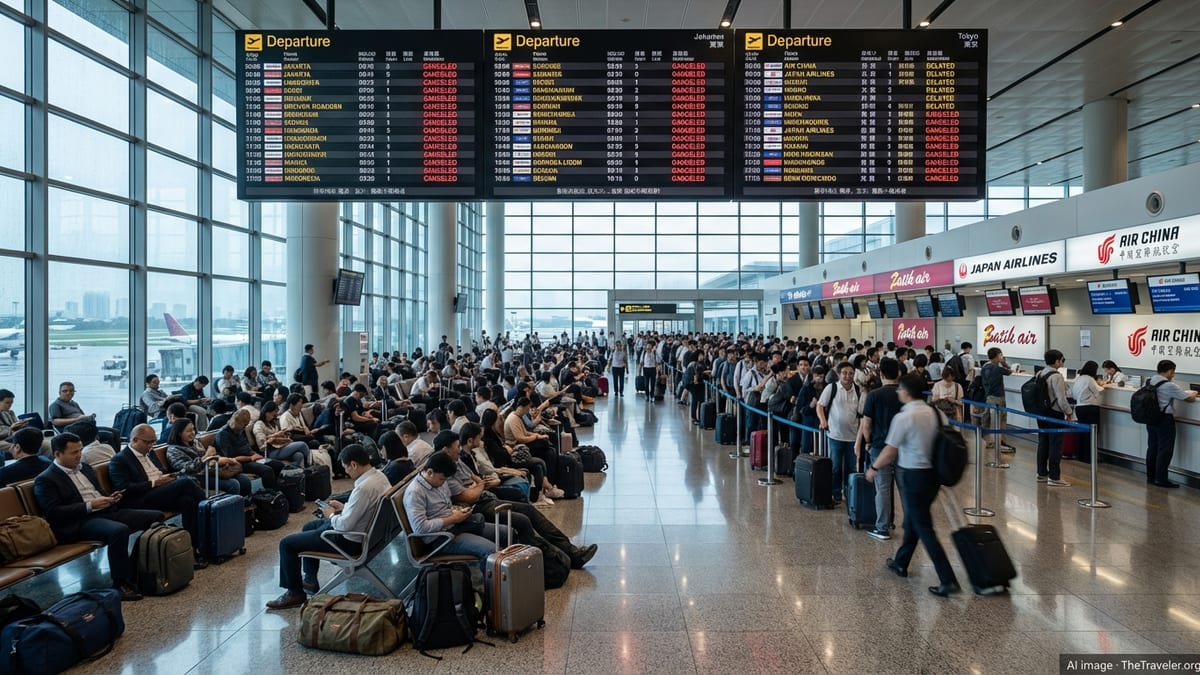
Malaysia–Jakarta Cancellations Mount As Ash Cloud Spreads
Publicly available information indicates that Malaysia Airlines and Batik Air together cancelled 20 flights linking Malaysian cities with Jakarta on Sunday, in response to safety concerns over volcanic ash in the airspace around Indonesia’s capital. The cancellations primarily affect services between Kuala Lumpur International Airport and Soekarno-Hatta International Airport, one of Southeast Asia’s busiest hubs.
Details published by Malaysia Airlines show at least a dozen Kuala Lumpur–Jakarta rotations removed from the schedule on September 6, following ash intrusions linked to the ongoing Anak Krakatau eruption near the Sunda Strait. The carrier listed multiple outbound and inbound flights between Kuala Lumpur and Jakarta that would not operate, noting that further decisions would depend on the evolving ash pattern over western Java.
Separate coverage from Malaysian and Indonesian outlets reports that Batik Air also cancelled several services on the same city pair, bringing the total number of affected Malaysia–Jakarta flights on Sunday to 20. The moves align with broader operational cutbacks across the region as airlines reassess routings and wait for updated ash advisories.
Temporary Closure Of Soekarno-Hatta Ripples Across Region
The concentrated wave of cancellations followed a temporary closure of Soekarno-Hatta International Airport on Sunday morning, after ash from Anak Krakatau was detected in the vicinity of the airport. According to published coverage, more than 200 flights were initially disrupted by the shutdown, affecting tens of thousands of passengers on both domestic and international routes.
Reports from Indonesia indicate that flight operations at Soekarno-Hatta were suspended for several hours while aviation authorities assessed the density and movement of the ash cloud. Services to and from key regional hubs, including Kuala Lumpur, Singapore, Hong Kong, Sydney, Seoul, Doha and Amsterdam, were among those impacted, with a mix of cancellations, delays and rescheduling.
Later updates from Indonesian agencies and airport operators describe a gradual resumption of activity as conditions allowed, but emphasize that the situation remains fluid. Even as runways reopen, airlines typically require additional time to reposition aircraft and crew, which can extend disruption well beyond the initial closure period.
Airlines Activate Contingency Plans And Passenger Support
Malaysia Airlines has outlined a range of options for affected passengers, directing travelers to update contact details via its online “My Booking” portal and to monitor email and SMS notifications for rebooking information. The airline states in publicly accessible notices that it is closely monitoring developments related to volcanic ash and will communicate any further schedule adjustments directly to customers.
Information from Batik Air and AirAsia points to similar responses, with carriers offering travel date changes, alternative flight arrangements where possible, or refunds subject to fare rules. AirAsia’s updates highlight that volcanic ash presents a significant hazard to jet engines, and that the airline has proactively cancelled or rescheduled flights whose paths intersect the ash-contaminated airspace around Jakarta.
Travel advisories from Malaysian and Indonesian aviation bodies generally encourage passengers booked on Jakarta-bound services to check their flight status before leaving for the airport. With hotel occupancy reportedly tightening around the Indonesian capital, some travelers are facing extended waits for onward connections as airlines rebuild their Jakarta schedules.
Why Volcanic Ash Is A Serious Aviation Hazard
The Anak Krakatau event has once again underlined how quickly volcanic activity can disrupt aviation, even far from the eruption site. Volcanic ash is composed of fine, abrasive particles that can damage aircraft engines, windscreens and sensors, particularly when ingested at cruising altitudes. It can also impair visibility and affect critical onboard systems.
Guidance from aviation safety documents published in the region notes that Malaysia has no active volcanoes, yet volcanic ash from neighboring Indonesia can drift into regional flight information regions and affect routes linking Southeast Asian hubs. Contingency plans typically call for rerouting, altitude changes or full cancellations when ash concentrations are high, prioritizing safety over schedule reliability.
The broad geographic spread of the Anak Krakatau ash cloud on Sunday, with satellite and ground observations indicating contamination across parts of western Java and Sumatra, left limited safe corridors for operations into Jakarta. As a result, airlines serving Malaysia–Jakarta routes leaned heavily toward cancellations rather than attempting complex diversions or extended delays.
What Malaysia–Jakarta Travelers Should Expect Next
For passengers booked on Malaysia–Jakarta flights over the coming days, publicly available information suggests that schedules may remain unstable while meteorological agencies track the ash plume and issue updated advisories. Airlines are expected to restore normal services once ash concentrations fall below operational thresholds and airport operations stabilize.
Travel industry observers note that passengers whose trips are time-sensitive should regularly review airline notifications and airport websites, and consider alternative routings through unaffected Indonesian gateways if travel is essential. However, such options may be limited while multiple airports contend with ash-related constraints and aircraft backlogs.
With Anak Krakatau activity still under close observation, regional carriers are likely to keep contingency measures in place, ranging from dynamic schedule changes to flexible rebooking policies. For now, the cancellation of 20 Malaysia–Jakarta flights on Sunday stands as one element of a wider network shock that has highlighted the vulnerability of dense air corridors to sudden geophysical events.
Malaysia Airlines, Batik Air cancel 20 Malaysia–Jakarta flights due to volcanic ash (Bernama)
Malaysia Airlines travel advisory on Jakarta volcanic ash disruption
Coverage of Malaysia–Jakarta flight cancellations linked to Anak Krakatau (Malay Mail)
Report on temporary closure of Soekarno-Hatta International Airport