


More news on this day
Australia is aligning with Qantas and Jetstar on a major expansion of domestic air services from the new Western Sydney International Airport, with government statements and industry reactions positioning the project as a transformative shift in the nation’s aviation network.
Get the latest news straight to your inbox!
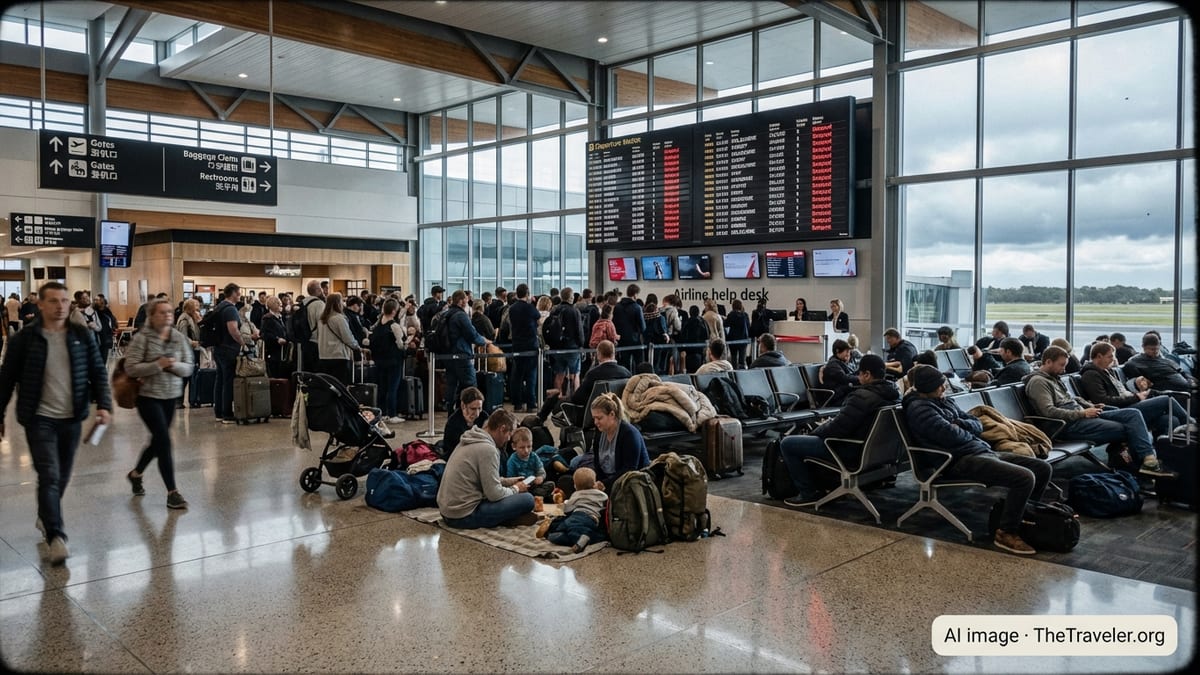
New Western Sydney Hub Targets Busy East Coast Routes
Publicly available information from Western Sydney International Airport and the Qantas Group indicates that Jetstar will operate the first commercial passenger services from the new Western Sydney International (Nancy-Bird Walton) Airport when it opens to travelers on 25 October 2026. Qantas-branded domestic flights are scheduled to follow from early 2027, supported by a five-year agreement covering passenger and freight operations.
Initial schedules show Western Sydney being linked to some of Australia’s highest-demand domestic corridors, including Melbourne, Brisbane and the Gold Coast. Reports suggest Jetstar will lead with multiple weekly services to these cities, with QantasLink Embraer E190 operations to be added as the network scales. The aim is to give travelers in western Sydney direct access to routes that are already among the world’s busiest domestically, without the need to transit via the existing Sydney Kingsford Smith Airport.
Government releases describe the new airport as a 24-hour curfew-free facility designed to complement, rather than replace, Sydney’s existing gateway. The opening timeline currently calls for freight operations to commence in July 2026, ahead of passenger flights from October, allowing airlines and ground handlers time to test systems and ramp up capacity in stages.
Industry commentary notes that the strategy mirrors global trends in multi-airport cities, where secondary hubs are used to relieve congestion and open up new origin-and-destination markets. In this case, Western Sydney International is intended to serve both as a domestic connector and, over time, as a new long-haul and regional hub for airlines that choose to base operations there.
Australia’s Policy Push Behind Western Sydney International
According to publicly released statements from the federal government, the decision to back Qantas and Jetstar’s deployment at Western Sydney International reflects a broader policy goal of boosting capacity across the national aviation system. With Sydney’s existing airport constrained by a long-standing curfew and limited room for additional movements, planners have long argued that a second major airport is essential to meet forecast demand.
Government material describes Western Sydney as one of Australia’s fastest-growing economic regions, home to a large and expanding population that has traditionally faced lengthy trips to reach the main airport on the eastern side of the city. Positioning Qantas and Jetstar as foundation domestic carriers at the new hub is therefore being framed as both an infrastructure milestone and a response to demographic change.
Travel industry associations have welcomed the announcement as a significant development for Australian travelers, highlighting the potential for more competition on key domestic routes and additional itinerary options for both leisure and business passengers. These groups point out that even a relatively modest initial schedule can have an outsized impact on fares, schedules and connectivity once a second airport comes online in a major metropolitan area.
Analysts also note that by anchoring early domestic services with established brands like Qantas and Jetstar, authorities are seeking to give the airport immediate credibility with consumers and international partners. This foundation is expected to support future negotiations with foreign carriers assessing whether to launch services to Western Sydney in addition to, or instead of, the existing Sydney airport.
Network Strategy for Qantas and Jetstar
Qantas Group communications outline a two-tier approach in which Jetstar takes on the role of launch carrier at Western Sydney, followed by QantasLink regional jets and, potentially, mainline Qantas narrowbodies at a later stage. Jetstar’s Airbus A320 family aircraft are slated to operate the early domestic flights, with the airline leveraging its low-cost model to stimulate demand from price-sensitive travelers in the catchment area.
Reports from aviation publications indicate that QantasLink Embraer E190 aircraft are expected to begin operating from the airport in 2027, adding flexibility in frequency and opening opportunities for thinner point-to-point routes over time. This layered strategy allows the group to test demand and adjust capacity while maintaining a unified presence under the Qantas brand umbrella.
Industry analysis suggests the network choices are designed to complement, rather than cannibalize, existing services from Sydney Kingsford Smith. Early route maps point to a balance between duplicating key trunk routes at both airports and selectively moving certain flows to Western Sydney to ease pressure on the older facility. For travelers, that is likely to translate into more departure time options and the ability to choose the airport that best matches their location or connections.
Aviation commentators also note that Western Sydney International’s 24-hour operating capability offers scope for off-peak flights and improved aircraft utilization, which can help keep fares competitive. Low-cost carriers such as Jetstar are typically quick to exploit late-night and early-morning slots, and the new airport’s operating model may encourage more of these services once infrastructure and demand are in place.
Implications for Travelers and the Wider Region
For residents of western Sydney and nearby regional areas, the partnership between Australia, Qantas and Jetstar at the new airport is expected to reduce reliance on long road or rail journeys to reach flights. Travel industry commentary observes that shorter surface commutes, combined with competitive fares, can meaningfully change travel behavior, encouraging more frequent short breaks and simplifying domestic business trips.
Local tourism bodies have highlighted the potential for Western Sydney to become a launching point for visitors heading to attractions across New South Wales and beyond. With early services focused on major gateways such as Melbourne and the Gold Coast, tourism operators anticipate new visitor flows in both directions, particularly as package deals and interline arrangements are developed around the new airport.
Economists and infrastructure specialists point to broader spillover effects, including job creation in aviation, logistics, retail and hospitality around the airport precinct. As more airlines and ancillary businesses commit to Western Sydney, the area is expected to evolve into a significant employment and activity hub, reinforcing government plans for a multi-nodal Sydney with several strong commercial centers.
At the same time, some commentators caution that ground transport links, such as road upgrades and rail connections, will be critical to realizing the full benefits of the new airport. Publicly available planning documents emphasize ongoing work on surface access, with the success of Qantas and Jetstar’s domestic services likely to be closely tied to how quickly and conveniently passengers can reach the terminal from across the metropolitan area.
Competition and Future Growth Prospects
With Australia backing Qantas and Jetstar as early domestic operators at Western Sydney International, attention is turning to how rival carriers might respond. Reports from aviation industry outlets note that Virgin Australia and several international airlines have previously expressed interest in serving the airport, although not all have yet finalized domestic plans comparable to those of the Qantas Group.
Analysts suggest that as passenger volumes grow and operational data becomes available, additional airlines are likely to view Western Sydney as an attractive opportunity to expand capacity or challenge incumbents on key routes. The presence of established brands from day one is seen as reducing perceived risk for new entrants by demonstrating viable demand patterns and operational reliability at the airport.
Medium-term growth forecasts for Western Sydney International envision a gradual build-up in frequencies and destinations rather than an immediate surge. The five-year agreement underpinning Qantas and Jetstar’s presence is structured to allow schedules to expand in line with demand, providing room for seasonal services, new regional links and, eventually, additional interstate routes as market conditions evolve.
For travelers, the combination of government support, anchor airline commitments and curfew-free operations signals a shift in how domestic air travel will function in Australia’s largest city. As the opening date approaches and more details on flight schedules, pricing and ground access emerge, Western Sydney International is expected to become a central focus of the country’s aviation and tourism conversation.