


More news on this day
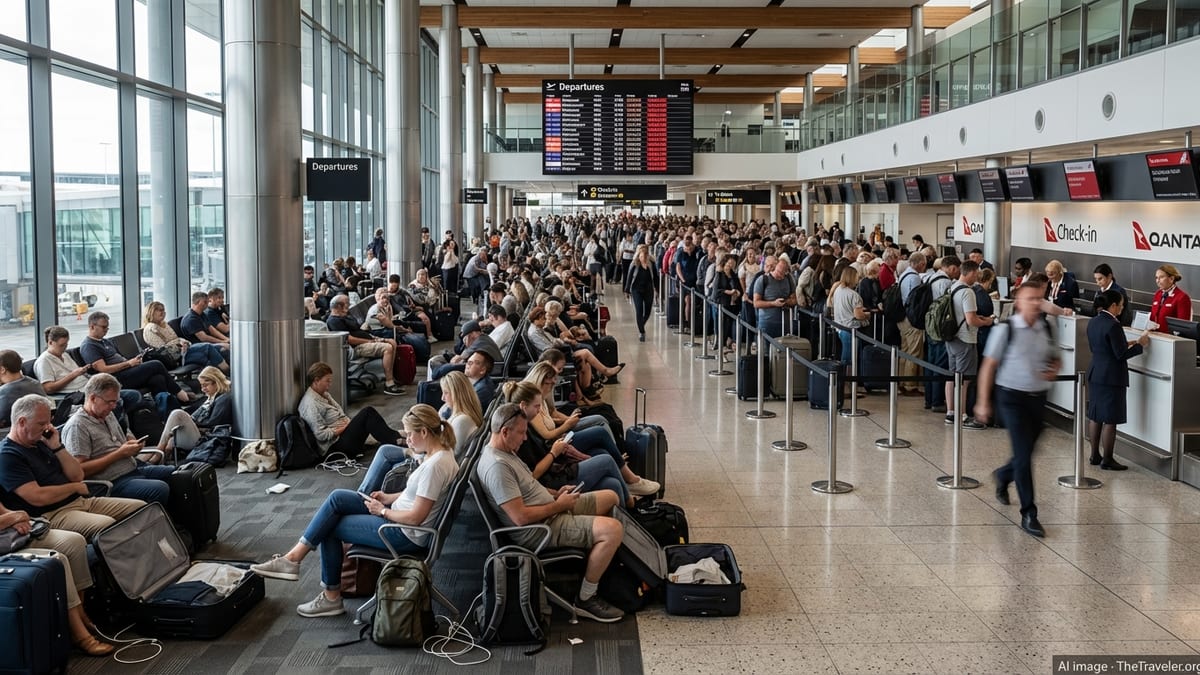
Air travel across Australia and New Zealand has been thrown into fresh turmoil as publicly available tracking data shows at least 282 flights delayed and 11 services cancelled on routes linking Sydney, Melbourne, Wellington, Auckland and other major centres, affecting operations by Jetstar, Sounds Air, Virgin Australia, Air New Zealand and several smaller regional carriers.
Get the latest news straight to your inbox!
Major Trans-Tasman Gateways Under Strain
The latest disruption has been felt most acutely at the region’s busiest gateways, with Sydney, Melbourne, Auckland and Wellington recording clusters of delayed departures and arrivals on key domestic and trans Tasman services. Flight tracking boards for the four hubs show rolling hold ups across much of the daily schedule, particularly on high frequency routes such as Sydney to Auckland, Melbourne to Wellington and Auckland to Wellington.
According to publicly available flight status data, airlines serving these corridors have pushed back departure times by anywhere from 30 minutes to several hours, with knock on effects rippling through connecting services. Travellers attempting to move between Australia’s east coast and New Zealand’s main centres are reporting missed onward flights, compressed connection windows and last minute gate changes as carriers work to reset schedules.
Auckland Airport, which serves as a primary hub for Air New Zealand and an important base for Jetstar, has seen a measurable increase in late running flights and same day schedule changes. Similar patterns are visible at Sydney and Melbourne, where Virgin Australia and Jetstar handle a large share of trans Tasman traffic alongside Air New Zealand and Qantas, intensifying congestion during peak travel periods.
In Wellington, a crucial domestic link and departure point for services to Australia, operational data shows congestion building during morning and late afternoon waves. Short haul flights shuttling between Wellington, Auckland, Christchurch and regional centres such as Nelson and Napier have been particularly exposed to the knock on impacts of late arriving aircraft and crew.
Jetstar, Virgin Australia and Air New Zealand Face Punctuality Pressure
The latest bout of disruption comes against a backdrop of heightened scrutiny on airline reliability across Australasia. Government transport statistics and independent analyses published over recent months highlight persistent punctuality challenges for several major carriers, with Jetstar and Virgin Australia repeatedly flagged for elevated rates of delays and cancellations on some routes compared with rivals.
Air New Zealand, the dominant player in the New Zealand market and a major trans Tasman operator, has also faced reliability pressures as it juggles strong demand and a complex mix of domestic and international flying. Publicly reported on time performance figures show variability across the network, with popular links such as Wellington to Auckland and Auckland to Queenstown periodically affected by schedule slippage and weather related constraints, particularly during busy holiday and long weekend periods.
Industry observers note that high utilisation of aircraft and crews across the region can leave limited margin to recover from earlier delays. When an early morning flight between, for example, Sydney and Auckland or Melbourne and Wellington departs late, the aircraft may operate several more sectors that same day, compounding delays for passengers who board later rotations.
Public discussion has grown more pointed as disrupted travellers share experiences of extended waits at departure gates, late night arrivals and missed family events or business meetings. Social media posts and consumer forums frequently single out specific airlines for perceived shortcomings in communication and rebooking support, reinforcing pressure on carriers already navigating tight operational conditions.
Regional and Commuter Carriers Caught In The Crossfire
While attention often focuses on the large trans Tasman brands, regional and commuter airlines such as Sounds Air in New Zealand are also being swept up in the turbulence. Operating smaller turboprop aircraft on short sectors linking secondary cities and provincial centres to hubs like Wellington and Christchurch, these carriers are especially exposed when inbound connections from major airlines arrive late or are cancelled.
Publicly accessible schedules show that regional routes including Nelson to Wellington, Blenheim to Wellington and other short hops are tightly timed to feed the peak morning and evening banks of larger carriers. When an upstream flight from Australia or a main trunk domestic service slips significantly off schedule, it can force last minute adjustments further down the line, including retimed departures or aircraft swaps.
For travellers in smaller centres, even a single cancellation can be highly disruptive, as alternative services may not operate again for several hours. This can strand passengers overnight in hub airports or require lengthy surface journeys to reach their destinations. Reports indicate that some travellers caught in the current wave of delays are facing longer than expected waits for replacement flights, particularly where load factors are already high.
Regional airports, which often have limited terminal capacity and fewer staff, can find it challenging to process a sudden influx of disrupted passengers seeking rebooking, baggage assistance and accommodation options. This amplifies the sense of turmoil for affected travellers, even when the original problem originated on a long haul or trans Tasman sector.
Weather, Capacity Constraints and Systemic Fragility
A combination of factors appears to be feeding into the present disruption. Meteorological reports for parts of eastern Australia and New Zealand in recent days describe periods of strong winds, low cloud and showers that can constrain runway use, require increased separation between aircraft or prompt temporary suspensions of operations, particularly at coastal airports such as Sydney and Wellington that are more exposed to crosswinds.
At the same time, aviation analysts point to ongoing capacity constraints in air traffic control, ground handling and maintenance across the region. Periodic staff shortages and high sickness rates, highlighted in recent industry briefings, can reduce flexibility to absorb sudden spikes in demand or to recover quickly from weather related slowdowns. When several of these factors coincide on a busy travel day, the result can be a rapid build up of delayed departures and arrivals.
Fleet availability is another pressure point. Airlines across Australia and New Zealand are in the process of renewing and expanding fleets but continue to operate with tight spare capacity while new aircraft are inducted and older types are phased out. An unexpected technical issue on a narrow body jet serving short haul routes between Sydney, Melbourne, Auckland and Wellington can therefore trigger multiple hours of secondary disruption, particularly if a replacement aircraft is not readily available.
Observers note that the pattern of 282 delayed flights and 11 outright cancellations reflects a system running close to its limits rather than a single, isolated incident. When one major hub experiences disruption, the interconnected nature of airline networks means that even distant regional links can feel the effects many hours later.
Travellers Adjust Plans As Disruption Continues
As airlines work through the backlog, passengers across Australia and New Zealand are being urged by travel agents and consumer advocates to build greater flexibility into their itineraries. Recommendations commonly include allowing longer connection times between domestic and international flights, avoiding last flight of the day options where possible and monitoring flight status closely via airline apps and airport displays.
Publicly available booking data and fare searches suggest that some travellers are shifting away from tightly timed same day connections, particularly on critical journeys such as cruise departures, key business meetings or major events. Others appear to be opting for earlier departures or adding overnight stopovers in hub cities like Sydney, Melbourne or Auckland to create a buffer against potential delays.
Travel insurers are also reporting renewed interest in policies that cover missed connections and extended delays, reflecting concerns that such events are no longer rare exceptions but a recurring feature of post pandemic air travel. Policy wording varies widely, however, and consumer groups continue to highlight the importance of understanding what is and is not covered before flying.
With airlines, airports and regulators all signalling that structural pressures on the aviation system will take time to resolve, passengers on routes linking Australia and New Zealand may need to brace for continued bouts of disruption even as carriers refine schedules and add capacity. For now, the latest wave of delays and cancellations across Sydney, Melbourne, Wellington, Auckland and beyond underlines just how fragile the region’s air travel network can be when several stress factors converge.