


More news on this day
Passengers at Houston’s George Bush Intercontinental Airport faced another day of disruption as 92 flights were delayed and four canceled, slowing travel across major domestic and international routes.
Get the latest news straight to your inbox!
Widespread Delays Hit a Key U.S. Hub
George Bush Intercontinental Airport in Houston, one of the country’s busiest hubs, experienced significant disruption as dozens of departures and arrivals were pushed back or scrapped. Publicly available tracking data on Thursday indicated that 92 flights were delayed and four canceled, affecting a mix of early morning and midday services when many airlines run their heaviest schedules.
The disruption affected a range of carriers, with large network operators such as United Airlines, American Airlines, and Delta Air Lines seeing knock-on impacts throughout their Houston schedules. Low cost and regional airlines that depend on shared infrastructure and connecting traffic also reported delays, intensifying congestion across terminals.
Operational data shows that the issues in Houston quickly rippled across the national network. Because Bush Intercontinental serves as a key connecting point, particularly for United, interruptions to a relatively small number of flights can cascade into missed connections and aircraft arriving late into other major cities.
While the level of disruption fell short of a full-scale shutdown, the combination of late arrivals, aircraft out of position, and crowded taxiways generated substantial wait times both on the ground and at security checkpoints, adding pressure to an airport already under scrutiny for recent congestion problems.
Impact on United, American, Delta and Other Carriers
United Airlines, which uses Houston as one of its main domestic and international hubs, appeared to be the most exposed to delays. A dense bank of morning departures from Bush Intercontinental to cities including New York, Chicago, Los Angeles, and Mexico City was affected as aircraft and crews cycled through the network more slowly than scheduled.
American Airlines and Delta Air Lines, which operate competitive services on key business routes from Houston, also experienced schedule disruptions. Publicly accessible timetables and status pages showed delayed departures on multiple trunk routes, with some flights holding at the gate while crews awaited connecting passengers or aircraft arriving late from other parts of the country.
Regional affiliates operating under these major brands were similarly caught in the pattern, as smaller jets that provide feeder services into Houston could not turn around as quickly as planned. That created challenges for travelers on multi-leg itineraries who depended on tight connections to reach destinations such as Toronto and Mexico City.
Other carriers that rely on shared airport resources, including gates and ramp access, encountered secondary delays even where their own operations were initially on time. Once pushback slots and taxi queues grow longer, even airlines with unaffected aircraft and crew can find themselves forced to wait.
Key Routes to Major Cities Disrupted
The latest disruption was particularly visible on high-demand routes linking Houston to New York, Chicago, Los Angeles, Toronto, and Mexico City, where morning and afternoon departures are typically scheduled in close succession. Tracking services showed flights leaving well behind timetable, with some arrivals landing significantly later than planned at their destination airports.
Houston to New York and Houston to Chicago services, both central to business travel and connections to transatlantic flights, saw a series of delays that forced passengers to rebook onward journeys. Flights to Los Angeles, another major West Coast gateway, also faced schedule pressure as aircraft arriving late into Houston turned around for westbound departures.
International services to Toronto and Mexico City were not spared. These routes are important for both business and leisure travelers across North America, and delays in Houston created knock-on effects for customs processing and ground handling at the destination airports. In some cases, passengers connecting in Houston from smaller U.S. cities missed their international flights altogether and were forced to wait for later departures.
Because many of these routes run near capacity at peak times, even modest delays can trigger a surge in standby lists and seat shortages. Families, tour groups, and business travelers competing for limited remaining seats reported crowded gate areas and lengthy waits for rebooking at customer service counters.
Weather, Infrastructure and Staffing Under Scrutiny
Recent coverage of operations at Bush Intercontinental has highlighted a mix of challenges that can quickly compound into large-scale disruptions. Periodic thunderstorms across southeast Texas have repeatedly forced ground holds and slower arrival rates, while ongoing construction and infrastructure work at the airport can limit available taxiways and gate space during peak periods.
Separate reports have pointed to extended security screening waits at Houston in recent weeks, driven by strained staffing levels and strong travel demand. When long lines form at checkpoints, rising numbers of late-arriving passengers can push airlines to hold flights slightly beyond their scheduled departure time, which then propagates delays throughout the day.
Industry observers note that the combination of weather-sensitive operations, a dense hub schedule, and infrastructure constraints makes Houston particularly vulnerable when anything goes wrong early in the operating day. Once aircraft rotations slip behind by an hour or more, regaining normal rhythm often takes the entire schedule cycle.
Airline planners and airport managers face the challenge of balancing aggressive schedules that meet travel demand with buffers that can absorb shock events. The latest day of disruption at Bush Intercontinental underscores how tight that margin has become, especially during busy travel periods.
What Passengers Experienced on the Ground
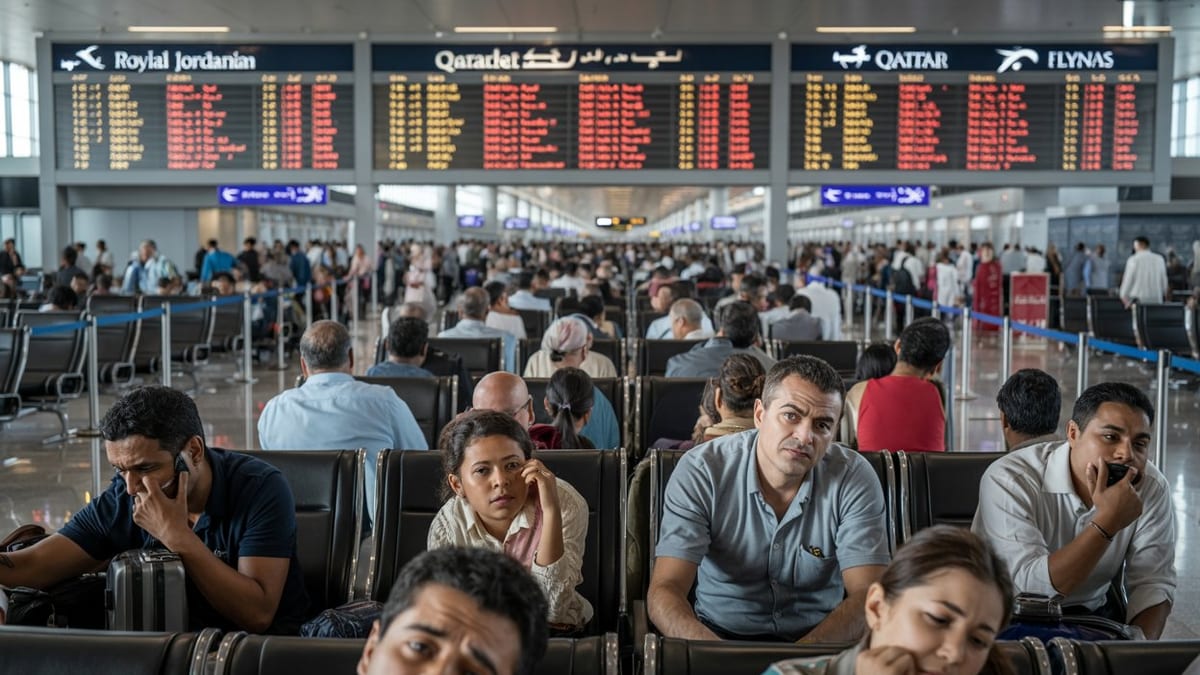
For travelers, the statistics on delayed and canceled flights translated into crowded concourses, tense lines at customer service desks, and uncertainty about when they would reach their destinations. Many passengers found that a delayed first leg from Houston would cause them to miss tightly timed connections in cities like New York or Chicago, forcing rebookings onto later flights that were themselves heavily subscribed.
Some travelers remained on board aircraft that had pushed back from the gate but were unable to depart promptly because of congestion in taxi queues or ground holds. Others spent long stretches in terminal seating areas, watching departure boards update repeatedly as airlines adjusted departure estimates.
Families and international passengers connecting through Houston faced particular strain, as visa rules, hotel availability, and the timing of onward long haul flights left limited flexibility. Travelers heading to Toronto or Mexico City who missed their original flights sometimes needed to stay overnight or accept routings through other hubs to complete their journeys.
Although airlines provided rebooking assistance and, in some cases, meal or hotel vouchers in line with their policies, the day’s events at Houston Bush Intercontinental highlighted again how quickly disruptions at a single major hub can ripple through the global air travel system, affecting passengers far beyond Texas.