


More news on this day
South Africa is accelerating visa reforms and expanding air connectivity as it seeks to tap fast-growing tourism demand from Global South markets, with new digital entry systems and long-haul routes expected to lift arrivals in 2026 and beyond.
Get the latest news straight to your inbox!
Visa Overhaul Puts Growth Markets in Focus
Publicly available information shows that South Africa has embarked on a broad reform of its visa regime, with tourism and investment identified as key beneficiaries. Policy documents linked to the Operation Vulindlela economic reform agenda describe the visa system as a priority area for modernization, with the aim of reducing red tape for visitors and skilled workers while maintaining security standards.
According to government briefings on the reform process, measures include simplifying visitor visa requirements, standardising decision-making across missions abroad and accelerating processing times. Industry bodies have welcomed these steps as a shift toward a more predictable and market-friendly regime, arguing that a less cumbersome system is critical if South Africa is to compete effectively with destinations in the Middle East and Asia for long-haul travellers.
Tourism planning documents for the 2024/25 and 2025/26 financial years highlight strong growth potential from major Global South economies such as China, India, Brazil and Nigeria. These markets are seen as increasingly important for diversifying South Africa’s visitor base beyond traditional Western sources and for smoothing seasonal demand, as many of these countries’ peak holiday periods do not coincide with the Northern Hemisphere summer.
Analysts note that the shift comes as Africa’s tourism industry experiences a broad rebound. International rankings for 2024 and 2025 indicate that the continent has recovered a large share of pre-pandemic arrivals, with South Africa consistently positioned among the top destinations in Africa and the Indian Ocean region by international travel publications.
Electronic Travel Authorisation and Remote-Work Visas
A central pillar of the new regime is the rollout of an Electronic Travel Authorisation, or ETA, which is being introduced in phases. Information released by the Department of Home Affairs indicates that the system went live initially for select categories of visitors and is intended to become the main online gateway for tourists from countries that still require visas.
Officials have described the ETA as a tool to remove historical bottlenecks such as paperwork-heavy applications and in-person interviews at consulates. Early indications from pilot phases suggest that the digital platform reduces processing times and allows authorities to pre-screen travellers before arrival. Once fully scaled, the ETA is expected to cover a wide range of source markets, particularly in Asia, the Middle East and Latin America, where physical South African missions may be few and far between.
In parallel, new provisions for remote-working visitors have been created following the publication of updated immigration regulations. According to publicly available notices and industry commentary, the remote-work visa is designed for foreign professionals who earn income from outside South Africa but wish to live in the country for extended periods. Tourism stakeholders argue that these visitors can provide a valuable, higher-spending segment that helps support airlines, accommodation providers and local hospitality businesses year-round.
Strategic plans released by South African Tourism for the 2025 to 2030 period underline the objective of capturing longer-stay digital nomads and repeat visitors from the Global South. By combining remote-work visas with streamlined entry procedures, planners hope to strengthen South Africa’s appeal relative to regional competitors pursuing similar policies.
Targeted Visa Easing for African and Emerging Markets
South Africa’s approach also includes targeted visa relaxations aimed at strengthening ties with key African and emerging-market partners. Regional tourism planning documents confirm that Kenya and South Africa implemented reciprocal visa-free arrangements for short stays in 2023, a move that has been framed as part of wider efforts to boost intra-African travel and trade.
Further steps have been taken to ease travel from major African economies. Public statements in late 2024 referenced a revised visa regime for Nigerian travellers, including multi-year, multiple-entry options and streamlined document submission processes. Observers see these changes as particularly significant for business and leisure flows, given Nigeria’s large population and growing middle class.
In Europe, the Department of Home Affairs recently expanded visa-free entry to several Central and Eastern European countries, including Bulgaria, Lithuania and Slovakia, for stays of up to 90 days. Sector associations note that this follows earlier exemptions for states such as Croatia, Hungary and Romania, gradually widening South Africa’s pool of visa-free visitors and signalling a more open stance toward emerging European markets.
Combined with the ETA, these targeted concessions are viewed as part of a broader pivot toward the Global South and non-traditional markets. Tourism strategists argue that such diversification reduces reliance on a narrow set of Western economies and makes the sector more resilient to economic shocks or policy changes in any single region.
Air Connectivity Surge Boosts South-South Flows
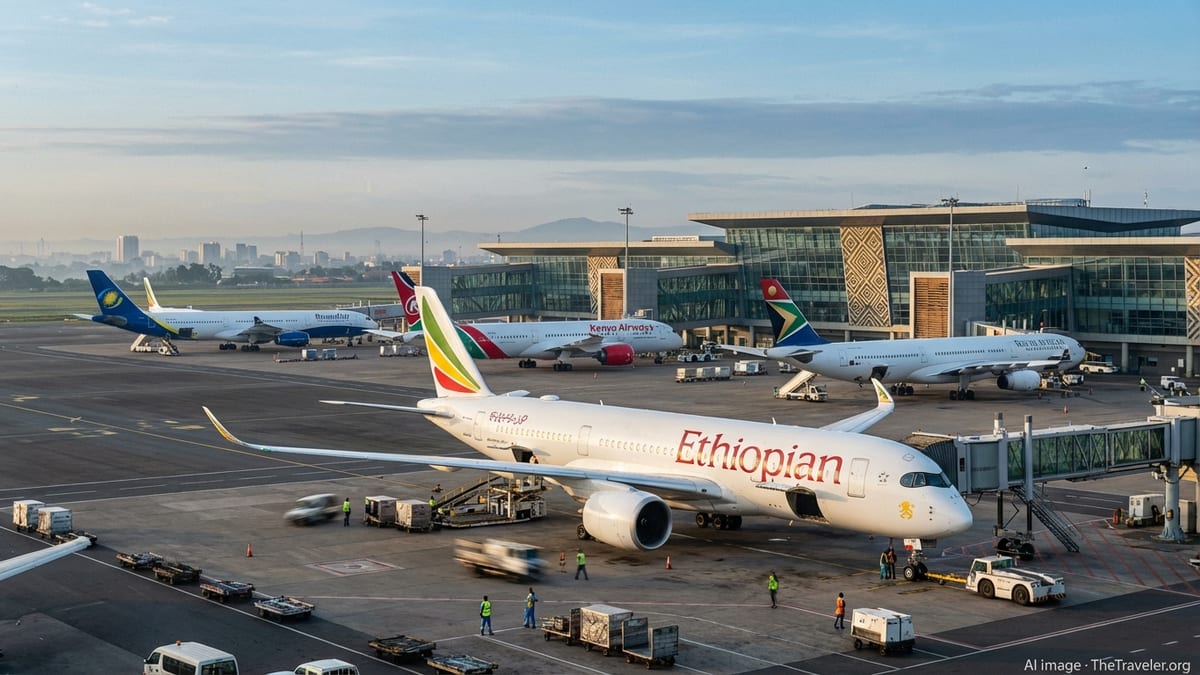
Alongside visa reforms, South Africa’s international air connectivity is undergoing a notable reshaping, with a particular emphasis on routes linking Johannesburg and Cape Town to other Global South hubs. South African Airways has gradually rebuilt its long-haul network, resuming flights to São Paulo in Brazil in late 2023 before relaunching its Johannesburg to Perth service in April 2024.
Airline schedules published for the 2025 and 2026 northern winter seasons indicate that South African Airways plans to increase frequencies on the São Paulo route, effectively doubling capacity on some rotations. Aviation analysts suggest that this growing South Atlantic corridor could serve both point-to-point leisure traffic and connecting passengers from other parts of Latin America heading to Southern Africa.
Industry reports also highlight increased competition and capacity from Gulf and African carriers, which provide one-stop links between South Africa and markets such as India, Southeast Asia and the Middle East. As these airlines add frequencies or deploy larger aircraft, travel from cities including Mumbai, New Delhi and key Gulf hubs becomes more accessible, especially for price-sensitive tourists.
Tourism strategists see these network changes as critical to unlocking South-South travel flows. With more non-stop or single-stop options linking Global South cities, travellers are less dependent on European hubs, which historically dominated traffic between Africa, Asia and Latin America. This shift supports South Africa’s ambition to position itself as a convenient entry point to the wider Southern African region.
Tourism Outlook: Competition and Capacity Constraints
Despite the positive momentum, analysts caution that South Africa faces stiff competition from other Global South destinations pursuing similar strategies. Countries such as Kenya, Rwanda and Namibia have also simplified visa regimes or introduced electronic travel authorisations, while Gulf hubs continue to invest heavily in aviation and tourism infrastructure.
Domestic constraints may also affect how quickly South Africa can capitalise on growing demand. Sector reports regularly point to issues including electricity supply disruptions, infrastructure backlogs and skills shortages in hospitality. Tourism planning documents emphasise the need for coordinated investment in airports, border facilities and visitor services to ensure that rising arrivals translate into sustainable jobs and revenue.
Nevertheless, multiple data sources indicate that international arrivals to South Africa have trended upwards since 2023, with 2024 passenger numbers at ports of entry approaching or surpassing pre-pandemic levels. Forecasts prepared for the 2024/25 and 2025/26 periods project further gains, particularly from Asian and African markets, if visa and air-connectivity reforms continue on schedule.
Observers argue that the combination of an expanded visa-free list, the phased rollout of the ETA system, new remote-work options and restored long-haul routes gives South Africa a rare opportunity to capture a larger share of global tourism growth originating in the Global South. The extent to which this potential is realised will depend on consistent policy implementation and the ability of the wider economy to support a growing visitor base.