


More news on this day
A Delta Air Lines Boeing 737-900 operating a scheduled service from New York LaGuardia to Miami diverted to West Palm Beach for an emergency landing following a midday departure, according to early operational data and flight-tracking reports.
Get the latest news straight to your inbox!
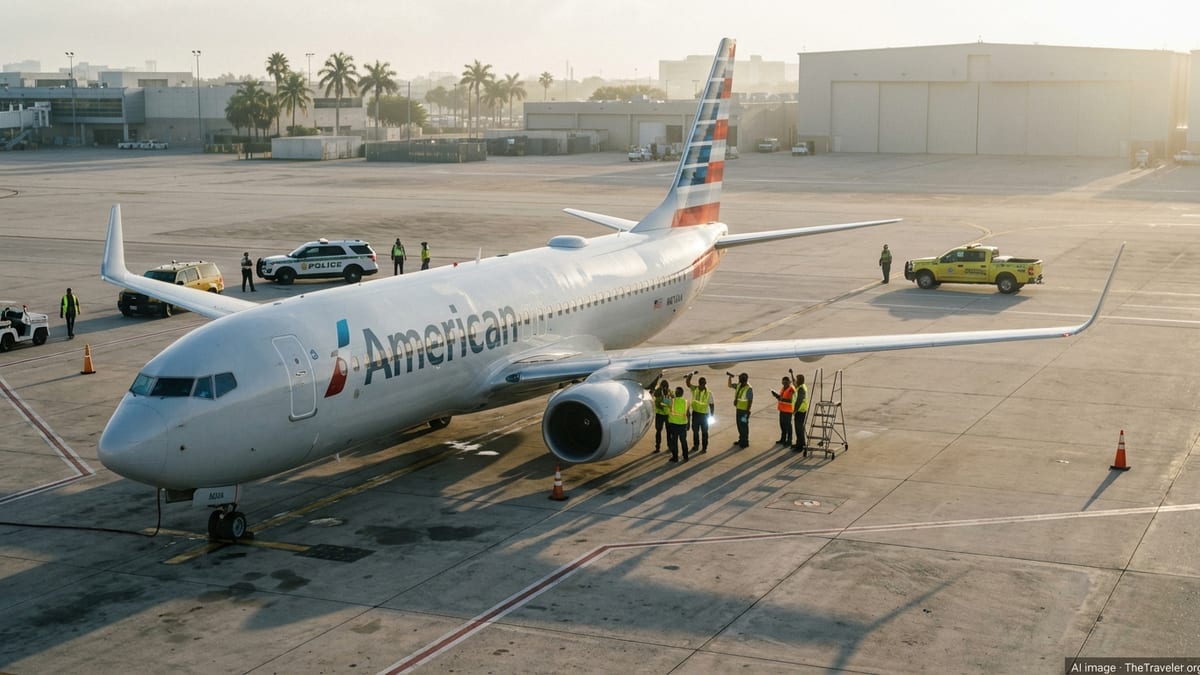
Midday LaGuardia Departure Ends in Unscheduled Stop
The Delta flight, listed as DL2300 on operational schedules, departed New York LaGuardia around the middle of the day on its regularly timetabled route to Miami International Airport. The sector is one of the busiest domestic corridors in the United States, linking the New York metropolitan area with South Florida’s tourism and cruise gateway.
Shortly after departure, tracking data shows the Boeing 737-900 following its usual southbound routing along the East Coast before the crew initiated a diversion toward Palm Beach County. Publicly available flight information indicates that the aircraft descended from cruise earlier than planned and lined up for an approach into Palm Beach International Airport rather than continuing on to Miami.
Reports indicate that the jet landed safely at West Palm Beach, where it taxied to the terminal area and passengers were brought to the gate. Initial information does not point to any serious injuries among those on board, and there are no confirmed accounts of structural damage to the aircraft.
As of the latest update, Delta had not yet published a detailed account of the circumstances surrounding the diversion, and the precise nature of the in-flight issue remains under review by the airline and aviation safety databases.
Early Indications on the Nature of the Emergency
While specific technical details have not been formally outlined, early operational references suggest that the crew declared an in-flight emergency as a precaution while en route to Miami. Diversions of this type can stem from a wide range of triggers, including indications in the cockpit, cabin environment concerns, or medical issues requiring urgent ground access.
Publicly accessible tracking feeds show a controlled descent and approach profile consistent with a managed diversion rather than a high-speed, last-minute return. The Boeing 737-900 is designed to continue flying safely following the loss or degradation of many systems, and standard operating procedures typically give flight crews several options for selecting a suitable alternate airport.
According to published coverage of similar recent events on Delta services, precautionary diversions often result in safe landings followed by detailed engineering inspections at the diversion airport. In many cases, passengers are rebooked on onward services once the aircraft is inspected and local ground handling arrangements are in place.
For this latest LaGuardia to Miami incident, there has been no indication in publicly available information of smoke, fire, or runway overrun, factors that can indicate a more severe emergency scenario. Instead, the flight path suggests an orderly rerouting into West Palm Beach, which offers a long primary runway and established facilities for handling large domestic jets.
Why West Palm Beach Became the Diversion Choice
West Palm Beach’s Palm Beach International Airport is a frequent alternate for traffic destined for Miami and Fort Lauderdale, particularly when weather, congestion, or operational issues affect the larger South Florida airports. The field lies a relatively short distance north of Miami, making it a practical option for aircraft already committed to the region.
Aviation analysts often note that pilots weigh several variables when selecting a diversion field, including runway length, current weather conditions, available emergency services, and maintenance support for the operating airline. Palm Beach International routinely receives mainline jets from major U.S. carriers and hosts regular Delta operations, making it a logical choice for a Delta 737-900 needing to cut its journey short.
For passengers, a diversion to West Palm Beach typically results in additional ground travel or a new connecting flight to reach Miami. Depending on aircraft availability and timing, airlines sometimes dispatch replacement aircraft or arrange bus transfers between South Florida airports to complete disrupted journeys.
In this case, scheduling data indicates that subsequent Delta services in the New York–South Florida corridor continued to operate, suggesting that the carrier absorbed the disruption within its broader network while the diverted aircraft awaited inspection and clearance.
Passenger Experience and Operational Follow-Up
Early passenger accounts shared with travel and aviation outlets describe a flight that initially appeared routine before the captain informed those on board of a diversion and unscheduled landing at West Palm Beach. Reports indicate that the cabin remained orderly and that crew members carried out standard safety briefings associated with precautionary landings.
Based on publicly reported experiences from similar recent Delta incidents, passengers on diverted flights are typically offered meal vouchers, rebooking assistance, and, when necessary, hotel accommodation if onward travel cannot be completed the same day. The extent of support often depends on the cause of the disruption, local time of arrival, and available seat capacity on later flights.
For airport operations teams in West Palm Beach, an unexpected mainline arrival from New York bound for Miami can require rapid coordination among ground handlers, security staff, and customer-service agents. Standard practice involves positioning air stairs or jet bridges, organizing gate space, and ensuring that luggage and connecting travel arrangements are managed as smoothly as possible.
As with all unscheduled landings classified as emergencies or precautionary events, the occurrence is expected to be logged in aviation incident databases, where further technical details may emerge following internal reviews and any subsequent maintenance findings.
Context: A Travel Season Under Close Scrutiny
The diversion comes during a period of heightened attention on U.S. airline reliability, with carriers managing strong travel demand alongside tight aircraft and crew availability. New York to Miami is a cornerstone leisure and business route, and any irregular operations on this corridor draw particular interest from both travelers and industry observers.
Published coverage of recent Delta events, including emergency returns and weather-related diversions across the network, has highlighted the complexity of decision-making on the flight deck when faced with abnormal indications. Flight crews are trained to prioritize safety over schedule, with diversions viewed as a conservative and expected response under many scenarios.
Aviation data firms tracking irregular operations note that, despite the visibility of such cases on social media and flight-tracking platforms, emergency landings remain a small fraction of overall departures in the United States. The vast majority of flights between LaGuardia and Miami complete their journeys without significant incident.
Further updates on the DL2300 diversion are likely to focus on engineering inspections of the aircraft, any necessary component replacements, and how quickly the jet returns to commercial service. Travelers booked on upcoming Delta flights in the New York–South Florida market are generally advised, in published guidance, to monitor their reservations and airline notifications but are not being warned of systemic safety issues related to this specific event.