


Australia or New Zealand. Two dream destinations in the same corner of the world, but with very different personalities. If you are planning a big trip to the South Pacific and only have time or budget for one, choosing between them can feel surprisingly hard. This guide breaks down who each country suits best, from road trippers and food lovers to hikers, families, and first time long haul travelers.
Get the latest updates straight to your inbox!
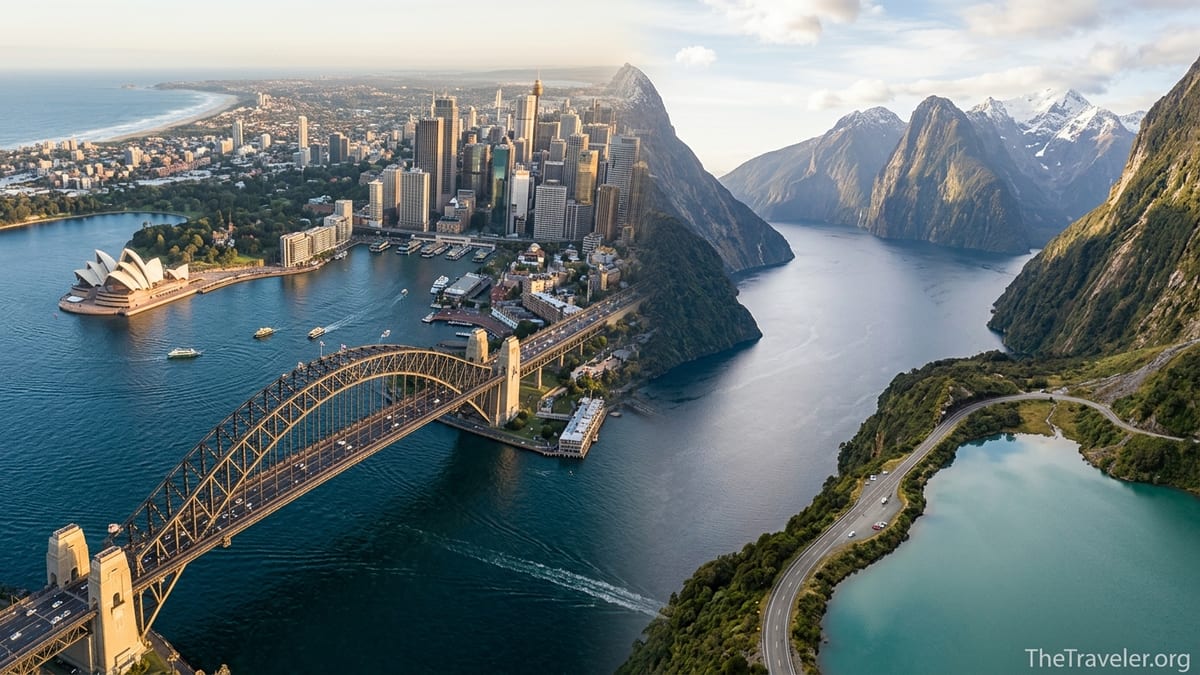
Big Picture: How Australia and New Zealand Feel on the Ground
Australia feels huge, sunny, and bold. Distances are long, cities are big and multicultural, and the landscapes can switch from glamorous beaches in Sydney to red desert around Uluru in a single internal flight. New Zealand, by contrast, feels compact and intensely scenic. You can land in Auckland, and within a few hours be walking black sand beaches, touring Hobbiton, or soaking in volcanic hot pools around Rotorua.
For many travelers, Australia works best if you like major cities with layered food scenes and want iconic sights such as the Sydney Opera House, the Great Barrier Reef, and the Great Ocean Road in a single trip. New Zealand tends to fit visitors who are happiest outdoors, with a camera or hiking boots always within reach, and who prefer quieter towns such as Queenstown or Wanaka over megacities.
Time also matters. With two weeks, most visitors to Australia pick just one or two states, for example New South Wales and Queensland, or Victoria and South Australia. In the same period in New Zealand you can realistically cross both islands by rental car or campervan, linking Auckland to Queenstown while seeing glowworm caves, lakes, and fjords on the way.
Landscapes and Outdoor Experiences: Beaches vs Alpine Drama
If your perfect day involves warm water and long sandy beaches, Australia is usually the better fit. The classic east coast route between Sydney and Cairns strings together places like Byron Bay, the Gold Coast, and the Whitsundays, where you can join a day cruise out to Whitehaven Beach or the Great Barrier Reef. In shoulder seasons such as April or October, sea temperatures around Queensland are usually comfortable enough for long snorkel sessions without getting chilled.
New Zealand has beaches, particularly around the Coromandel and Northland, but its standout landscapes are alpine. Around Queenstown and Wanaka you get jagged peaks, glacier fed lakes, and in Fiordland National Park, the sheer walls of Milford Sound rising almost vertically from the water. A full day coach and cruise trip to Milford Sound from Queenstown typically runs in the range of about 180 to 300 New Zealand dollars per adult depending on operator and inclusions, which gives a good sense of how much a marquee New Zealand nature day can cost in 2026.
For active travelers, both countries deliver, but in different ways. In Australia, you might spend a morning surfing at Bondi, then hike the Bondi to Coogee coastal path, or tackle sections of Tasmania’s Overland Track if you have more time. In New Zealand, classic hikes are front and center. The Tongariro Alpine Crossing is a long, challenging day walk past craters and emerald lakes, while shorter trails around Lake Tekapo or Queenstown give you big mountain views in two to three hours.
Cities, Culture, and Food: Big Buzz or Small Town Charm
City lovers usually lean toward Australia. Sydney and Melbourne in particular offer dense neighborhoods, world class dining, and a steady calendar of festivals and sport. In Sydney, you can spend a day riding ferries across the harbor, stopping at Barangaroo for modern dining, then finish with a show inside the Opera House. Melbourne appeals to travelers who like laneway cafes, street art, and serious coffee culture in neighborhoods such as Fitzroy and Collingwood.
New Zealand’s cities are smaller and more low key. Auckland sprawls but feels relaxed, with harbor suburbs that have a village vibe and easy ferry links to wine soaked Waiheke Island. Wellington is compact and creative, with Te Papa museum giving useful context on Maori history and New Zealand’s natural world. Queenstown is technically a town, but it functions as a lively resort hub with more bars, restaurants, and tour desks than its size suggests.
Food scenes differ too. Australia’s larger immigrant communities mean you can eat Vietnamese in Cabramatta, Lebanese in western Sydney, Greek in Melbourne’s Oakleigh, and modern Australian tasting menus in central business districts on the same trip. In New Zealand, you will find excellent seafood, lamb, and wine powered restaurant menus, especially around Hawke’s Bay and Central Otago, but there is less sheer variety once you leave Auckland and Wellington. Craft beer and coffee culture are strong in both countries.
Adventure, Wildlife, and Road Trips
Australia is ideal if wildlife is high on your wish list. On a typical east coast itinerary you might snorkel or dive with marine life on the Great Barrier Reef, meet koalas and kangaroos in wildlife parks near Brisbane or Adelaide, and, if you head inland, see red kangaroos and wedge tailed eagles across the outback. Short domestic flights, such as between Sydney and Melbourne, are frequent and often competitively priced when booked early, which makes stringing together far flung experiences relatively straightforward.
New Zealand specializes in soft and not so soft adventure. Queenstown brands itself the adventure capital, and it largely lives up to the name. In peak season it is normal to see visitors booking jet boat rides on the Shotover River, bungee jumps off the Kawarau Bridge, and winter ski passes at the Remarkables within the same week. Day tours combining a coach journey and cruise through Milford Sound are among the most popular big ticket outings from Queenstown.
For road trip fans, both countries are exceptional, but with different flavors. In Australia, a classic loop might be the Great Ocean Road from Melbourne, where you hug the coastline to see the Twelve Apostles and stay in small towns like Lorne or Apollo Bay. In New Zealand, a similar highlight is driving from Queenstown to Te Anau and on to Milford Sound, where the road winds past mirror lakes, beech forest, and avalanche chutes before reaching the fjord. The key difference is distance. Australian drives can take an entire day between major sights, while New Zealand often rewards you with new scenery every 30 minutes.
Budget, Transport, and Trip Logistics
Both Australia and New Zealand are high cost destinations compared with much of Asia or parts of Europe, but how you travel will change the bottom line. In Australia’s big cities, a midrange hotel in central Sydney or Melbourne often sits in the range you would expect in major North American or Western European capitals. Domestic flights, on the other hand, can be good value if you book early and travel light, which helps you cover long distances in a short vacation window.
In New Zealand, accommodation outside peak periods can sometimes be slightly easier on the wallet, especially in smaller towns. However, activity heavy itineraries add up quickly. An 8 to 12 hour Milford Sound coach and cruise day from Queenstown often runs into the low to mid hundreds of New Zealand dollars per adult depending on whether lunch, glass roof coaches, or extra scenic stops are included. Multiply that by a couple or a family and you are looking at a significant single day spend, particularly if you add other big name activities like helicopter flights or glacier hikes elsewhere in the trip.
Transport style is another differentiator. In Australia, most visitors combine flights and regional drives, perhaps flying from Sydney to Cairns then renting a car for a few days around Port Douglas and the Daintree Rainforest. In New Zealand, self driving or renting a campervan is almost the default for independent travelers, letting you stop at lakeside lookouts or small vineyards without fixed schedules. Buses and small group tours do exist, but they are less frequent outside key tourist corridors than the web of domestic flights in Australia.
When to Go and How the Seasons Shape Your Trip
Because both countries sit in the Southern Hemisphere, their seasons are flipped compared with North America and Europe. December to February is high summer, which means warm beach days in Australia and crowded hiking trails and lakeside towns in New Zealand. If your dream is snorkeling on the Great Barrier Reef or enjoying long evenings in Sydney, planning for late spring or early summer can help you sidestep peak holiday crowds while still getting reliable weather.
New Zealand’s peak season for classic scenic drives and outdoor adventures runs roughly from November through March, especially in the South Island. Queenstown and Wanaka can be especially busy during school holidays, which pushes up prices for accommodation and popular tours such as Milford Sound day trips. Shoulder seasons like October or April can still bring crisp, clear days and thinner crowds, though you should be ready for more changeable weather on alpine passes and boat cruises.
Winter behaves very differently between the two countries. In Australia, places like Sydney and Brisbane stay relatively mild, and the focus shifts to events and coastal walks rather than swimming. In New Zealand, June to September turns Queenstown into a ski resort hub as nearby mountains open their lift systems. If you specifically want snow sports combined with dramatic landscapes, a New Zealand winter itinerary might be more compelling than an Australian one.
Which Country Fits Different Travel Personalities
Think about how you naturally like to travel. If your ideal trip mixes culture, nightlife, and iconic city views with a few standout nature experiences, Australia often wins. Staying a few nights in central Sydney, you might spend a day exploring the Rocks and Circular Quay, another ferrying to Manly Beach, then fly north for a Great Barrier Reef day cruise and rainforest walk in Queensland to round things out.
If you feel most alive on hiking trails or scenic drives, New Zealand is hard to beat. You could fly into Auckland, work your way south through Rotorua’s geothermal valleys and Wellington’s harbor hills, then cross to the South Island for lake towns, glaciers, and a day on Milford Sound. Many of New Zealand’s best experiences, such as short hikes to waterfalls or alpine lookouts, are free apart from fuel and occasional parking fees, which can balance out the cost of marquee paid tours.
Families and cautious travelers might lean toward New Zealand for its slower pace, compact size, and generally straightforward driving conditions outside of winter. Solo travelers and city focused visitors often gravitate to Australia, where nightlife, museums, and public transport networks in places like Sydney, Melbourne, and Brisbane make it easy to fill days and evenings without renting a car.
The Takeaway
If you picture yourself moving between big harborside cities, hot beaches, and desert icons, Australia is likely your match. It rewards travelers who are comfortable with long internal flights, enjoy lively urban neighborhoods, and want to check off globally recognizable landmarks alongside wildlife and reef experiences.
If you imagine winding mountain roads, mirror calm lakes, and hikes that start 10 minutes from your motel, New Zealand will probably feel closer to your travel style. It suits visitors who are happiest outdoors, do not mind changeable weather, and prefer compact resort towns and national parks to skyscraper skylines.
In a perfect world you would do both on separate trips. If time or budget forces a choice, use your own habits as the deciding factor. List the moments that made your past travels unforgettable. If they mostly happened in cities and on busy beaches, start planning an Australian itinerary. If they happened on trails, at quiet lookouts, or on small boat cruises under towering cliffs, New Zealand is waiting.
FAQ
Q1. Is Australia or New Zealand cheaper for a two week trip?
Costs are comparable overall, but how you travel matters more than the country choice. City heavy itineraries in Australia can feel pricey for hotels and dining, while activity packed New Zealand routes with multiple paid tours and cruises quickly add up. Self driving, cooking some meals, and prioritizing a few big experiences helps keep either destination in check.
Q2. Which country is better for a first big international trip?
New Zealand often feels less intimidating because distances are shorter, towns are smaller, and driving is relatively relaxed outside winter conditions. Australia is just as welcoming but can feel more complex to plan since key sights are spread across several states, and you may rely more on domestic flights to link them.
Q3. Where should I go if I am mainly interested in beaches and warm water?
Australia usually wins for warm beach focused trips. The Queensland coast, parts of Western Australia, and New South Wales offer long sandy beaches and good swimming for much of the year. New Zealand has pretty beaches, especially in the North Island, but water temperatures are cooler and many travelers prioritize lakes and mountains instead.
Q4. Which is better for hiking and mountain scenery?
New Zealand is generally the stronger choice for concentrated hiking and alpine views. Trails near Queenstown, Wanaka, and Fiordland National Park offer dramatic mountain and fjord landscapes in relatively compact areas. Australia has excellent hiking too, particularly in Tasmania and the Blue Mountains, but distances between key areas are greater.
Q5. Can I visit both Australia and New Zealand in one trip?
Yes, but it works best if you have at least three weeks. Typical combinations include a week split between Sydney and the Great Barrier Reef, followed by one to two weeks driving through New Zealand’s North and South Islands. With less than three weeks, most travelers are happier choosing one country and exploring it properly.
Q6. Do I need to rent a car in Australia or New Zealand?
In Australia you can rely more on domestic flights and public transport within major cities, then rent a car briefly for regional side trips. In New Zealand, renting a car or campervan for most of your stay is common, as it lets you reach trailheads, smaller towns, and scenic stops that are not well served by public buses.
Q7. Which country is better for wildlife encounters?
Australia is the stronger choice if wildlife is a primary goal. You have a high chance of seeing kangaroos, koalas in sanctuaries, and rich marine life on the Great Barrier Reef. New Zealand has its own unique species, including native birds and marine mammals, but it does not offer the same density of iconic land animals that Australia does.
Q8. How do seasons affect choosing between the two?
For summer trips between December and February, both countries are attractive but also busy and more expensive. Shoulder seasons such as October or April often bring good weather and fewer crowds. If you are interested in skiing, New Zealand’s winter from June to September is the better match, while Australian cities remain relatively mild and more focused on cultural events.
Q9. Which destination is better suited to families with young children?
Both can work well, but New Zealand’s smaller scale and easy access to nature often appeal to families. Short drives between towns, lakeside playgrounds, and gentle walks make it simple to build kid friendly days. In Australia, families often base themselves in one city or coastal area and take day trips, rather than moving every night.
Q10. If I love nightlife and dining, which should I pick?
Australia is usually the better fit for nightlife and dining focused travel. Sydney and Melbourne in particular offer deep restaurant scenes, vibrant bar districts, and year round cultural events. New Zealand’s cities and resort towns have good food and a sociable atmosphere, but they are smaller and naturally quieter once you move away from peak holiday weeks.