


More news on this day
Australia has tightened its travel advice for Kuwait in line with guidance for Iran, Qatar, Bahrain and the wider Middle East, following renewed missile and drone strikes across the region that have disrupted airspace, damaged airports and injected new uncertainty into travel plans.
Get the latest news straight to your inbox!
Fresh Missile Strikes Renew Focus on Gulf Security
Recent exchanges of fire involving Iran and the United States have again placed Gulf states under the spotlight, with reports of Iranian missiles and drones targeting Bahrain, Kuwait and Qatar as part of a wider conflict that has unfolded since late February 2026. News agency coverage and regional statements describe repeated attacks on military-linked facilities and critical infrastructure, as well as interceptions of incoming fire over several countries.
Publicly available reporting on the 2026 Iran war notes that Kuwait International Airport and airports in Qatar and Bahrain have all experienced disruption or damage at various stages of the conflict, with flights grounded or diverted and airspace temporarily closed. Aviation hubs in these states are central to global traffic between Europe, Asia and Africa, magnifying the wider impact of any strike or closure on travelers worldwide.
Regional governments and foreign ministries in the Gulf have issued a series of public statements condemning the latest attacks and highlighting the risk to civilian populations. At the same time, foreign travel advisories from partner countries have been updated repeatedly in response to the evolving security picture, particularly where airports or air routes are considered at heightened risk of further attack.
Australia Raises Alarm on Airspace and Flight Disruptions
Australia’s Smartraveller platform has recently updated advice for multiple Middle Eastern destinations, warning that military conflict in the region may cause travel disruptions including airspace closures and flight cancellations. Destination pages for Kuwait, Qatar and Bahrain all caution that travel plans can be affected at short notice, and that travelers should monitor airlines and local developments closely.
According to the latest consolidated destination list, Australia currently advises people to reconsider their need to travel to Bahrain, Kuwait and Qatar, while maintaining a higher “do not travel” level for Iran. A separate global update on the impacts of conflict in the Middle East highlights that airspace closures, diversions around high risk corridors and sudden changes to airport operations have become recurring features of the current crisis.
Australia’s foreign minister also recently announced that advice levels for Bahrain, Kuwait, Qatar and the United Arab Emirates had earlier been reduced from “do not travel” to “reconsider your need to travel,” reflecting a momentary easing in tensions. However, subsequent strikes and counterstrikes have brought renewed concern that conditions can deteriorate quickly, prompting fresh warnings that the security environment remains volatile and unpredictable.
Kuwait Aligns With Regional Risk Profile
Within this shifting landscape, Kuwait’s risk profile for foreign visitors has moved closer to that of its Gulf neighbors. Australia’s country-specific advice for Kuwait now notes that regional military conflict may cause travel disruptions, including possible airspace closures. Separate international assessments describe how Iran has previously targeted Kuwait International Airport and other locations in the country during the current conflict, causing severe operational disruption and raising concerns about future attacks.
Security analysts’ summaries of recent months point to Kuwait’s role as a logistical hub and host to foreign military assets as a key factor in its exposure to missile and drone activity. That position, shared in different ways with Bahrain and Qatar, has meant that all three states are treated with similar caution in several governments’ travel frameworks, despite variations in the intensity and frequency of attacks reported in open sources.
For travelers, this alignment translates into comparable guidance across the Gulf’s northern tier. International advice generally emphasizes that nonessential travel should be carefully reconsidered, that itineraries should remain flexible to accommodate sudden flight changes, and that individuals should be prepared for heightened security procedures at airports and around key infrastructure.
Iran and Qatar: Heightened Warnings and Complex Air Corridors
Iran occupies a distinct category in Australian guidance, with Smartraveller listing the country as “do not travel” and citing ongoing military conflict, internal security risks and the possibility of further attacks on critical infrastructure. Reports indicate that Iran’s own airports and airspace have come under strain as part of the wider conflict, adding additional complexity to any journey that might otherwise have relied on Iranian routes.
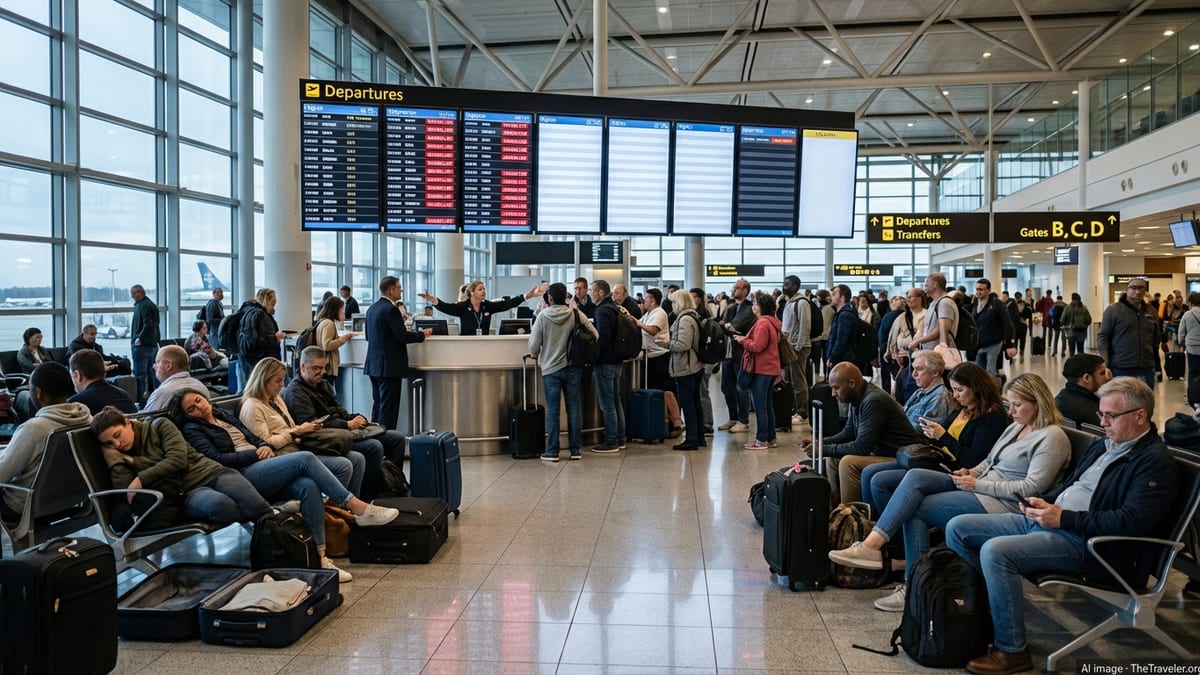
Qatar, by contrast, continues to function as a major aviation hub while still facing the residual risk of missile activity and airspace disruption. Coverage of the conflict details periods when Qatari airspace was closed or restricted, leading to mass flight cancellations, diversions and large numbers of travelers stranded in Doha. Although many services have since resumed, travel advisories consistently warn that conditions can change rapidly if tensions escalate or if new strikes occur in the vicinity of major airports.
Airlines operating through Qatar and neighboring states have repeatedly adjusted schedules and flight paths to avoid perceived high risk corridors, sometimes adding hours to long haul routes. Travelers transiting through Doha, Kuwait City or Manama are therefore urged in public guidance to maintain close contact with carriers, monitor airport announcements and plan for possible overnight delays, missed connections or rerouting through more southerly or alternative hubs.
Bahrain and Wider Gulf Impacts for International Travelers
Bahrain, home to the headquarters of a major foreign naval fleet, has also been repeatedly mentioned in public reporting on Iranian missile and drone activity throughout 2026. Travel advisories and security assessments describe Bahrain International Airport as having faced severe disruption at various points, with aviation operations reduced or suspended while authorities assessed the threat to overflying aircraft.
The clustering of risk across Bahrain, Kuwait and Qatar has encouraged many travelers and corporate travel planners to view the northern Gulf region as a single, interconnected airspace environment. Disruption or attack in one state can quickly ripple across to its neighbors, as airlines reroute around danger zones or pause services entirely pending further assessment of missile and drone patterns.
Australia’s broader Middle East travel guidance reflects this interconnected reality, urging travelers to stay informed about the status of land, sea and air border crossings and to consider leaving affected countries while commercial flights remain available and it is safe to reach the airport. For those who proceed with travel to the region, official advice stresses the importance of comprehensive travel insurance, contingency planning and regular monitoring of both airline communications and local news reports.
With conflict dynamics still evolving and new missile incidents reported in recent days, the outlook for air travel across the Gulf remains fragile. Kuwait’s alignment with the advisory levels already applied to Iran, Qatar and Bahrain underlines the extent to which security risks and operational uncertainty have become defining features of the region’s travel landscape in 2026.