


More news on this day
Rail passengers travelling through Stratford in east London face extended disruption after a fire next to the tracks damaged signalling and telecoms equipment, with operators warning that reduced services and delays are expected to continue into Monday morning.
Get the latest news straight to your inbox!
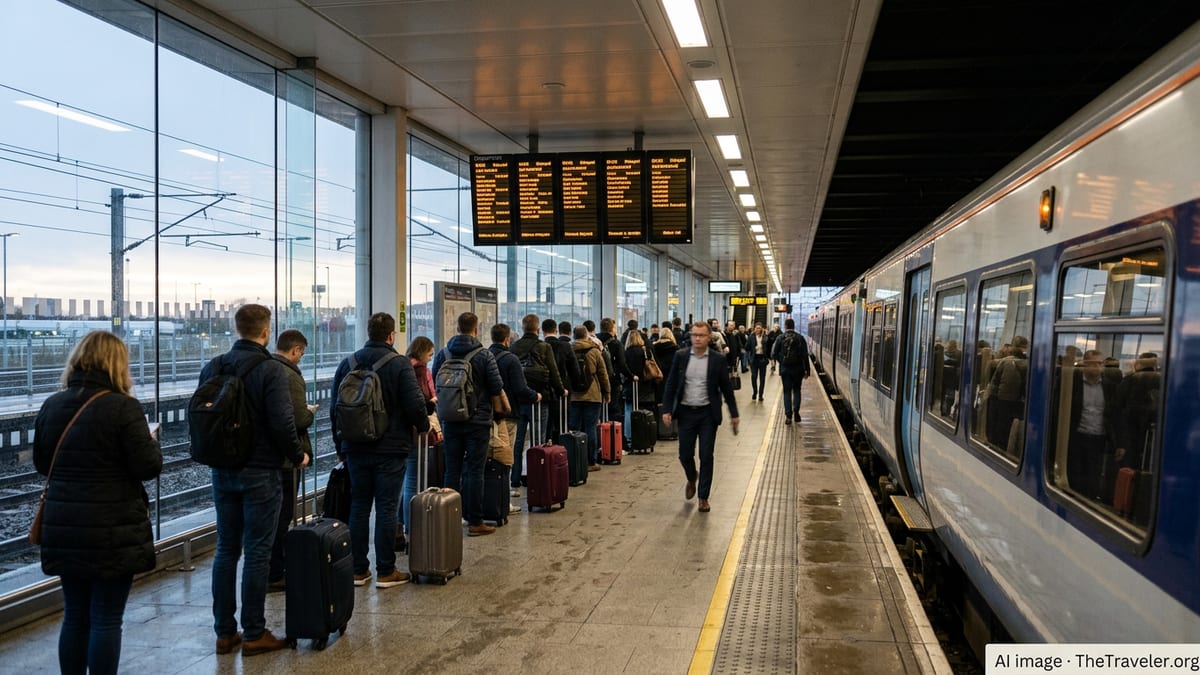
Trackside blaze triggers major weekend disruption
Services through Stratford were severely disrupted after a fire broke out beside the railway on Saturday evening, affecting one of the capital’s busiest rail interchanges. Reports indicate that the blaze involved trees and vegetation close to the line, prompting the suspension of several services while emergency crews worked near the tracks.
According to publicly available information from rail operators and network managers, the incident caused extensive damage to lineside signalling and telecommunications infrastructure. This, rather than fire on the running rails themselves, is being cited as the main reason for the prolonged disruption window stretching into the start of the working week.
Stratford is a critical node in east London’s transport network, handling mainline services to and from London Liverpool Street, regional routes across Essex, London Overground trains and interchange with the Underground and the Elizabeth line. The concentration of services through a relatively constrained corridor means that any infrastructure failure in the area quickly ripples across multiple operators and routes.
By Sunday, some services were running again, but with reduced frequencies, short-notice cancellations and trains starting or terminating short of their usual destinations. Journey planners and station departure boards showed gaps in timetables, particularly on services linking London Liverpool Street with stations in Essex and east London suburbs.
Damage to signalling systems extends impact into Monday
Network updates published over the weekend indicate that the fire’s greatest impact has been on signalling and telecoms systems which control the safe movement of trains through the Stratford area. Repairs to this equipment are more complex than clearing debris from the lines, significantly extending the timeframe for a return to normal operations.
National rail status pages and operator service updates on Sunday advised that disruption was expected to continue into Monday morning, with some sources indicating a working estimate of around 06:00 for the completion of the most urgent repairs. That estimate, however, has been presented as indicative and subject to change as engineers assess the full extent of the damage on site.
Rail infrastructure in busy urban corridors such as east London relies on dense clusters of cables, trackside cabinets and junctions. When a fire affects this equipment, work often involves not only replacing damaged hardware but also testing and reconfiguring complex signalling logic before trains can safely operate at normal speeds and frequencies. This can take many hours even after the blaze itself is fully extinguished.
Published information from journey-planning services on Sunday evening showed ongoing speed restrictions and altered train paths in the Stratford area, further contributing to delays and reduced capacity. Some services were diverted away from the affected stretch where alternative routes were available, adding pressure to neighbouring lines and stations.
Routes and operators most affected by the Stratford incident
The disruption has particularly affected commuters and weekend travellers using services between London Liverpool Street and destinations across Essex and east London, including intermediate stops that rely on Stratford as a key interchange. Reports highlight repeated alterations to stopping patterns, with some trains omitting Stratford or turning back short of their planned terminus.
Greater Anglia services on the main line to Shenfield and beyond have seen notable disruption, with cancellations, extended journey times and overcrowding on the trains that are able to run. Publicly available operator updates describe a rolling pattern of changes, as control rooms adjust services in real time to accommodate restricted track capacity and ongoing engineering work around the damaged equipment.
London Overground routes linking Stratford with other parts of the network have also been affected, with some services experiencing delays or alterations to timetables. Passengers relying on these connections to reach Underground or Elizabeth line services at Stratford have been advised to check alternatives before travelling, as platform allocations and interchange times may be different from usual.
Because Stratford functions as a gateway between regional and urban transport, the knock-on effects have extended beyond the immediate rail corridor. Crowding has been reported at nearby stations on alternative routes as passengers adjust their plans, while road traffic around key interchange hubs has increased as some travellers switch to buses, taxis or private vehicles.
Advice for passengers as the Monday commute approaches
With disruption forecast to continue into Monday morning, rail users planning to travel through Stratford are being advised to allow extra time and to verify their journeys shortly before departure. Journey planners and real-time departure boards are being updated frequently as repaired sections of infrastructure are brought back into service and temporary timetables are refined.
Published travel information suggests that tickets are being accepted on some alternative routes and modes, though the exact scope of these arrangements varies by operator and time of day. Passengers undertaking essential journeys are encouraged to look for mainline services that avoid the most affected stretch where possible, or to consider Underground and bus options for part of their trip.
Those with flexible schedules may benefit from travelling later in the morning peak or avoiding the busiest periods entirely, especially if their trip relies on tight connections at Stratford. Some employers continue to support remote working arrangements, which may help to reduce pressure on the network while full repairs are completed.
Passengers delayed by cancellations or extended journey times are also being encouraged by consumer and transport advice outlets to keep records of their travel, such as tickets and screenshots of service alerts, in case they are eligible for compensation under delay or disruption schemes operated by individual rail companies.
Trackside fires highlight resilience challenges in hot, dry conditions
The Stratford incident adds to a growing list of recent rail disruptions linked to fires or heat-related problems near the tracks in the United Kingdom and elsewhere in Europe. While the precise cause of the Stratford fire is still the subject of local reporting and technical assessment, dry vegetation beside busy rail corridors is widely recognised as a recurring risk factor, especially in warmer months.
Transport commentators note that modern rail networks are increasingly exposed to a mix of climate-related and infrastructure challenges, from heat-damaged rails to trackside fires that threaten signalling and power systems. Concentrated nodes like Stratford, carrying high volumes of commuter, regional and urban services, are particularly sensitive to such incidents because there is limited redundancy and little spare capacity to absorb disruption.
Recent policy discussions around railway resilience have highlighted the importance of proactive vegetation management, upgraded cabling and the relocation or hardening of critical equipment where feasible. While many of these measures are already under way in parts of the network, incidents such as the Stratford fire underline the operational and economic costs when vulnerabilities remain.
As engineers work to restore full services into Monday and beyond, the episode is likely to feed into broader debates about long-term investment in Britain’s rail infrastructure. For passengers across east London and Essex, however, the immediate focus remains on navigating another day of altered timetables, busier trains and longer-than-usual journeys through one of the country’s busiest rail hubs.