


More news on this day
Typhoon Bavi has swept across northern Taiwan and China’s eastern seaboard, triggering widespread transport disruption, coastal closures and emergency measures that are complicating summer travel plans for domestic and international visitors.
Get the latest news straight to your inbox!
Storm Track Puts Key Tourism Hubs in Turbulence
According to regional meteorological centers, Typhoon Bavi passed north of Taiwan before making landfall in China’s eastern Zhejiang province late Saturday, where it was later downgraded to a strong tropical storm. The system has still brought intense rain, storm surges and powerful winds to densely populated coastal areas that serve as major gateways for tourism in East Asia.
Published coverage from Taiwan indicates that the storm’s outer bands lashed northern counties, including Taipei and Keelung, with heavy rainfall, strong gusts and coastal wave action. The conditions led to localized flooding, power outages affecting tens of thousands of households and temporary shutdowns of many public services in popular urban districts frequented by visitors.
On the Chinese mainland, government information services and regional media report that Zhejiang province, including the port cities of Taizhou and Wenzhou, bore the brunt of landfall. Large waves and high tides along the East China Sea have prompted shoreline restrictions in parts of Zhejiang and neighboring Fujian, while cities farther north such as Shanghai and Hangzhou prepared for heavy rain and disruptive winds as the weakened system moved inland.
Tourism analysts note that the timing of Bavi has proved particularly challenging, arriving during a busy period for regional travel, with cross-strait routes, onward connections to Northeast Asia and popular coastal resorts all affected to varying degrees.
Mass Flight Cancellations Across Taiwan and Eastern China
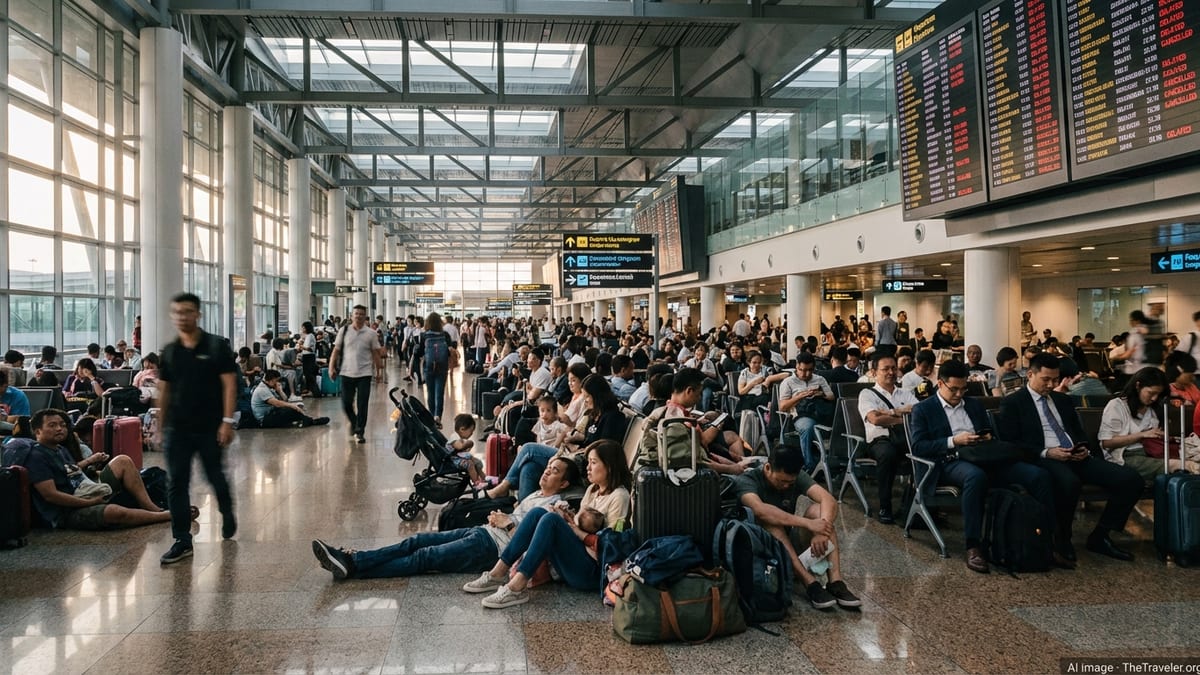
Air travel has been among the sectors most visibly hit. Taiwan’s transport data and local news outlets show that more than a thousand flights were canceled or rescheduled over Friday and Saturday, including domestic services and international routes linking Taipei with other Asian hubs. Taipei Songshan and Taoyuan airports both reported extensive disruption as airlines adjusted schedules in response to evolving forecasts.
Reports from Focus Taiwan describe at least 1,200 flight cancellations and delays, alongside a rolling wave of schedule changes covering the end of the week. Travelers on routes between Taiwan and cities such as Shanghai, Wuhan, Osaka, Okinawa and Bangkok faced last minute changes, and some carriers introduced limited-time fee waivers or free rebooking windows for affected tickets.
On the mainland side, coverage by regional media and international broadcasters indicates that airlines operating out of Zhejiang, Fujian and Shanghai canceled scores of flights as Bavi approached, with several airports warning of further disruption as the storm tracked inland. Carriers serving Taipei and Shanghai also issued dedicated travel alerts, offering rebooking or refunds for departures on 11 and 12 July and advising passengers to monitor flight status closely.
The cascading changes have rippled through regional and long haul itineraries. Travellers connecting through Taiwan or eastern China on routes between North America, Europe and Southeast Asia have faced missed connections, extended layovers and, in some cases, unexpected overnight stays while waiting for operations to normalize.
Ferries, Coastal Attractions and Island Getaways Shut Down
Beyond aviation, sea and coastal tourism has been severely curtailed. Taiwan’s maritime authorities and local media report that ferries linking the main island with offshore destinations, including Green Island, Orchid Island, Penghu, Matsu and Kinmen, were suspended as early as midweek, with at least a hundred sailings canceled on some days as conditions deteriorated.
These ferry routes are lifelines for small island communities and popular with domestic and foreign tourists seeking diving, surfing and beach holidays. As services shut down, thousands of travelers found themselves stranded or forced to cut trips short, with operators arranging emergency sailings before the worst of the weather and then suspending operations once sea conditions became unsafe.
Along China’s southeast coast, port authorities and tourism offices in Zhejiang and Fujian introduced similar restrictions. Public information from Chinese state and regional outlets describes the suspension of coastal sightseeing cruises, the closure of seafront promenades, and swimming bans on many beaches considered at risk from strong waves and rip currents.
In prominent urban destinations such as Shanghai, local media reports note that waterfront events, riverfront festivals and certain outdoor performances were canceled or postponed as precautionary steps. These measures, while temporary, effectively removed a number of marquee attractions from visitor itineraries across the weekend.
Evacuations, Emergency Measures and Urban Disruption
The human impact of Bavi’s passage has been significant. News agencies summarizing official figures from Zhejiang province report that nearly 1.7 million residents were moved from at risk areas ahead of landfall, including low lying coastal districts, islands and locations prone to landslides. In Taiwan, local coverage points to more than 14,000 people evacuated from vulnerable northern regions and outlying islands.
Emergency plans activated on both sides of the Taiwan Strait have included pre emptive closures of schools, partial suspension of public transport and rerouting of long distance rail services. Some cities in northern Taiwan implemented work and class suspensions for parts of Friday, leading to quieter streets and shuttered businesses in usually busy tourism districts.
Urban tourism has also been affected by secondary impacts such as flooding, fallen trees and localized power cuts. Imagery and video shared through media reports show toppled roadside trees in Zhejiang’s coastal cities and temporary street flooding in sections of Taipei and other northern municipalities. These issues have occasionally resulted in road closures and congestion, complicating airport transfers and intercity coach services.
While Bavi weakened after landfall, forecasters have warned that inland areas could still face flooding and landslides as the system’s remnants move west and north. Travellers heading into interior provinces of eastern China over the coming days are being advised through public bulletins to check local conditions before undertaking overland journeys.
Guidance and Safety Considerations for International Travellers
For international visitors already in the region or planning imminent trips, publicly available advisories from airlines, tourism boards and foreign ministries stress flexibility and caution. Travellers are being encouraged to verify the status of flights and ferries before leaving for airports or ports, to allow extra time for security and check in, and to prepare for potential last minute cancellations when warnings remain in effect.
Accommodation providers in affected areas, particularly along Taiwan’s east coast and on offshore islands, have begun offering flexible cancellation or rebooking policies, according to local tourism coverage and traveller forums. Visitors with pre paid tours or activities are advised to review contract terms and contact operators about rain checks or refunds if excursions have been called off for safety reasons.
Consular advisories for China and Taiwan typically recommend avoiding coastal sightseeing during and immediately after typhoons, steering clear of seawalls, piers and riverbanks where waves can be hazardous, and following locally issued guidance on temporary closures and restricted zones. Travellers are also urged to maintain access to offline maps and essential supplies in case of short duration power or connectivity outages.
Industry observers note that while regional aviation and ferry networks are adept at recovering after major storms, residual disruption can persist for several days, especially where aircraft and vessels are out of position. For those still planning to travel through Taipei, Shanghai or coastal airports in Zhejiang and Fujian in the coming week, flexible tickets, comprehensive travel insurance and contingency plans for alternative routings may help reduce the impact of any further weather related changes.