


More news on this day
As major wildfires continue to burn across parts of Europe during the busy northern summer, Australian travellers are being cautioned against a "big mistake" that could leave them both stranded and out of pocket: waiting until the last minute to organise flexible bookings and comprehensive travel insurance that actually covers natural disasters.
Get the latest news straight to your inbox!
Wildfires intensify during peak ‘Euro summer’ travel period
Europe is again grappling with severe wildfires during the height of the holiday season, with blazes reported across parts of Spain, France and the Mediterranean region. Published coverage indicates that tens of thousands of residents and tourists have faced evacuations or travel disruption as flames and smoke close in on popular resort areas and transport corridors.
The current fires are unfolding during late July, a period when Australians traditionally flock to Europe to escape the southern winter. Travel industry reports describe airports, highways and rail lines periodically affected as authorities divert services around fire grounds or shut routes when visibility and safety deteriorate.
European institutions have recently highlighted that wildfire risk on the continent is rising. A communication on integrated wildfire risk management released by the European Commission in March 2026 outlined how hotter, drier conditions and changing land use are contributing to longer and more intense fire seasons. A related recommendation adopted by European ministers in June urged member states to strengthen prevention and preparedness as systems are pushed to their limits.
For travellers, the practical impact is increasingly visible: smoky skies over major cities, detours on popular road trips and last minute changes to island-hopping itineraries. While many destinations remain open, the margin for disruption is narrowing as fire danger spikes.
The ‘big mistake’: leaving insurance and flexibility until it is too late
The central warning emerging from Australian consumer advocates and travel experts is that many holidaymakers are still buying travel insurance at the wrong time, or not reading what it actually covers. Recent analysis from comparison sites in Australia highlights that travellers often purchase insurance only a few days before departure, treating it as an airport errand rather than a core part of trip planning.
That timing can be a costly error. Insurers typically view wildfires and other natural disasters as “known events” once they are widely reported, meaning any new policy bought after that date may not cover cancellations or changes linked to those fires. Public guidance from major Australian brands sets out cut-off dates after which fire-related claims for particular regions are excluded for new policies.
Australia’s official Smartraveller service has also warned that travellers commonly misunderstand how advisories and insurance interact. Guidance produced with the Insurance Council of Australia notes that many people are unaware their policy might not cover travel to destinations with higher-level advisories, or may provide only limited benefits if they choose to go anyway. In the context of Europe’s wildfires, that can leave Australians exposed if conditions deteriorate after they have locked in non-refundable bookings.
Travel law information published by Australian state consumer agencies adds another layer of complexity. Refund rights after a natural disaster often depend on the fare conditions and any insurance purchased rather than on broad consumer law. In practice, that means travellers who buy the cheapest, least flexible tickets and delay insurance can find there is no safety net when fires force changes of plan.
European hotspots, smoke impacts and fast-changing local conditions
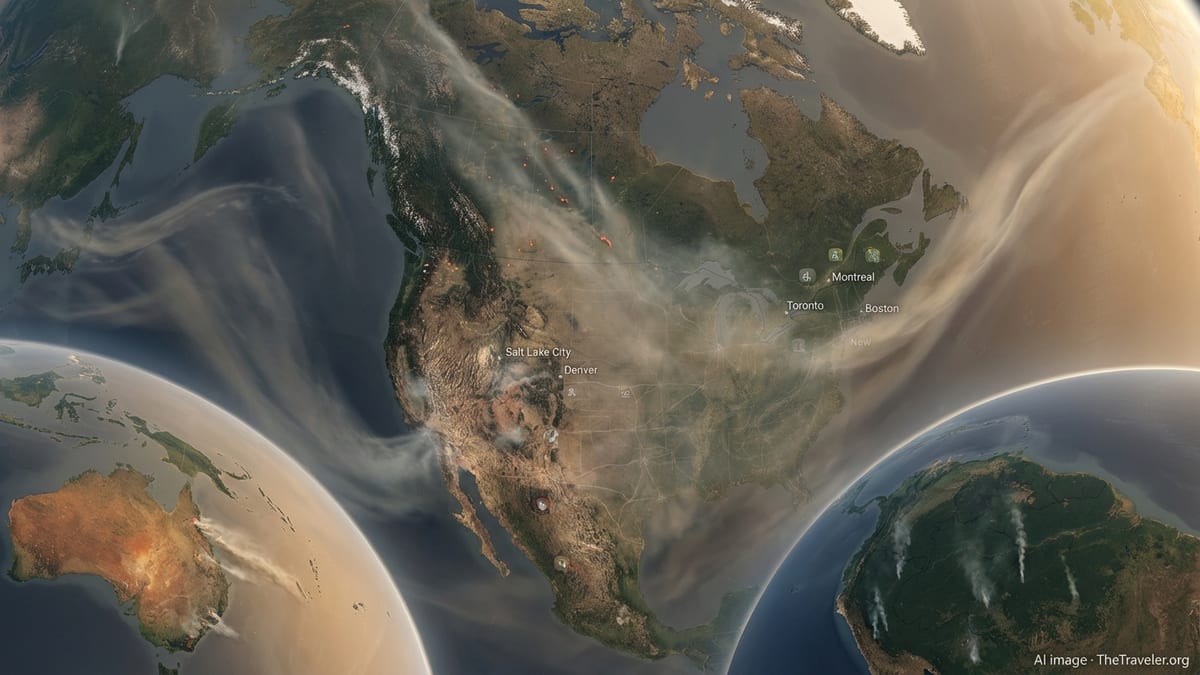
While images of advancing flames dominate news coverage, experts stress that smoke and heat can be just as disruptive for travellers. Research highlighted by European media shows that particulate pollution from wildfires can travel hundreds or even thousands of kilometres from the fire front, affecting cities far from the immediate danger zone and prompting health advisories for vulnerable people.
In Spain, France and Greece, emergency services and meteorological agencies have been issuing frequent bulletins as conditions shift. Air quality alerts, closure of popular hiking trails, and restrictions on outdoor activities are now common features of summer in fire-affected regions. Government travel advisories from several countries, including Australia, New Zealand and the United Kingdom, urge visitors to monitor local news and be prepared to adapt their routes at short notice when fire danger ratings climb.
Recent updates to official travel advice for Greece and other Mediterranean destinations emphasise that wildfires can start with little warning and spread quickly in high winds. Tourists are encouraged to follow instructions from local services, observe fire bans and stay alert to emergency notifications on their phones. Even without direct evacuation orders, travellers may find ferry schedules altered, coastal roads closed or popular islands temporarily difficult to reach when conditions escalate.
For Australians, the evolving situation can be confusing, especially when social media posts and viral images blur the line between genuine warnings and outdated or misleading content. Fact-checkers in the region have documented multiple examples of old or mislabelled fire photos being recycled and rebadged as current emergencies in Europe, Australia and North America, adding to uncertainty for people trying to decide whether to proceed with trips.
How Australian travellers are being advised to reduce their risk
Publicly available advice aimed at Australians heading overseas now routinely frames wildfire risk as a practical planning issue rather than a reason to abandon all travel. Smartraveller recommends that travellers carefully read policy documents before purchase, ensuring their insurance covers natural disasters, trip cancellation, medical treatment and evacuation if required.
Consumer advocates also encourage travellers to pay attention to the fine print around “known events,” cancellation cut-off times and requirements to follow official advisories. Policies may require travellers to act reasonably to minimise losses, such as accepting rebooked flights or alternative accommodation if offered, instead of insisting on full refunds for every change.
Flexible bookings are emerging as another key tool. Many airlines and accommodation providers now offer fare classes or rates that allow changes for a fee, or include no-cost date shifts within certain windows. While these options are often more expensive upfront, they can prove cheaper than losing the entire value of non-refundable tickets if fires or smoke force itineraries to be rearranged.
Experts also suggest building additional time into itineraries, particularly when travelling through regions that have recently experienced serious fire seasons. Extra buffer days can make it easier to cope with cancelled ferries, rerouted trains or diverted flights without missing onward connections or organised tours.
Rethinking expectations of a ‘normal’ European summer
The scenes unfolding across Europe’s fire grounds sit uneasily with long-standing Australian images of “Euro summer” as a carefree escape of clear blue skies and balmy evenings. Climate researchers and emergency planners increasingly argue that this picture is out of date, as extreme heat, drought and wildfire now shape the high season from the Iberian Peninsula to the Balkans.
Scientific studies of recent fire seasons in Spain and Portugal point to more frequent periods of very high fire danger, with larger burned areas in some regions than historical averages. European policy papers estimate that wildfires already cost the bloc billions of euros each year, prompting investment in new satellite-based early warning systems and shared firefighting resources.
Australian travellers, who have their own experience of catastrophic bushfire seasons at home, are being urged to factor this new reality into their plans for Europe. Rather than assuming that disaster will strike “somewhere else,” guidance suggests treating wildfire risk as a normal part of trip preparation, in the same category as checking passport validity or organising vaccinations.
The underlying message is not to cancel every European holiday, but to avoid complacency. By securing robust insurance early, choosing more flexible bookings, staying informed through official advisories and having backup plans for heat and smoke, Australians can reduce the chance that a dream trip will be derailed by fires burning half a world away.