


Landing at Tocumen International Airport and heading straight to the San Blas Islands sounds simple on paper: airport, 4x4, boat, beach. In reality, the timing is tight, the road is regulated, and the boats do not wait. With early pickups, mandatory 4x4 transfers, strict luggage limits, and indigenous border controls, the way you connect your flight to Guna Yala can make or break your trip. This guide focuses on exactly that window between Tocumen and the islands so you can plan a high‑value, low‑stress transfer instead of a race against the clock.
Get the latest updates straight to your inbox!
Understanding the Route: Tocumen to Guna Yala in Two Legs
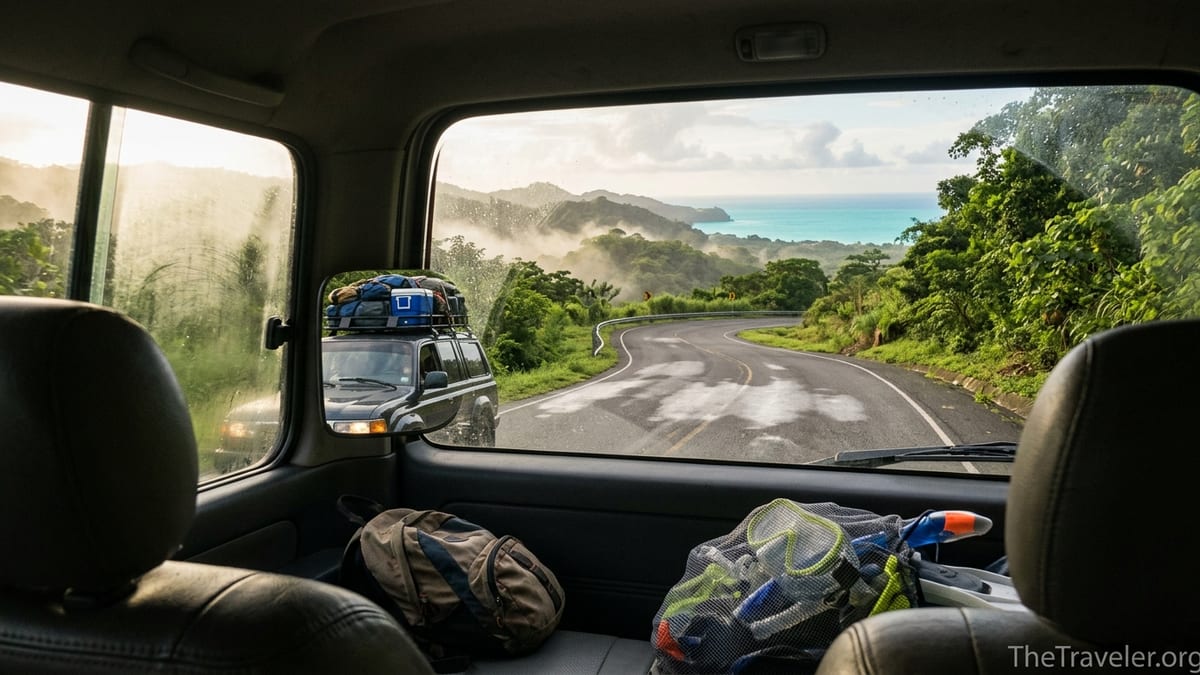
Every journey from Tocumen International Airport to the San Blas Islands involves two separate legs: a 4x4 drive across the mountains to the Caribbean side, then a boat ride out to the islands. There is no direct public transport and no large ferry from Panama City. Most travelers first reach Panama City by taxi or prearranged transfer from Tocumen, then join an early morning 4x4 that leaves from central neighborhoods such as Casco Viejo, Obarrio, El Cangrejo, or near major hotels along Calle 50.
The 4x4 segment follows the El Llano–Cartí road, the only land access to the Guna Yala coast. This paved but steep and winding route typically takes around 2.5 to 3 hours from Panama City to the Cartí area docks in light traffic, according to local operators and recent 2026 transport guides. Shared jeeps used by reputable San Blas tour and charter companies generally plan for four hours door to dock to account for passenger pickups, a fuel stop, and the immigration-style checkpoint at the Guna Yala border.
From the docks, small outboard motorboats make the final hop to the islands. For closer islands like Perro Chico or Isla Diablo, the ride may be 30 to 40 minutes in good weather; for boats or lodges anchored farther out in the archipelago, travelers commonly report 45 minutes to over an hour. Crucially, these boats do not depart on a continuous shuttle basis. Most leave in coordinated batches between roughly 8:30 and 10:00 in the morning, tied to the arrival of the 4x4 convoys and to sea conditions.
Because both segments are tightly choreographed, missing the morning departure window can mean a day lost in transit or higher costs for special arrangements. That is why agencies, yacht charters, and local drivers all stress the same message: if you want to reach San Blas the same day, you must plan your flight into Tocumen and your overnight in Panama City around an early 4x4 pickup.
Why Same-Day Logistics Matter So Much
The biggest trap for first-time visitors is assuming they can land at Tocumen, grab a car, and head directly to San Blas the same afternoon. In practice, almost all shared 4x4s to Guna Yala depart Panama City between about 5:00 and 6:00 in the morning, with coordinated boat departures soon after. Operators emphasize that arriving later in the morning usually means you miss the scheduled boats, as they do not run on demand for individual travelers.
Consider a concrete example. A traveler lands at Tocumen at 11:30 on a typical Saturday in high season. Even if immigration and baggage take only 45 minutes, it is nearly 12:15 before they reach the arrivals hall. Without pre-booked private transport, they would need another 40 to 60 minutes by taxi to a central hotel or meeting point, arriving around 1:15. By that time, the day’s 4x4 convoys are already at the docks or on the islands. The traveler now faces a difficult choice: attempt to negotiate an expensive same-day private 4x4 and private boat, or accept an unplanned night in Panama City and a lost day on the islands.
On the other hand, if that same traveler schedules their international flight to arrive the previous afternoon, checks into a hotel in the city, and confirms a 4x4 pickup at 5:15 the next morning, the rhythm becomes predictable. They leave the hotel before dawn, reach the Guna Yala checkpoint around 7:00 to 7:30, arrive at the docks by roughly 8:30 to 9:00, then board the island boat soon after. By late morning they are swimming in turquoise water instead of queuing at a border post with the midday crowd.
Same-day logistics also matter when leaving San Blas. Most tours and charters arrange return 4x4s that leave the docks in the early afternoon, often around 3:00. With the 3-hour drive back plus city traffic, travelers typically reach central Panama City between 6:00 and 7:00 in the evening. Trying to pair that with an evening international departure from Tocumen on the same day adds tight margins for delays, heavy rain, or road checks. Many regular visitors choose to spend the night back in the city and fly out the following day to reduce stress and flight-change risks.
4x4 Transfers: Timing, Terrain, and Choosing the Right Operator
The 4x4 segment is not only necessary, it is also regulated. Guna Yala authorities require 4x4 vehicles at the border checkpoint because of the road’s steep gradients and frequent heavy rain. In practice, almost all authorized transfer vehicles are high-clearance SUVs such as Toyota Prados and Fortuners with space for six passengers plus driver. While some travelers have reached the border in smaller cars, the final section into Guna territory is typically restricted to 4x4s, and rental companies may not insure your vehicle on that road.
Pickup times are early by design. Many established agencies quote hotel pickups around 5:00 to 5:30, with a target arrival at the docks before 9:00. A typical shared transfer might collect guests at two or three city hotels, stop briefly for fuel or snacks on the Pan-American Highway, then climb into the hills after sunrise. Along the way, all foreign visitors pay a per-person entrance fee at the Guna Yala border post, generally in cash. Operators allow 15 to 20 minutes for this stop, but at peak holiday periods or long weekends, queues can lengthen and delay everyone’s arrival at the port.
When choosing a 4x4 operator, what matters most is coordination with your island host or sailing charter rather than saving a few dollars on the ground transfer. Responsible yacht companies and island lodges often recommend specific transport partners they work with daily, precisely because they can adjust pickup times and departure batches if there are weather issues or delays at the checkpoint. Using an anonymous ride arranged the night before can leave you at the dock without a confirmed boat seat or on a schedule that does not match your accommodation’s check-in window.
Prices vary by season and by what is included, but as of 2026 many mid-range agencies advertise shared 4x4 plus boat transfers from Panama City in the range of roughly 90 to 130 US dollars per person for a same-day return package, or around 120 to 150 dollars for round-trip transport with an overnight. If your sailing charter or island stay sells the transfer separately, expect round-trip 4x4 plus boat charges in a similar band, with private 4x4s costing more depending on group size and exclusivity.
Boat Connections: Schedules, Sea Conditions, and Island Matchups
Once you reach the dock near Cartí, the rhythm of the trip changes. The waterfront can look chaotic at first glance: rows of fiberglass launches, piles of coolers and luggage, day-trippers checking in for tours, and captains calling out island names. Behind the scenes, most boats operate on a simple pattern. They cluster departures when a group of 4x4s arrives, take everyone to the appropriate islands, then return later for mid-afternoon pickups.
For guests heading to nearby islands used for standard day tours, boats often depart within 20 to 30 minutes of the vehicles arriving at the dock. For travelers connecting to sailing catamarans or remote island lodges, local partners usually pre-assign them to a specific boat and captain. In these cases, the timing is even more sensitive. Captains need to balance the sea state, available daylight, and fuel. Missing your planned morning boat can mean waiting several hours for the next practical departure, or in rough weather, deferring movement until the following day.
Sea conditions vary through the year. In the windier months, when the Caribbean chop is stronger, transit times can stretch and departures may be slower, especially for boats heading beyond the inner ring of islands. Information from San Blas sailing and transfer operators in 2026 suggests that a 40-minute ride in calm weather can stretch closer to an hour when seas build. These are open boats, so spray is common and you should pack valuables and electronics in dry bags or waterproof cases rather than standard daypacks.
Because of this variability, it is best to think of boat departures as windows rather than exact minutes on a timetable. Your 4x4 driver usually knows which representative or captain you should meet at the dock and will help point you in the right direction. Sticking with the group and following their instructions is typically the fastest way to your final island, whereas wandering off to look for food or negotiate your own ride can leave you out of sync with the day’s planned transfers.
Luggage Limits, Packing Strategy, and What to Leave in Panama City
The combination of a packed 4x4 on a steep mountain road and a small open boat on the Caribbean sea means that luggage is not an afterthought. Most San Blas operators impose practical limits of one small suitcase or backpack plus a daypack per person, and strongly urge travelers to leave large hard-shell suitcases in Panama City. A typical shared jeep seats six passengers; if each arrives with two large roller bags, space quickly disappears and safety becomes a concern.
In real terms, that means planning to travel to San Blas with something like a 40- to 50-liter soft backpack and a smaller personal item. Heavy, rigid luggage is difficult to stow on the roof racks of 4x4s and even harder to move in and out of rocking boats at the docks. Many centrally located hotels and guesthouses in Panama City offer short-term luggage storage for guests, allowing you to leave your main suitcase for one to three nights while you visit the islands. Some travelers even book a night in the same hotel before and after San Blas specifically to secure an easy place to store belongings.
On the boat, captains prefer compact, well-closed bags. Zippers should be fully shut, and any loose straps tied down so they do not catch on benches or other passengers. Electronics, passports, and key documents should go in a small waterproof pouch that you keep with you, not in a bag on the boat floor where waves and spray can soak them. It is common to see travelers arrive at their island with damp clothing after a lively crossing, but it is far more stressful to have a soaked passport or a laptop filled with seawater.
Weight is another consideration. While there is no formal weigh-in for most tourist transfers, operators may ask you to declare extra items such as coolers, diving gear, drones, or large camera equipment, and may charge modest supplements. In extreme cases, if a vehicle or boat appears overloaded, they can refuse additional bags for safety reasons. Traveling light is not just convenient in San Blas; it is a genuine safety and comfort factor for everyone on board.
Overnight Planning Around Tocumen and Panama City
Good San Blas logistics usually start with one simple decision: whether to overnight in Panama City before or after your island stay. Because 4x4 departures to Guna Yala start so early, most travel specialists recommend at least one night in the city before heading to the islands, especially if you are arriving on an international flight. This buffer allows you to absorb common disruptions such as late landings, long immigration lines, or delayed baggage without jeopardizing your entire island itinerary.
If your flight arrives at Tocumen after about 9:00 in the morning, assume that a same-day shared transfer to San Blas is not realistic. Instead, plan to take an official airport taxi or prebooked shuttle into town, check into your hotel, and use the afternoon to visit the historic Casco Viejo district, the Cinta Costera waterfront, or a viewpoint over the canal. Many city hotels used by San Blas travelers are familiar with early-morning pickups and can arrange for breakfast boxes or coffee before the 4x4 arrives.
On the return leg, treat the afternoon drive from San Blas back to Panama City with similar caution. Even if your operator advertises a departure from the islands around 3:00 and an estimated arrival in the city at 6:30, any delay at the dock, heavy rain, or traffic jam near the capital can easily add an hour or more. Booking an international flight out of Tocumen late that same night leaves narrow margins and can turn a relaxed island exit into a stressful countdown.
A common high-value pattern is to book your return flight for the following day and enjoy one last night in the city instead. After days of basic island facilities, running water, and limited electricity, many visitors appreciate a hot shower, air conditioning, and a proper dinner. It also allows you to repack, dry out any damp gear, and collect stored luggage without watching the clock. For those on tight itineraries, an alternative is to schedule a very late departure from Tocumen and treat any schedule slippage from San Blas as built-in buffer.
Early Pickups, Checkpoints, and Safety on the Road
Climbing into a 4x4 at 5:15 in the morning can feel extreme, but every piece of the schedule serves a purpose. Leaving early spreads traffic on the narrow El Llano–Cartí road, reduces the risk of tropical afternoon storms affecting the drive, and gets you to the dock in time for the first wave of boats. It also means you hit the Guna Yala border checkpoint soon after it opens for the morning, avoiding long queues that build up later when multiple convoys converge.
At the checkpoint, all passengers typically disembark, present passports or national IDs, and pay the Guna Yala entrance fee in cash. Families with children or groups in separate vehicles should stay together and coordinate with their drivers to avoid confusion. Agents may ask where you are staying and for how long. This is routine and part of the comarca’s effort to manage tourism and collect local revenue for community services.
Once you enter Guna Yala, the road becomes more winding and the scenery more dramatic. The combination of sharp curves, steep descents, and occasional potholes is precisely why the 4x4 requirement exists. Reputable drivers who make the trip daily know the hazards and adjust speed accordingly. Seat belts should be worn by all passengers, and heavy objects stored low rather than balanced on laps or overhead. Motion sickness is common among travelers unaccustomed to mountain roads; packing motion tablets and avoiding a heavy breakfast can make the ride more comfortable.
In terms of safety, incidents on the route are relatively rare, especially with established operators, but the remoteness of the road means that breakdowns or accidents can cause significant delays. This is another reason to avoid scheduling tight onward connections on either side of your San Blas stay. If you are traveling during Panama’s major holidays or long weekends, consider booking transfers well in advance and reconfirming pickup times the day before, as demand spikes and vehicles can be fully booked.
The Takeaway
Travel between Tocumen International Airport and the San Blas Islands is less a simple transfer and more a carefully choreographed sequence: an airport arrival, a city overnight, a predawn 4x4 departure, a mountain checkpoint, and a timed boat connection. Each part has its own constraints, from 4x4 requirements on the El Llano–Cartí road to limited boat departure windows and strict luggage realities on small launches.
High-value planning means accepting these constraints and arranging your flights, hotel nights, and packing list around them rather than trying to bend the system to fit a tight schedule. Aim to arrive in Panama City at least a half-day before your island transfer, choose a 4x4 operator that is coordinated with your island or sailing host, travel with compact luggage you can easily move between car and boat, and keep your international departure flexible enough to absorb delays on the way back.
When you do this, the journey itself becomes part of the experience rather than a logistical obstacle. Dawn over the Panamanian hills, the pause at the Guna Yala border, and the first glimpse of palm-fringed islands from the boat all feel like steps into another world. With realistic timing and a little advance planning, that world can be reached smoothly from Tocumen without turning your trip into a race against the clock.
FAQ
Q1. Can I go from Tocumen Airport to the San Blas Islands on the same day?
In most cases you should not count on it. Shared 4x4 transfers to San Blas typically leave Panama City between 5:00 and 6:00 in the morning, and boat departures are tied to those arrivals. If your international flight lands after mid-morning, it is usually safer and more practical to spend the night in Panama City and join an early transfer the following day.
Q2. How long does the journey from Panama City to the San Blas docks take?
Under normal conditions, the drive from central Panama City to the docks near Cartí takes roughly 2.5 to 3 hours. Shared transfers often schedule around 4 hours door to dock to allow time for hotel pickups, a brief stop on the highway, and the Guna Yala checkpoint where everyone pays the entrance fee and shows identification.
Q3. Why do I need a 4x4 to reach San Blas?
The final section of road into Guna Yala is steep, winding, and can become slippery in heavy rain. Local authorities require 4x4 vehicles for safety on this route, and most authorized transport companies use high-clearance SUVs such as Toyota Prados or Fortuners. Even if a smaller car could technically reach the border, you may not be allowed to continue past the checkpoint without a proper 4x4.
Q4. What time do the boats to the islands usually leave?
Most boats depart in clusters between about 8:30 and 10:00 in the morning, aligned with when the 4x4 convoys arrive at the docks. Boats serving nearby day-tour islands often leave soon after passengers arrive, while those heading to more distant islands or sailing yachts follow prearranged schedules. There are usually no regular mid-afternoon departures for independent travelers.
Q5. How much luggage can I bring to San Blas?
Operators generally recommend one small suitcase or backpack plus a personal item per person. Space in shared 4x4s and small boats is limited, and large hard-shell suitcases are difficult to manage. Many travelers leave bulky bags in storage at a hotel in Panama City and travel to San Blas with a 40- to 50-liter soft backpack and a daypack.
Q6. Is it safe to book my own 4x4 and boat separately?
It is possible but not usually advisable for first-time visitors. The value of booking through your island lodge or sailing charter is that they coordinate the timing between the 4x4 and the boat and have established contacts at the dock. Arriving independently without a confirmed boat seat can mean long waits, higher last-minute prices, or difficulty reaching your specific island the same day.
Q7. How should I plan my overnight stays around a San Blas trip?
For most travelers, the smoothest plan is to arrive in Panama City at least the afternoon before heading to San Blas, spend one night in a central hotel, then take an early 4x4 the next morning. On the way back, it is wise to spend another night in the city before flying out of Tocumen, as afternoon departures from the islands and unpredictable traffic can make same-day international flights risky.
Q8. What documents and payments are required at the Guna Yala checkpoint?
You should carry your passport or national ID for every member of your group, as officials verify identity and nationality at the border. There is also a per-person entrance fee to the Guna Yala comarca, usually payable in cash in US dollars. Your driver or guide will typically tell you the current amount and guide you through the process.
Q9. What happens if my flight to Tocumen is delayed?
If a delay causes you to miss the early 4x4 departure, you will usually need to overnight in Panama City and take the next day’s transfer. Same-day private 4x4 plus boat arrangements are sometimes possible but can be very expensive and are not guaranteed, especially in bad weather or late in the day. To avoid this scenario, consider building at least half a day of buffer time between your international arrival and your San Blas departure.
Q10. Are there alternatives to the 4x4 plus boat route?
A small number of charter flights and private boat or helicopter options exist, generally used by higher-budget travelers or for specific resorts and yacht charters. These services are far more expensive than the standard land-and-sea route and must be arranged well in advance. For the vast majority of visitors, the combination of shared 4x4 transfer and scheduled boat remains the most practical and affordable way to reach the San Blas Islands.