


More news on this day
Aviation networks across New York, Massachusetts, Georgia and Florida faced severe disruption today as at least 314 flights were cancelled and 737 delayed across the United States, snarling operations at major hubs for JetBlue, Delta and American and leaving thousands of domestic and international travellers facing missed connections and overnight stays.
Get the latest news straight to your inbox!
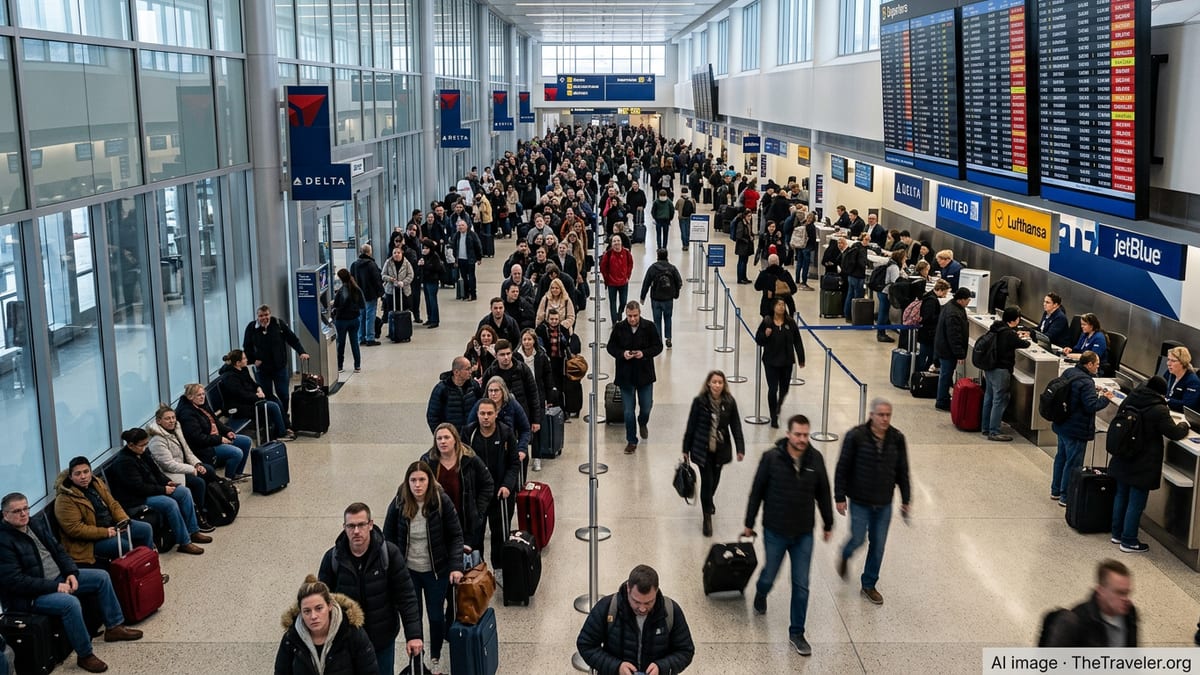
Air Travel Disruptions Concentrated Around Major East Coast Hubs
Publicly available flight tracking boards show that the heaviest disruption has been clustered around high-traffic airports in New York, Boston, Atlanta and multiple Florida cities, where cancellations and rolling delays quickly rippled through tightly scheduled networks. The concentration of affected flights in these four states has amplified the impact on both short-haul and long-haul itineraries, as many cross-country and transatlantic routes depend on these hubs for connecting traffic.
Data compiled from real-time aviation dashboards indicates that New York’s LaGuardia and John F. Kennedy airports are among the hardest hit, with elevated rates of both cancellations and departure delays. Boston Logan in Massachusetts has also seen a sharp spike in schedule disruptions, affecting travellers heading to and from key business and leisure destinations across the Midwest, the South and Europe.
In Georgia, Atlanta’s primary hub has experienced sustained congestion, with late-arriving aircraft and ground holds impacting departures through the afternoon. The knock-on effect has spread into regional airports that feed traffic into Atlanta, creating a cascade of missed connections for travellers attempting to reach smaller cities.
Florida’s major gateways, including airports serving Orlando, Miami and other coastal destinations, have reported growing queues at security checkpoints and rebooking counters as airlines work through the backlog. With Florida acting as both a domestic leisure magnet and a jumping-off point for Latin America and the Caribbean, disruption in the state has added an international dimension to what began as a largely domestic gridlock.
JetBlue, Delta and American Among Most Affected Carriers
According to aggregated figures from live tracking services, JetBlue, Delta Air Lines and American Airlines rank among the carriers most exposed to today’s cancellations and delays, reflecting their heavy reliance on the affected hubs. Each airline operates large schedules through New York and Boston, while Delta also maintains an extensive operation in Atlanta and American fields significant capacity through multiple Florida airports.
Operational data suggests that the mix of cancellations and delays has varied by carrier and airport. At some New York and Boston terminals, JetBlue’s point-to-point network has seen clusters of flights cancelled outright, particularly on dense shuttle and leisure routes where aircraft and crews could not be repositioned in time. Delta’s hub-and-spoke structure around Atlanta and New York has led to a series of rolling delays that compound throughout the day as late arrivals push back subsequent departures.
American Airlines, with a broad East Coast and Sun Belt footprint, has experienced a combination of targeted cancellations and extended departure holds. This pattern has been particularly visible on routes linking Florida with the Northeast and Midwest, where aircraft turnaround times are tight and ground operations can quickly become overstretched once disruptions begin.
Regional affiliates operating under the brands of these major carriers have also been affected, as smaller jets that feed passengers into the hubs are often among the first flights to be cut when schedules must be thinned rapidly. This has made it more difficult for airlines to reposition travellers onto alternative connections, especially in the late afternoon and evening bank of departures.
Weather, Congestion and Crew Positioning Drive Today’s Gridlock
Published coverage and aviation meteorology reports indicate that a combination of unsettled weather patterns, airspace congestion and crew positioning challenges underpinned the spike in cancellations and delays. Thunderstorms and low visibility along segments of the Eastern Seaboard have forced air traffic flow programs that reduce the number of aircraft permitted into already busy terminal areas, stretching schedules and forcing airlines to reshuffle assets.
When traffic into a constrained region must be slowed, flight tracking data typically shows a rapid rise in ground delay programs and en route holding patterns. Aircraft arriving late into New York, Boston or Atlanta then turn around late for their next departures, a pattern that becomes particularly problematic in the late afternoon, when schedules are densest and recovery windows shortest.
Crew duty-time limitations add another layer of complexity. Once pilots and cabin crews reach regulatory limits on their working hours, flights may need to be cancelled or substantially delayed while new crews are sourced and positioned. On days when weather and congestion are widespread rather than localized, spare crews and aircraft are often not where airlines need them, compounding delays even after storms move away.
The cumulative impact is especially visible on connecting itineraries. A traveller whose initial flight is delayed by an hour may miss a tightly timed connection at a hub where later alternatives are already oversold or experiencing their own disruptions, multiplying the number of stranded passengers even if the overall percentage of affected flights remains relatively modest.
Impact on Domestic and International Travellers
The disruption has had outsized consequences for both domestic and international travellers, particularly those relying on single-day itineraries with connections in the affected states. New York and Boston serve as major gateways for transatlantic routes, while Atlanta and Florida’s primary airports play a central role in linking the United States with Latin America and the Caribbean.
Publicly accessible airport status boards show that several long-haul departures have been subject to rolling delays, with revised departure times pushed back in increments as aircraft, crews and arrival slots are reassigned. Even when these flights ultimately depart, travellers can face missed onward connections in Europe or the Americas, turning what was planned as a single layover into an unplanned overnight stay.
Domestic passengers have faced similar challenges on high-demand routes linking the Northeast to Florida, the Midwest and the West Coast. Full summer loads leave limited spare seats for rebooking, especially for families and groups seeking to travel together, and some passengers have reported through social media that they were unable to secure same-day alternatives.
Airlines have responded by waiving certain change fees and, in some cases, allowing same-carrier rebooking within a defined travel window, according to their publicly posted advisories. However, accommodation and meal support can vary depending on whether the disruption is categorized as within the airline’s control or as a weather-related event, leaving some travellers to shoulder out-of-pocket costs.
What Travellers Can Do As Disruptions Continue
With flight tracking platforms still showing elevated numbers of delayed and cancelled flights across the four affected states, industry guidance suggests that travellers due to fly through New York, Massachusetts, Georgia or Florida should closely monitor their flight status and consider building extra time into connections for at least the next 24 hours. Even if weather conditions improve, residual delays often persist while airlines work to reposition aircraft and crews.
Passengers are encouraged by consumer advocates to check airline mobile apps and airport display boards frequently, as these channels typically reflect schedule changes before third-party booking platforms. When a cancellation occurs, rapidly confirming rebooking options can make the difference between securing one of the limited remaining seats the same day or facing a longer wait.
Travel insurance providers note that policies with trip interruption and travel delay benefits may offer partial reimbursement for additional hotel nights, meals and ground transport incurred due to extended disruptions, depending on the terms selected at purchase. Travellers are generally advised to keep receipts and document delay durations using screenshots of airline or airport status pages to support any future claims.
With the busy summer travel period continuing, analysts observing today’s disruptions say that the situation underscores the fragility of tightly wound aviation schedules in major hub regions. When several key airports in New York, Massachusetts, Georgia and Florida are simultaneously constrained, even a few hundred cancellations and several hundred delays can cascade into a national event felt by passengers far beyond the airports directly affected.