


More news on this day
British holidaymakers heading to Europe through London Gatwick are being urged to prepare for longer queues this summer, as rising passenger numbers collide with new EU border controls that are already stretching several major airports to breaking point.
Get the latest news straight to your inbox!
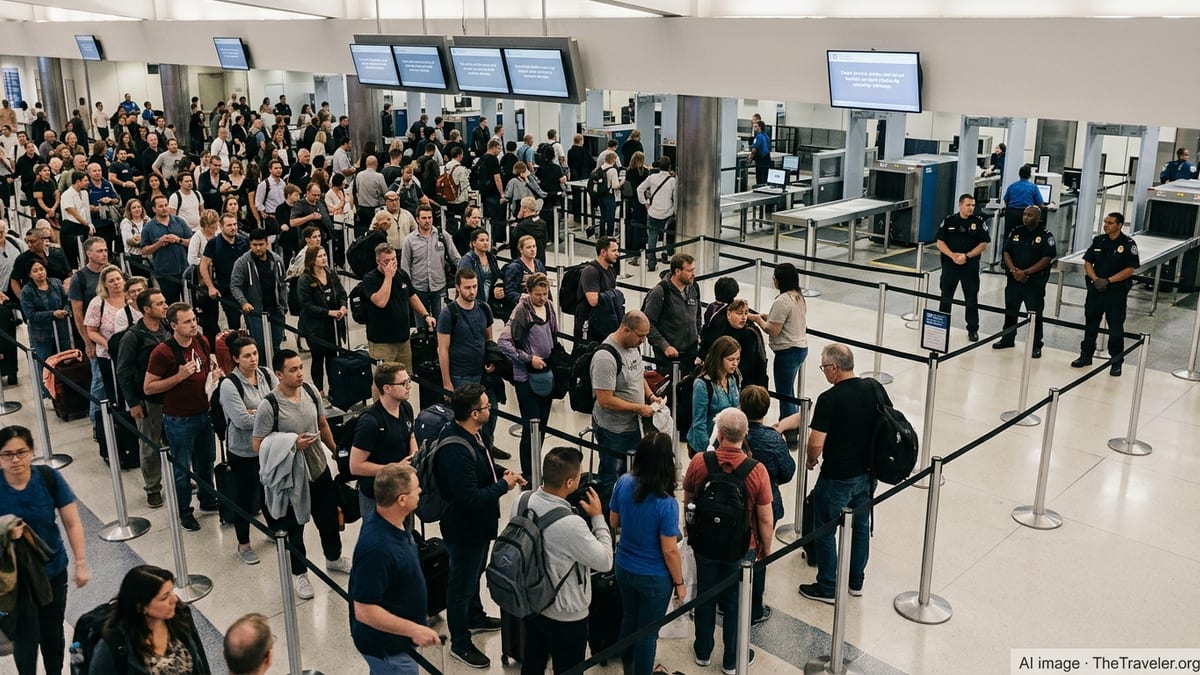
Gatwick braces for peak-season pressure
Gatwick is entering one of its busiest summer periods since before the pandemic, with investor updates showing airlines adding routes and capacity through 2025 and 2026 to meet strong leisure demand. Publicly available company information indicates that growth has been particularly strong on short-haul European services, which rely heavily on smooth passport processing on arrival.
Industry guidance now circulating to UK travellers advises those flying from Gatwick to Schengen destinations to build in extra time both at departure and on arrival. While security and check-in processes at Gatwick itself have generally recovered since the disruption of 2022, downstream congestion at EU border checkpoints is increasingly dictating the overall journey experience.
Gatwick-focused reports suggest that airport planners are working on the basis of continued high load factors to popular holiday hubs in Spain, Italy, Portugal and Greece across July and August. Any disruption at those arrival points is therefore expected to ripple quickly back through Gatwick’s schedule, particularly on short-turnaround low-cost services.
Travel analysts note that, even when flights leave London on time, missed connections and extended queues at passport control in Europe can still translate into delays and missed departures on the return leg, prompting airlines and airports to warn passengers that “on time departure” no longer guarantees a predictable overall journey.
Five major hubs across Europe under strain
Across the continent, several of Europe’s busiest holiday gateways are already reporting long waits at border control as the main summer school holiday season approaches. Published coverage and industry surveys highlight persistent congestion at airports such as Malaga on Spain’s Costa del Sol, Alicante on the Costa Blanca, Milan Linate in northern Italy, as well as major hubs in Portugal and Germany.
In Spain, local and international travel reports describe repeated scenes of lengthy queues at Malaga and Alicante, where large volumes of UK and other non-EU passengers are being processed under the new biometric rules. Airlines operating at these airports have warned that some passengers are missing flights despite arriving in good time, as bottlenecks build at passport control during peak arrival waves.
Italian airports have seen similar flashpoints. Coverage of recent disruption at Milan Linate pointed to queues of up to three hours at border checkpoints, with more than 100 passengers reportedly missing a single Manchester-bound flight after becoming stuck in the non-EU line. Airport and airline data from across Italy indicate that smaller terminals with limited space for queuing are particularly exposed when multiple flights from the UK and other third countries land within a short window.
In Portugal and Germany, aviation trade bodies and national media report growing concern that current staffing and infrastructure levels at some border posts are insufficient for the combination of summer traffic, post-Brexit passenger flows and new biometric procedures. While not every major airport is experiencing severe disruption every day, air-sector associations warn that pressure points can develop quickly when one or two large aircraft arrive late or off-schedule.
New Entry/Exit System slows passport processing
At the centre of the current disruption is the European Union’s new biometric Entry/Exit System, which became fully operational at Schengen external borders in April 2026. The system replaces manual passport stamping for non-EU travellers with a digital record of each entry and exit, including fingerprints and facial images captured during a first registration.
According to travel-industry briefings, a standard passport check that previously took under half a minute can now require around 90 seconds per traveller during the initial enrolment. For families and groups, this can multiply quickly, especially when some passengers need extra assistance or are unfamiliar with the process.
Surveys conducted by airport trade bodies across dozens of European airports in May and June found that border-control queues have already reached between three and three-and-a-half hours at some locations during peak times. Reports compiled by airline and airport associations caution that, without further operational changes, waits of four to six hours could occur at the busiest points in the summer schedule.
The aviation sector has formally asked European institutions to allow more flexibility in how the system is applied during the peak season. Open letters from major airline and airport groups argue that the current configuration risks “widespread saturation” of border facilities and call for temporary suspension or partial rollbacks of the new checks where queues become unmanageable.
Calls for emergency measures as queues grow
As reports of missed flights and stranded passengers mount, several major carriers and industry groups have issued increasingly urgent warnings. Budget airlines with large leisure networks across Spain, Italy and Portugal have publicly described the risk of “queue chaos” this summer, urging regulators to avoid using holidaymakers as test cases while technical and staffing issues are ironed out.
Associations representing European airports, flag carriers and low-cost operators have jointly pressed the European Commission to grant member states more latitude to suspend or scale back biometric checks when passenger numbers exceed the physical capacity of border-control areas. Their position is that the current framework places unsustainable pressure on front-line staff and infrastructure just as air traffic returns to, or exceeds, pre-pandemic levels.
Publicly available reports suggest that some countries have already made use of limited flexibilities built into the system, pausing aspects of the biometric process at the busiest times or temporarily reverting to manual passport stamps. However, industry analyses indicate that these measures are often ad hoc and that clearer, continent-wide guidance may be needed to prevent an uneven patchwork of rules from creating further bottlenecks.
Consumer advocates, meanwhile, are drawing attention to the financial impact on travellers. Missed connections caused by border delays fall into a grey area of passenger-rights frameworks, with some journeys not covered by standard compensation rules. Advisers are therefore encouraging holidaymakers to allow longer connection times and to avoid tight same-day transfers between separate tickets when crossing the Schengen border.
What Gatwick passengers can do this summer
For travellers using Gatwick over the coming weeks, the immediate challenge lies less in the airport’s own performance and more in conditions at arrival and transfer points across Europe. Industry guidance directed at UK passengers recommends checking in as early as possible, monitoring airline communications closely and treating published minimum connection times within the Schengen area as a bare minimum rather than a comfort margin.
Travel publications and aviation experts suggest that passengers on separate onward tickets should consider leaving at least several hours between flights if their itinerary involves crossing the external Schengen border under the new system. For journeys with fixed cruise departures, rail connections or events at the destination, advisories increasingly recommend planning to arrive a day earlier where feasible.
Analysts also note that the pattern of disruption can change rapidly, with different airports experiencing pressure on different days depending on local staffing, school-holiday calendars and weather-related knock-on effects. Gatwick passengers are therefore being encouraged to stay informed about conditions at their specific arrival airport, rather than assuming that experiences reported from one destination will necessarily mirror another.
With the main school holiday period in the UK about to begin, Gatwick is expected to remain a critical gateway between Britain and some of the most popular destinations in the Schengen area. The combination of strong demand, tight schedules and a new border regime means that, while many journeys will still run smoothly, passengers are being advised to factor in the real possibility of longer queues and build extra resilience into their summer travel plans.