


More news on this day
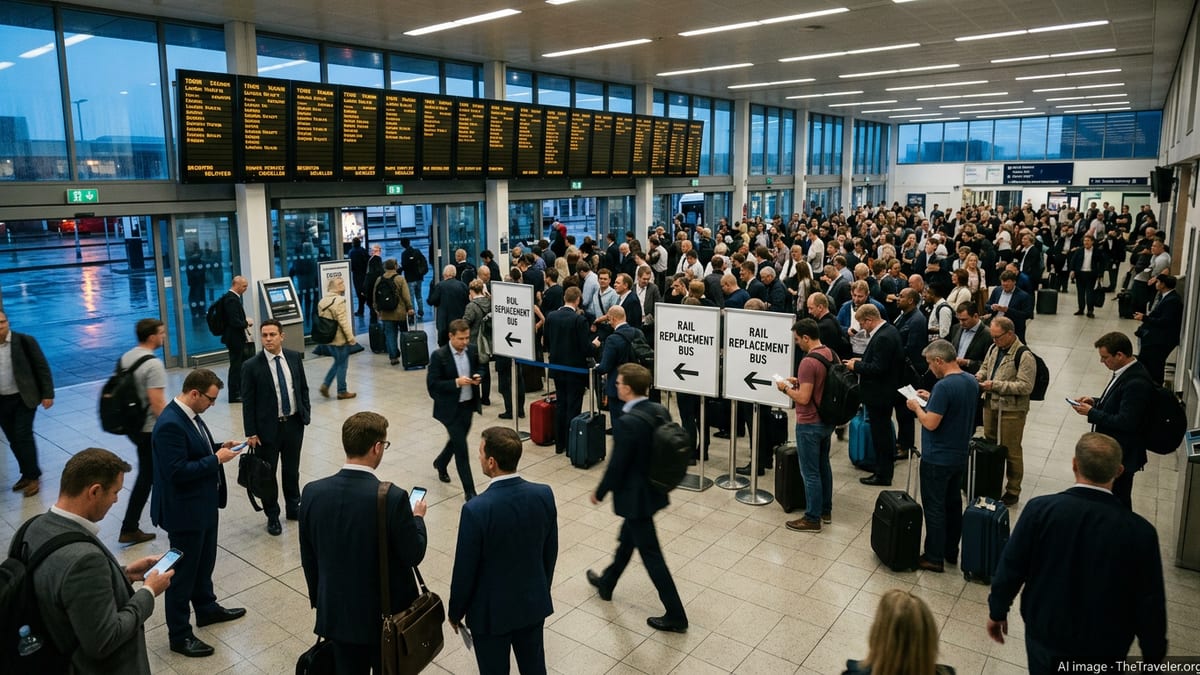
Rail passengers across parts of southern England faced severe disruption on Tuesday after a substation fire near New Milton in Hampshire led to significant delays and cancellations on key commuter and leisure routes.
Get the latest news straight to your inbox!
Incident near the tracks prompts emergency response
Reports indicate that the fire broke out at an electrical substation close to the railway near New Milton early on Tuesday morning, affecting infrastructure that supplies power and signalling to the busy South Western Railway corridor. The incident occurred adjacent to the main line linking Bournemouth, Southampton and London Waterloo, a route heavily used by commuters and holidaymakers along the south coast.
According to publicly available travel updates, trains in the New Milton area were initially brought to a halt while the blaze was dealt with and safety checks were carried out on nearby equipment. Services later began to move again but at much reduced speed, with a restriction in place on all lines through the affected section.
Initial assessments suggested that the fire damaged cables and associated equipment, prompting concerns about the stability of power and signalling systems through the area. Engineers were dispatched to inspect the infrastructure and begin repairs, a process that typically requires services to operate under caution, resulting in extended journey times.
Widespread delays and cancellations on South Western Railway
Publicly accessible disruption maps for the South Western Railway network showed knock-on delays spreading well beyond New Milton as the morning peak progressed. Trains between Weymouth, Bournemouth, Southampton and London Waterloo experienced extended journey times, with several services cancelled or revised to start and terminate short of their usual destinations.
Journey planners advised passengers to check services before travelling and to allow additional time for their journeys. In some cases, rail users were warned to expect crowding and potential last-minute alterations as control teams attempted to re-balance train and crew diagrams after the initial suspension.
The coastal route is a key artery for commuters from Dorset and Hampshire heading into London, as well as for visitors travelling to seaside resorts on the south coast. Even a short period of restricted running can cause service patterns to unravel, with trains and staff falling out of position and limited capacity to recover the timetable quickly.
Impact on commuters, leisure travellers and connections
The disruption came at a busy time for both commuters and leisure travellers, with many passengers relying on early morning services to reach workplaces in Southampton, Basingstoke and London. Reports from journey-planning platforms highlighted extended journey times of up to an hour on some services, as trains were routed slowly through the affected section or held at signals to manage congestion.
Leisure and airport-bound travellers were also affected. The south coast line provides onward connections to ferry terminals, regional airports and cross-country services, meaning delays around New Milton had the potential to cause missed connections for passengers heading to other parts of the UK and beyond.
Season ticket holders and regular commuters are increasingly familiar with the vulnerability of the rail network to incidents involving power and signalling equipment. A fire at or near a substation can be particularly disruptive because it can impact multiple tracks and systems simultaneously, rather than a single train or stretch of line.
Technical challenges of substation and lineside fires
Substations and associated lineside cabinets house key components for traction power and signalling, including transformers, circuit breakers and communication equipment. When a fire occurs in or near this infrastructure, engineers must ensure that all systems are electrically safe and structurally sound before normal speeds can resume.
Recent incidents elsewhere on the rail network, including fires affecting power cables and signalling rooms, have shown that even relatively small blazes can lead to prolonged disruption if they damage complex wiring or safety-critical systems. Repairs often involve replacing cables, testing interlocking equipment and recalibrating signalling, processes that cannot be rushed without compromising safety.
In the case of New Milton, travel updates indicated that trains were running at reduced speed on all lines after the fire, a standard precaution when there is a risk of residual damage or when temporary repairs are in place. This kind of blanket speed restriction protects the infrastructure and allows time for further inspections, but it also reduces capacity, creating bottlenecks that ripple through the timetable.
Advice for passengers as services gradually recover
According to published journey information, rail users were advised to check live departure boards and journey planners throughout the day, as residual delays were expected to continue while the timetable recovered. Ticket acceptance on alternative routes is sometimes offered during major incidents of this kind, although options along the south coast can be limited compared with busier intercity corridors.
Passengers holding advance tickets were encouraged, through standard disruption guidance, to travel on earlier or later services where possible, while flexible ticket holders were advised to avoid the peak periods if they could. Those planning leisure trips were urged to verify that both outward and return services were operating before setting off.
The New Milton incident underlines the growing focus within the rail industry on the resilience of power and signalling infrastructure, particularly as warmer and drier conditions can increase the risk of lineside and substation fires. For travellers, it serves as another reminder of the importance of checking for live updates before heading to the station, especially when journeys depend on tight connections or time-critical appointments.