


More news on this day
Spain is moving quickly to coordinate with France, Germany and European Union institutions on emergency measures to ease border bottlenecks triggered by the new Entry/Exit System, as aviation and airport groups warn that peak summer traffic could bring hours-long queues for holidaymakers at key hubs across the bloc.
Get the latest news straight to your inbox!
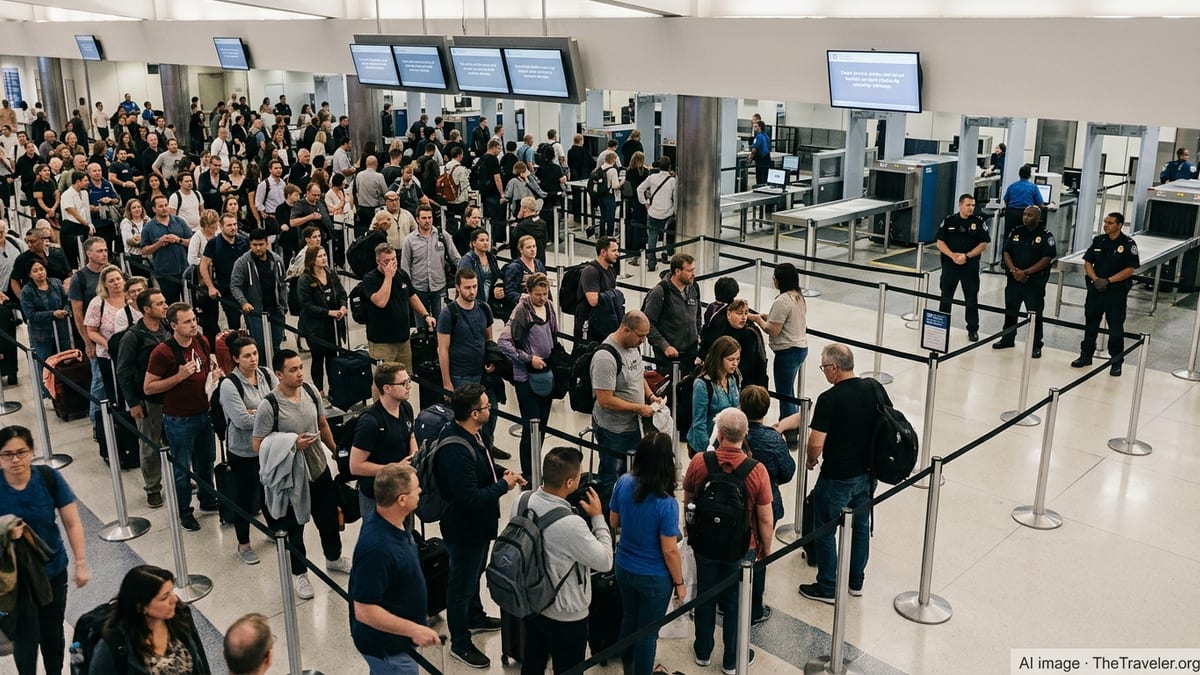
Mounting Pressure Over EES Delays At Major Airports
The EU’s biometric Entry/Exit System, which fully replaced passport stamping for non-EU visitors in April 2026, was designed to speed up checks and enhance security. Instead, its first high season is exposing capacity gaps at border control, with industry reports pointing to queues of two to five hours at some external Schengen airports during recent holiday peaks.
Airline and airport associations have repeatedly highlighted the risk of widespread congestion this summer, flagging that initial EES enrolment takes significantly longer than the manual stamp it replaced. Published analyses from travel and aviation outlets describe missed connections, passengers held in queues outside terminals and knock-on disruption when border lines spill back into check-in and security areas.
These warnings have sharpened political focus in Europe’s largest tourism markets. Spain, France and Germany, which together handle tens of millions of non-EU leisure arrivals each year, are now at the centre of efforts to stabilise EES performance before the peak August holiday period.
Publicly available information from EU agencies indicates that the European Commission, national interior ministries and border management agency eu-LISA are in frequent contact about remedial steps. The three countries’ transport and interior portfolios have become key channels linking operational concerns at airports with policy decisions in Brussels.
Spain Steps Up Coordination With France And Germany
In recent weeks, Spanish, French and German authorities have signalled a more closely aligned approach to managing EES bottlenecks, particularly at major tourism gateways. Travel industry coverage indicates that Spain has ramped up staffing and technical support at high-volume airports while engaging with counterparts in Paris and Berlin on common contingency procedures and data-sharing issues tied to the system.
Reports focused on Spain point to busy holiday hubs such as Madrid Barajas, Barcelona, Málaga, Palma de Mallorca, Alicante and the Canary Islands, where EES queues are most likely to affect visitors from the United Kingdom, North America and other non-Schengen markets. These airports also act as transfer points into France, Germany and the wider Schengen zone, magnifying the impact of any disruption.
In France and Germany, similar concerns are emerging at major hubs including Paris Charles de Gaulle, Paris Orly, Frankfurt and Munich. According to European aviation briefings, authorities in the three countries are sharing operational lessons on queue management, signage, pre-enrolment areas and the deployment of automated kiosks to accelerate the first-time registration process.
Spain’s involvement is particularly significant because of its tourism-heavy regional economies. Coordination with France and Germany is being framed in public reporting as part of a broader push by leading EU members to keep cross-border leisure and business travel functioning smoothly while the new technology beds in.
EU Institutions Respond To Aviation Industry Warnings
The latest push from Madrid, Paris and Berlin comes after renewed appeals from Europe-wide airline and airport bodies. In open letters and public briefings, groups representing carriers and airport operators have called for an urgent review of EES operations, temporary relaxations where necessary and the definition of clear performance thresholds that would trigger targeted suspensions or workarounds.
Recent European Commission communications on smart borders acknowledge that EES is being introduced through a progressive operational phase and that some member states are still ironing out technical and staffing challenges. Official documentation stresses that the system is meant to improve both security and traveller experience over time, while noting that Brussels remains in “close contact” with national administrations about roll-out problems.
Travel industry reports indicate that EU institutions are now considering a package of short-term mitigation steps for the air sector. These include encouraging member states to reconfigure border zones, expand pre-check facilities for coach and ferry passengers feeding into airports, and make greater use of automated border control gates for eligible travellers once their biometric profile is established.
Discussions cited in industry analyses also cover more pragmatic communication with passengers, with calls for clearer information campaigns explaining EES, who is affected and how much extra time should be allowed at border control during the first visit under the new regime.
What Holidaymakers Can Expect At Spanish, French And German Airports
For travellers heading to Spain, France or Germany this summer, the immediate effect of these policy moves is likely to be incremental rather than transformative. Publicly available accounts from early summer departures suggest that while the worst delays are concentrated at peak times and specific terminals, non-EU visitors should still budget significantly more time for border checks than in previous years.
At Spain’s busiest tourist gateways, airports have been reconfiguring passport control zones to carve out more space for EES kiosks and additional manual booths. According to trade coverage, extra staff have been deployed during morning and evening waves of arrivals from the UK and North America, and some terminals are trialling separate lanes for passengers who have already completed their first EES registration on an earlier trip.
In France and Germany, similar patterns are emerging. Major hubs are adapting wayfinding and pre-queue triage to separate travellers who need full biometric enrolment from those whose details are already in the system, in an effort to keep repeat visitors moving more quickly. Nonetheless, aviation bodies continue to caution that any technical issues or staffing shortages could still see waiting times stretch sharply during holiday peaks.
For connecting passengers, particularly those flying into Spain and then onward to France, Germany or other Schengen countries, travel industry commentators advise against tight layovers that rely on rapid border processing. The combination of EES kiosks, manual verification and potential data hiccups means that even well-resourced airports may struggle to guarantee predictable processing times on the busiest days.
Longer-Term Fixes And The Outlook For EU Travel
Beyond the current summer, Spain, France and Germany are aligning with broader EU plans to refine the digital border architecture. Public policy documents outline work on system stability, data quality and the integration of EES with future layers such as the European Travel Information and Authorisation System, planned for introduction in 2026.
Technology providers and border agencies are focusing on software updates, better connectivity between national systems and shared troubleshooting to reduce the risk of biometric data being lost or duplicated. Over time, officials at EU level have argued that a fully stable EES should shorten routine border checks for repeat visitors, especially when combined with wider use of automated gates.
For now, however, European aviation leaders continue to frame EES as both an essential security project and the most pressing operational challenge facing airports. With Spain now working closely alongside France, Germany and Brussels-based bodies to smooth out implementation problems, the coming weeks will test whether these coordinated efforts can keep summer queues manageable for the millions of holidaymakers heading to Europe’s beaches and cities.