


Used carefully, 12Go can be a convenient way to book buses, trains, ferries and even some flights across Asia and beyond. Used carelessly, it can leave you stranded at a pier in Koh Phangan with a useless voucher, fighting for a refund on a canceled Sri Lankan train, or discovering at check in that your “VIP” bus is anything but. This guide walks you through the most common mistakes travelers make before booking with 12Go and how to avoid them, using real examples from recent trips.
Get the latest updates straight to your inbox!
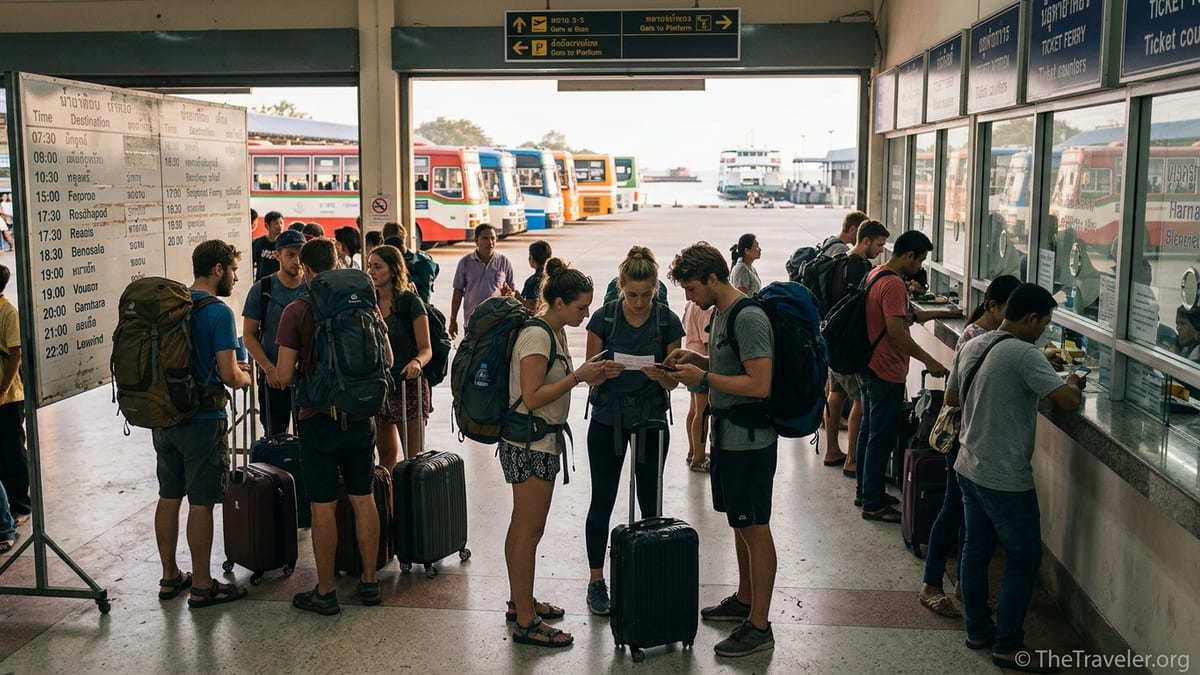
Understand What 12Go Actually Is (and Is Not)
Before you click “Pay,” it is crucial to understand that 12Go is a booking platform, not a transport company. The buses, trains, ferries and flights you see on 12Go are run by hundreds of separate operators. 12Go holds your money, issues tickets and provides customer support, but it does not control schedules, vehicle quality, staff behavior or safety standards. Reviews from 2025 and 2026 repeatedly show confusion on this point, with travelers blaming 12Go for late buses or broken air-conditioning that are really the responsibility of the local operator.
This matters when things go wrong. If a ferry from Phuket to Phi Phi is canceled because of high waves, 12Go cannot simply send another boat. In many cases the local company decides whether to run the service, what alternatives to offer, and what refund rules apply. 12Go’s own terms spell out that it is an intermediary and that refunds and changes are ultimately subject to the policies of each operator.
Consider a recent example from Sri Lanka. A traveler booked train tickets between Kandy and Ella through 12Go. Heavy rains triggered landslides and the railway canceled the service entirely. The passenger reasonably expected a full refund from 12Go. Instead, they were told to visit a major station such as Colombo Fort in person, with passports, to obtain a refund from Sri Lanka Railways. For someone on a tight itinerary, this effectively meant the tiny ticket price was lost, and 12Go still kept its service fee. The problem was not that 12Go was “fake,” but that the traveler assumed it operated like a package tour company with full control, which it does not.
Before you book, remind yourself that you are buying a ticket to travel with a local bus line in Vietnam, a ferry company in Indonesia or a private minivan operator in Thailand, with 12Go acting mainly as the broker and payment channel. That mindset leads naturally to more cautious decisions.
Failing to Check Operator Reviews and Vehicle Types
One of the most common and avoidable mistakes is treating all options on 12Go as equivalent. On a route like Bangkok to Chiang Mai you might see multiple overnight buses, all leaving around the same hour with similar prices. To an inexperienced traveler, they look interchangeable. In practice, the difference between a reputable company using modern double-deck coaches and a cut-rate operator with cramped seats and weak air-con can mean the difference between arriving rested or exhausted and angry.
Recent TripAdvisor reviews of journeys booked through 12Go highlight this risk. In one April 2026 case, a customer paid around 150 US dollars for what was advertised as a private transfer. The vehicle that arrived was much older and in worse condition than expected, and they later shared video evidence to support a complaint. The booking technically matched the broad description, yet the traveler’s expectations were far higher than what the operator delivered. That disconnect often begins at the search screen, when people ignore operator names, star ratings and user photos and simply pick the cheapest ticket or the most convenient time.
A better approach is to treat each operator like its own brand. If you are booking a minivan between Chiang Mai and Pai, take a minute to search the operator’s name alongside "reviews" and read what other travelers say about safety, punctuality and comfort. If a ferry between Bali and the Gili Islands has a pattern of delays or sea-sickness nightmares in reviews, ask yourself if you are comfortable with that risk, especially in rainy season. On busy routes there is usually at least one company with consistently better feedback, even if its tickets cost a few dollars more.
Vehicle type also deserves a second look. Phrases like “VIP bus,” “first class,” or “luxury minivan” are not regulated in most of the countries where 12Go operates. A “VIP” overnight bus from Hanoi to Hue may still have narrow reclining seats rather than true lie-flat berths. A “first-class” train carriage in Thailand might simply mean air-conditioning and a softer seat, not the kind of spacious cabin you would expect on a European night train. Before you book, scroll down and check photos, seat layout diagrams and recent comments that mention legroom, seat width or ability to sleep.
Ignoring the Fine Print on Refunds, Changes and Service Fees
The second big trap is skimming over the cancellation and modification rules. 12Go’s platform aggregates widely different policies, from nearly fully flexible tickets to non-refundable deals with strict cut-off times measured in hours rather than days. Many negative reviews in late 2025 and early 2026 revolve around travelers who discovered, only when their plans changed, that most of what they paid was non-refundable or that a “100 percent refund” applied only to the base fare, not the booking fee.
Imagine you are planning a flexible island-hopping trip in Thailand and book a Bangkok to Koh Samui bus and ferry combo several weeks ahead. Later you decide to fly instead. When you go to cancel, you find that the ferry operator allows cancellations only up to 72 hours before departure and that 12Go’s own service fee is non-refundable. Even if you are technically entitled to a full fare refund, currency conversion and card processing charges mean you receive slightly less than you paid, after days or weeks of waiting.
In another real-world complaint, a traveler booked a Sri Lankan train that was later canceled for operational reasons. The national railway refunded the fare to 12Go in late 2025, but the customer only discovered months later that they were still waiting for their own money to be passed on. They described extremely slow communication and a sense that 12Go’s systems were not designed for proactive outreach when refunds flowed from operators back to customers. The lesson is not that refunds never happen, but that you should not assume they are automatic or instant.
To protect yourself, always click through to the ticket’s detailed “cancellation policy” panel before confirming payment. Note three points: how many hours or days before departure you can cancel, what percentage of the fare you will receive back, and whether the 12Go service fee is excluded. If your plans are still uncertain, choose routes and operators that allow partial refunds up to 24 or 48 hours in advance, even if their tickets cost slightly more. Also mentally write off the booking fee as a sunk cost from the moment you confirm; it is there to pay for the platform’s service, not your ride.
Booking Tight Connections and Overlooking Local Realities
A third frequent mistake is booking ambitious connections on 12Go that look fine on paper but fall apart in real life. Many routes combine buses and ferries, or trains and minivans, across busy border crossings, congested cities and ports exposed to weather-related delays. Travelers who treat these as perfectly timed, airport-style connections often end up sleeping on benches or buying expensive last-minute tickets to catch up with their itineraries.
Take the popular Bangkok to Koh Phangan journey as an example. A typical 12Go itinerary might show a late-evening night bus from Bangkok’s Southern Bus Terminal to Surat Thani, followed by a morning ferry to Koh Phangan. On the search screen, the total travel time and connection window appear very manageable. In reality, the bus can be delayed by traffic leaving Bangkok, and the transfer from the bus drop-off point to the pier can be chaotic, especially in peak holiday periods like New Year or Songkran. If you then have a separate speedboat or taxi boat reservation to a remote beach, one delay can cascade through the entire day.
Similar stories emerge from border routes. On the Thailand–Cambodia corridor, travelers sometimes buy a single 12Go ticket covering a minivan from Bangkok to the border, a guided crossing, and then another vehicle onward to Siem Reap. The marketing description may suggest a seamless experience, but delays at immigration, queues for visas on arrival, and ad hoc “rest stops” at partner restaurants can stretch the advertised travel time by several hours. If you have an onward domestic flight from Siem Reap the same evening, the risk of missing it is real.
The safest strategy is to avoid same-day “must make” connections on separate tickets. If you use 12Go for an overnight train from Bangkok to Chiang Mai, for example, do not schedule a non-refundable domestic flight onward to Mae Hong Son just two hours after the scheduled arrival. Give yourself a buffer of several hours, or even an overnight stay, before any flight or expensive tour that cannot be changed. When weather or infrastructure issues hit, such as monsoon storms in the Gulf of Thailand or landslides on Sri Lankan railways, these generous buffers are what keep your trip from unraveling.
Not Double-Checking Times, Dates and Time Zones
Time confusion is another recurring theme in traveler complaints about 12Go. Across Southeast Asia, services can show departure information in different local formats, and some cross-border routes cross time zones. On top of that, travelers booking late at night on their phones often mis-tap calendar dates or misunderstand how overnight buses and night trains are labeled on the platform.
A classic scenario involves overnight buses. Suppose you are in Chiang Mai on July 10 and want a night bus to Bangkok that departs “tonight.” On 12Go, the calendar might show the next departure technically as July 11 at 00:30. If you casually tap July 11 thinking “that’s tonight,” you may actually be buying a ticket for the night after, because a 00:30 departure belongs to the next calendar day. More than one traveler has arrived at the terminal a full 24 hours early or late, only discovering the error when the staff cannot find their names on the passenger list.
Ferry schedules can be even trickier. In countries like Indonesia and the Philippines, some boats operate on local island time that may differ from the time zone of nearby international airports. While 12Go generally converts times into the local time zone of the departure point, operators sometimes phrase their own instructions differently. If you are connecting from an international flight to a ferry, make sure you understand not only local time but also whether the ferry ticket requires check in 30, 60 or even 90 minutes before departure. Missing a 10:00 ferry because you believed boarding closed at 09:45 instead of 09:30 is maddening, but common.
The solution is simple but requires discipline. Before you pay, read the date and time on the booking screen out loud to yourself, including the weekday: “Tuesday, 11 November, bus leaves at 20:00, check in 19:00.” After receiving the voucher email, open the PDF and confirm that the same information appears there. If there is any ambiguity about time zones or midnight departures, raise a support ticket with 12Go while you are still days away from travel rather than hours.
Assuming Western-Style Safety Standards and Comfort
Another problem lies not so much with 12Go as with expectations imported from Western transport systems. When you book a long-distance train in France or a domestic flight in the United States, there is an assumption of strict safety enforcement, transparent maintenance schedules and consistent comfort. Many 12Go routes operate in countries where infrastructure and regulation are improving but still uneven, and where safety culture can vary significantly from one operator to another.
Traveler reports from 2025 and 2026 underline common complaints: overcrowded minivans between Thai islands and mainland piers, buses in Vietnam driving at uncomfortable speeds on mountain roads, ferries in Indonesia and the Philippines departing later than planned with little explanation, and sleeper buses with narrow upper berths that feel precarious in rough weather. Some passengers describe drivers using mobile phones while driving or ignoring seat belt use.
When you book through 12Go, you may see some of these risks mentioned in reviews, but the platform rarely spells them out forcefully. That does not mean they are not real. It simply means you must bring your own risk assessment to the table. If you are anxious about sea conditions, think carefully before booking a small high-speed ferry during rainy season. If you are traveling with young children, avoid the cheapest overnight buses and look for daytime trains or private transfers on routes with winding roads.
Comfort expectations should be adjusted as well. Even on premium operators, air-conditioning can be aggressive or inconsistent, sleeper berths may be shorter than Western averages, and on-board toilets may not meet the standards of European intercity trains. Having a light blanket, earplugs, motion sickness tablets and a backup face mask can transform an otherwise difficult ride into a manageable one.
Overlooking Communication Limits and Customer Support Delays
When everything goes smoothly, 12Go can feel impressively slick: instant email confirmation, downloadable vouchers, QR codes and clear meeting points. The trouble appears when plans change at short notice or when an operator cancels a service suddenly. Many negative reviews focus on how difficult it can be to get a timely human response when you most need it, especially for same-day emergencies.
For example, a customer in late 2025 reported a schedule change on a flight booked via 12Go that was not adequately flagged by email. They only discovered the change when they happened to log into their account, at which point the new departure time no longer suited their itinerary. When they tried to contact customer support to adjust the ticket, they encountered slow responses and what they perceived as scripted, non-committal replies. In fast-moving situations, such as visa-on-arrival delays or weather-related port closures, that lag can be the difference between catching an alternative service and losing a day.
Part of the issue is time zones: 12Go’s main support operations are not necessarily online 24 hours a day in every region. Another part is the structure of the intermediary model. When a bus company in Laos cancels a route, 12Go often must wait for official confirmation and instructions before it can formally reschedule customers or issue refunds. That creates grey zones in which you may be standing at a station with no bus, a non-responsive local phone number and an email thread full of “we are checking with the operator” messages.
To reduce exposure, treat 12Go confirmations as one layer of communication, not the only one. Whenever possible, use the voucher to identify the exact local operator, then search for a direct phone number or Facebook page and confirm departure times 24 hours before travel. If an operator tells you of a change or cancellation, take screenshots of your conversation and photos of any notices at stations or piers. These can be invaluable later if you need to push 12Go for a refund.
The Takeaway
12Go is neither a miracle solution nor an automatic disaster. It is a powerful tool that can simplify travel across some of the world’s most complex transport networks, particularly in Southeast Asia and parts of South Asia where online booking is still patchy. It shines when you know exactly which route and operator you want and simply need a reliable way to pay with an international card and receive a readable e-ticket.
Problems arise when travelers forget the limits of an intermediary platform. Booking the cheapest unknown operator, skipping the fine print, assuming Western-level safety margins and expecting instant, proactive customer service from a company that relies on many third parties will almost always end badly. By contrast, reading operator reviews, checking refund rules, building in generous buffers, verifying times and staying realistic about comfort and support will dramatically improve your odds of a smooth journey.
Before your next bus, train, ferry or flight search on 12Go, slow down at the checkout page. Ask yourself whether you understand who is actually transporting you, how flexible your ticket really is, and what you will do if the service is delayed or canceled. That extra three minutes of attention is often the difference between a forgettable annoyance and a vacation-ruining ordeal.
FAQ
Q1. Is 12Go a legitimate company or a scam?
12Go is a legitimate booking platform that has operated for years and processes large volumes of tickets, particularly in Asia. However, as with any intermediary, service quality depends heavily on the local operators you choose and on understanding the platform’s limitations, especially around refunds and support.
Q2. When is it actually smart to use 12Go instead of booking direct?
12Go is most useful on routes where direct online booking is difficult or impossible, such as long-distance buses in Vietnam, ferries between Thai islands, or popular trains in Indonesia. It can also be convenient when you want to compare several operators at once. If a reputable operator offers easy direct booking in English at the same price, booking direct often gives you more straightforward support.
Q3. How can I avoid hidden fees when booking through 12Go?
Before paying, expand the price breakdown on the checkout page and look carefully at line items labeled as service or booking fees. Consider these non-refundable from the start. Compare the total price you see on 12Go with the same route booked directly with the operator, if possible. If 12Go is significantly more expensive, decide whether the convenience and payment options justify the difference.
Q4. What should I do if my bus, train or ferry is canceled?
First, ask the local operator at the station or pier for written confirmation of the cancellation, such as a photo of a notice board or a stamped note. Then contact 12Go through your account or email, attach proof and request a refund or alternative departure. Be prepared for processing to take days rather than hours and keep copies of all communication in case you need to escalate.
Q5. Is it safe to book overnight buses and ferries on 12Go?
Safety varies by country, route and operator, not by the fact that the ticket was bought through 12Go. Read recent reviews that mention driving behavior, overcrowding and safety equipment, and favor companies with consistent positive feedback even if their tickets cost slightly more. If you are uncomfortable with risk, consider daytime services, trains where available, or private transfers on challenging routes.
Q6. How far in advance should I book popular routes?
For sought-after routes like Thai overnight trains, ferries during peak holidays, or Indonesian island transfers in high season, booking one to three weeks ahead is usually wise. In ultra-peak periods like New Year or major festivals, tickets can sell out even earlier. For everyday regional buses and minivans outside holiday peaks, booking a few days in advance or even the day before is often enough.
Q7. Can I change the name on a 12Go ticket if a travel companion cancels?
Whether you can change a passenger name depends entirely on the operator’s policy. Some bus and ferry companies treat tickets as transferable; others link them strictly to the original name and passport. Check the product details and, if in doubt, contact 12Go support well before departure. Name changes at the last minute are rarely allowed.
Q8. How do I know which operator to pick on a route with many choices?
Look beyond price and departure time. Read recent reviews, paying attention to comments on punctuality, comfort and safety. Search the operator’s name separately to see independent feedback. If one company consistently receives better ratings, prioritize it even if it costs a few dollars more. Treat the choice as you would when picking an airline or hotel brand, not a random commodity.
Q9. What documents do I need to board if I booked through 12Go?
Most operators accept a printed voucher or a digital version on your phone, along with your passport or government-issued ID. Some railways and cross-border buses require a physical ticket to be collected at a station or office before boarding, so read your voucher carefully for pickup instructions and arrive early if an exchange is needed.
Q10. What is the single biggest mistake to avoid before booking with 12Go?
The biggest mistake is treating 12Go as a full-service tour operator that will automatically fix any problem and guarantee Western-style standards. In reality it is a convenient middleman. If you ignore operator reviews, skip the fine print on refunds and book tight, high-stakes connections, you increase your chances of a frustrating experience.