

More news on this day
British Airways has suspended flights linking London with Bahrain, Dubai, Tel Aviv, Amman, Doha, and Abu Dhabi as drone attacks, damaged airports, and rapidly shifting airspace restrictions push Middle East aviation into its most volatile period in years.
Get the latest news straight to your inbox!
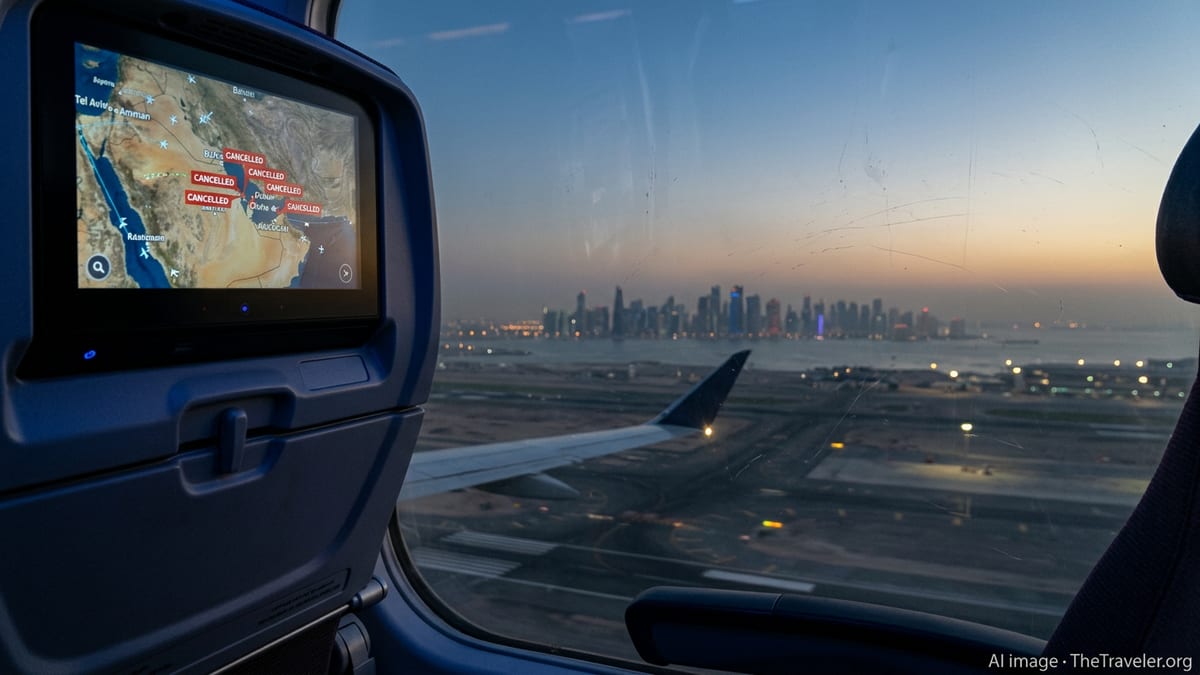
Expanded Suspension List Now Reaches Six Major Cities
The latest British Airways schedule updates show a widening circle of disruption affecting some of the Gulf’s busiest hubs. Flights between London and Amman, Bahrain, Doha, Dubai, and Tel Aviv are cancelled through at least late March, while services to and from Abu Dhabi are suspended until later this year, with no firm restart date signalled in public information.
This places Bahrain alongside Dubai, Tel Aviv, Amman, Doha, and Abu Dhabi in a single line of halted routes that once formed a key British Airways corridor into the wider Middle East and beyond. The carrier describes the move as a temporary reduction in its flying programme, but published timetables indicate that for many travellers these cities are effectively offline for weeks, and in the case of Abu Dhabi, for an extended period.
Reports from UK and Gulf media note that British Airways has operated limited repatriation flights in recent days to bring stranded passengers back to London, but regular commercial services on the affected routes remain absent. Customers booked to travel in March are being offered rebooking, vouchers, or refunds, with the airline advising travellers to monitor their booking status rather than airport departure boards.
Drone Strikes and Airspace Closures Redraw Regional Flight Maps
The cuts by British Airways come against a backdrop of intensifying conflict centred on Iran and its confrontation with Israel and the United States. A series of joint strikes on Iranian targets at the end of February has been followed by waves of missile and drone attacks that have hit or threatened multiple countries across the Gulf and Levant, including the United Arab Emirates, Bahrain, Qatar, Jordan, and Israel.
Publicly available reporting describes drone strikes damaging infrastructure from desalination facilities in Bahrain to energy and transport sites in the UAE and Qatar. In parallel, several states have periodically closed their airspace or curtailed operations at key airports, including Dubai International, Hamad International in Doha, Kuwait International, and Bahrain International Airport, after attacks or attempted strikes in their vicinity.
For airlines, these developments translate directly into route suspensions, diversions, and long detours that are often commercially unviable once war-risk insurance premiums and crew safety are factored in. Aviation industry analysis indicates that the corridors over Iraq, Iran, Jordan, and parts of the Gulf that previously carried dense flows of Europe–Asia traffic have become restricted or unattractive, forcing carriers to choose between expensive rerouting or cancelling flights outright.
Knock-on Effects for Gulf Hubs and Competing Carriers
The British Airways suspensions are part of a wider reshaping of travel through the Gulf. Coverage from regional outlets shows that KLM and several other European carriers have also pulled back from Dubai at least until late March, while some Asian and Indian airlines have temporarily halted services to Bahrain, Qatar, the UAE, and Saudi Arabia as they adjust to changing risk assessments.
At the same time, major Gulf-based airlines are attempting to sustain a skeleton network through the disruption. Reports indicate that Emirates and Etihad are slowly rebuilding operations from Dubai and alternative UAE airports after earlier interruptions linked to drone activity, while Qatar Airways has focused on repatriation and limited scheduled services as Qatari airspace and airport capacity fluctuate.
In Bahrain, publicly available travel advisories describe airport operations as heavily constrained following airspace closures and nearby attacks, even as national carrier Gulf Air works to maintain selected routes via alternative hubs such as Dammam in Saudi Arabia. The result for travellers is a patchwork of options that can change from one day to the next, with certain city pairs fully suspended and others operating only at reduced frequency.
Travellers Face Rolling Cancellations and Complex Rerouting
For passengers booked on British Airways services to Bahrain, Dubai, Tel Aviv, Amman, Doha, or Abu Dhabi, the airline’s rolling approach to cancellations has created an environment where plans may shift with limited notice. Public guidance from the carrier states that safety is the primary consideration and that flights will only operate when conditions are assessed as acceptable, but for now most direct options from London to these cities remain unavailable.
Travel industry monitors report that some UK travellers bound for the Middle East are being rebooked onto partner airlines that still serve certain destinations, routed through alternative hubs in Europe or Asia that avoid the most affected airspace. Others are choosing to postpone trips entirely, particularly where non-essential or leisure travel is concerned, amid warnings that disruption could extend into the busy Easter period and beyond.
Advisories circulating from risk consultancies and corporate travel departments recommend that anyone with planned journeys to or through the region maintain flexible itineraries, keep airline contact details updated, and monitor official travel advice from their home governments. For many, the most realistic strategy is to expect last-minute changes rather than rely on timetables set weeks in advance.
What to Watch Next as the Situation Evolves
Looking ahead, the key variables for travellers and airlines alike are the trajectory of the conflict and the stability of regional airspace. If missile and drone activity diminishes and airports in Bahrain, the UAE, Qatar, Jordan, and Israel can operate without repeated interruptions, carriers such as British Airways may begin to restore a limited schedule, starting with cities where infrastructure has been least affected.
However, if attacks persist or spread, the current suspensions could harden into a longer-term retreat from parts of the Middle East by some European and Asian airlines, especially on routes where local competitors with large regional networks can return more quickly. Analysts point out that decisions about when to restart flights often lag improvements on the ground, as airlines wait for insurance costs to fall and for confidence to return among crews and passengers.
For now, Bahrain’s inclusion alongside Dubai, Tel Aviv, Amman, Doha, and Abu Dhabi in the suspended British Airways network underlines how widely the shockwaves from the Iran-centred conflict have spread. The once seamless web of connections that carried millions of travellers through Gulf hubs each year has been temporarily fractured, and it may take considerable time, and a sustained period of calm, before those lines in the sky are fully redrawn.