


More news on this day
Passengers traveling through Copenhagen Airport are facing mounting disruption after a baggage handling work stoppage slowed ground operations, leading to delayed departures, late-arriving luggage and growing backlogs at one of northern Europe’s busiest hubs.
Get the latest news straight to your inbox!
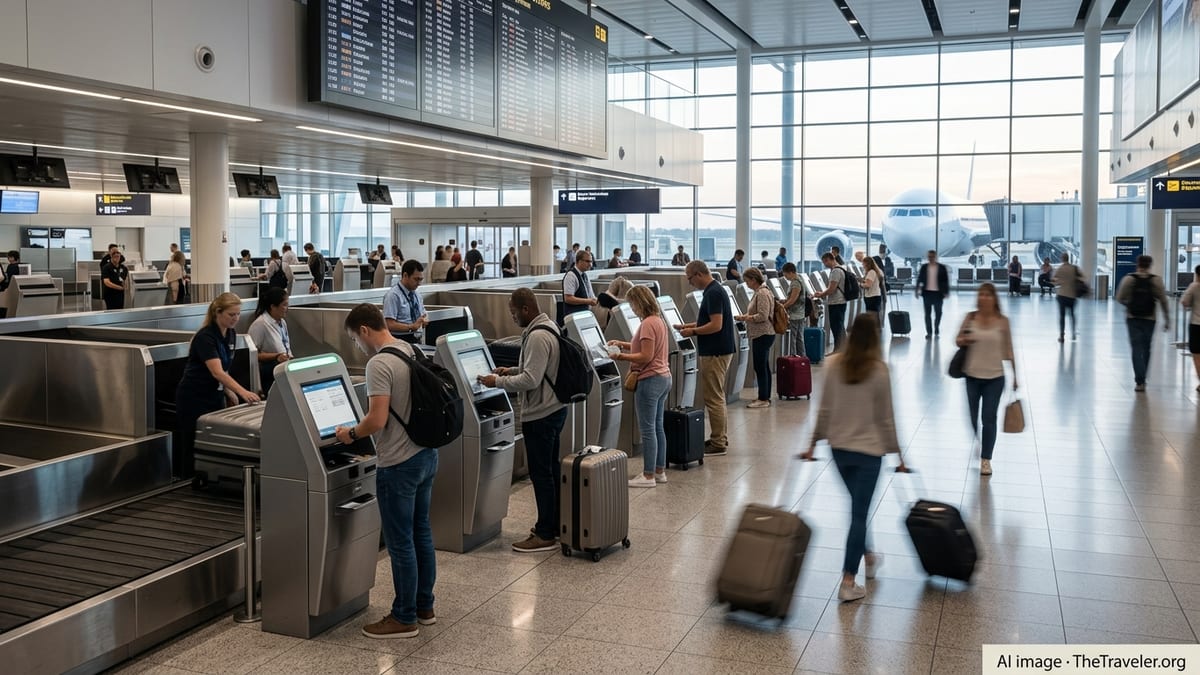
Operational disruption at a key Nordic hub
The work stoppage among baggage handling staff at Copenhagen Airport has affected one of Scandinavia’s most important aviation gateways at the start of the busy summer travel period. Publicly available information shows that ground handling companies at the airport are operating with reduced staffing, limiting their ability to load and unload bags at normal speed and pushing airlines to adjust schedules.
Reports indicate that aircraft are spending longer on the ground while handlers clear containers and bulk baggage by hand. This is contributing to a knock-on pattern of delayed departures and late arrivals across the network, particularly on short-haul European routes that rely on tight turnaround times.
Copenhagen Airport, which serves Denmark, southern Sweden and much of the wider Øresund region, typically handles tens of thousands of checked bags each day during June. The baggage stoppage has exposed how dependent flight punctuality is on smooth ground operations, even when air traffic and weather conditions remain relatively stable.
According to published coverage and traveler accounts, some flights are leaving on time but without all checked bags on board, forcing airlines to reroute luggage later in the day or on subsequent days once ground capacity becomes available.
Long waits at carousels and growing luggage backlogs
For arriving passengers, the most visible impact has been extended waits at baggage carousels and the sight of growing piles of unclaimed luggage. Social media posts and travel forum discussions describe passengers waiting well beyond usual delivery targets, in some cases more than an hour, before bags begin to appear on the belts.
Recent experience at Copenhagen during earlier technical disruptions in its automated baggage system has shown how quickly backlogs can accumulate when the normal flow breaks down. At that time, several thousand bags required manual handling and forwarding over subsequent days, a pattern that travelers now fear could repeat if the current stoppage persists.
Publicly available information from the airport indicates that when baggage handling capacity is constrained, priority is often given to transfer luggage to protect onward connections. This can leave origin and destination passengers waiting longer landside, even when their flight has arrived on time, as handlers concentrate on time-critical transfers airside.
Ground handling companies serving airlines at Copenhagen have previously been required to call in additional staff and extend shifts to clear backlogs following major disruptions. Travel industry observers suggest that similar measures may again be needed if the present stoppage is prolonged or escalates.
Transit passengers face missed connections and rerouting
The baggage stoppage is creating particular challenges for travelers using Copenhagen as a connecting hub. Many itineraries through the airport are built on tight transfer windows, and any delay in unloading bags or preparing aircraft for departure can quickly erode that margin.
Traveler reports on airline-focused forums indicate that some passengers are making their onward flights while their checked baggage does not, especially where minimum connection times are under 75 minutes. In those cases, bags are being retagged to later services or alternative routings, extending the time before travelers are reunited with their belongings at final destinations.
Airlines that rely heavily on Copenhagen for long-haul and regional connections are reported to be adjusting some departure times, holding flights for key inbound connections where possible, or proactively rebooking passengers whose itineraries are at high risk of disruption. However, these measures can only partially offset the strain created by reduced baggage handling capacity on the ground.
Travel advisors note that even when flights operate, baggage delivery issues can create additional pressures on accommodation plans, cruise departures and rail connections, particularly for travelers on tightly scheduled itineraries across Europe and North America.
Guidance for travelers passing through Copenhagen
Travel experts and passenger advocacy groups are urging travelers transiting Copenhagen in the coming days to allow extra time at the airport, monitor their flight status closely and prepare for the possibility of delayed or missing luggage. Public guidance from airlines and travel risk consultancies in similar situations has emphasized the value of keeping essential items in carry-on bags whenever possible.
Advisers commonly recommend packing medication, important documents, a change of clothes and valuables in cabin baggage, given the heightened risk that checked bags may not travel on the same aircraft. Travelers with short connections are being encouraged to review their itineraries and, where feasible, move to services with longer layovers to reduce the likelihood of missed flights or separated luggage.
Passenger rights organizations point out that under European Union rules, travelers whose baggage is delayed or lost may be entitled to reimbursement for essential purchases and, in some cases, compensation, depending on the circumstances. Claims typically need supporting documentation such as baggage delay reports and receipts for replacement items.
Airlines operating at Copenhagen are advising passengers to file missing baggage reports as soon as a delay becomes apparent, either at airport desks or through digital channels, to ensure bags can be tracked once ground operations normalize.
Broader context of summer travel strain
The disruption at Copenhagen comes against a backdrop of intensifying pressure on European aviation as summer 2026 travel builds. Industry reports highlight a combination of high passenger demand, staffing challenges at airports and ground handlers, and periodic industrial actions across the continent, all of which are contributing to a more fragile operating environment.
Recent data from European air traffic network analyses has already pointed to rising airport-related delays in early 2026, even before the peak holiday months. Baggage handling issues, whether triggered by work stoppages, staffing shortages or technical failures, are increasingly cited as a key factor in passenger dissatisfaction and operational bottlenecks.
Travel observers note that Copenhagen is not alone in grappling with strain on ground operations, but its role as a major Scandinavian hub magnifies the impact when problems occur. Disruptions at the airport can reverberate through airline schedules across northern Europe, affecting both point-to-point travelers and those connecting between continents.
For now, the pace at which baggage handling services at Copenhagen can be stabilized will be central to restoring punctuality and passenger confidence. Travelers planning to pass through the airport in the days ahead are being advised, based on public guidance and current reports, to stay informed, travel with lighter checked baggage where possible and factor potential delays into their plans.