


More news on this day
Viking has expanded its European river cruise presence with the delivery of Viking Dagur, a new Longship-class vessel designed for itineraries across key waterways including the Rhine, Main and Danube.
Get the latest news straight to your inbox!
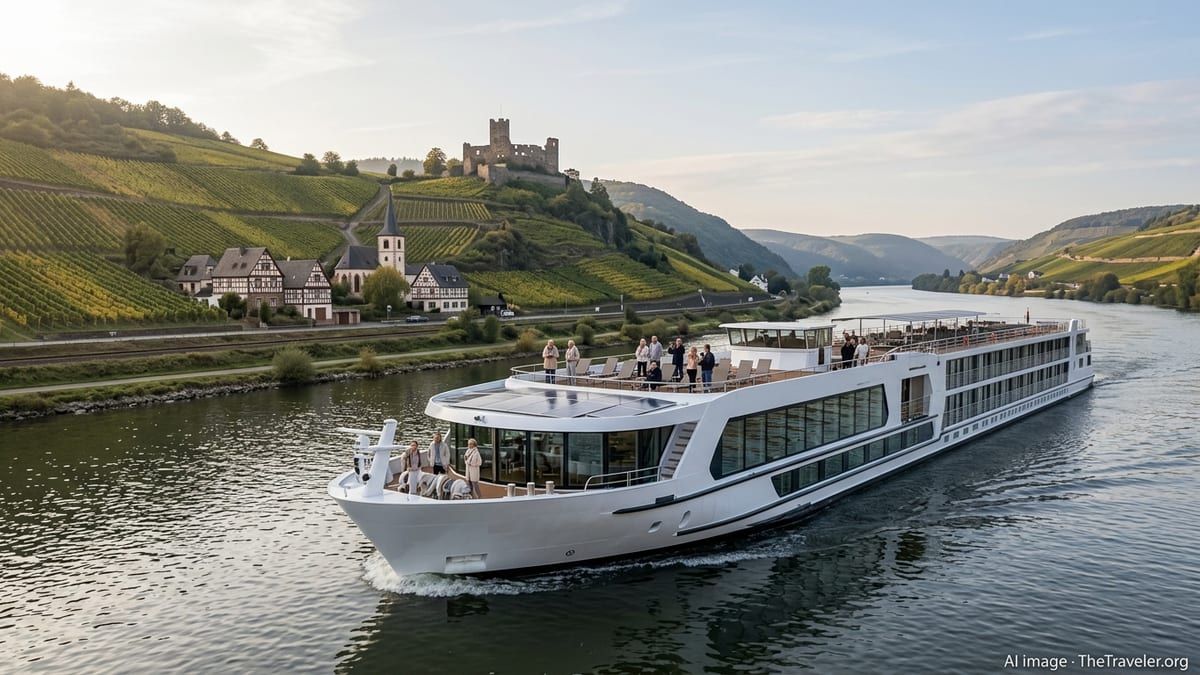
Newest Longship Extends Viking’s European River Reach
Publicly available fleet data and shipbuilder information indicate that Viking Dagur is among the latest additions to the company’s Longship series, a class of 190-passenger river vessels tailored for Europe’s major inland routes. The ship’s entry into service reinforces Viking’s focus on dense deployment across the continent’s busiest cruise rivers.
Viking Dagur follows the familiar Longship template, with 95 staterooms spread across multiple decks and a shallow draft suited to Europe’s variable river conditions. The ship’s dimensions and capacity align with infrastructure on the Rhine, Main and Danube, including locks, low bridges and narrow channels that constrain vessel size and design.
The introduction of another Longship in Europe comes at a time when demand for river itineraries continues to recover and diversify. Industry reports show that travelers are increasingly seeking slower-paced journeys focused on history, culture and smaller ports that are not accessible to ocean ships.
By placing additional tonnage on established routes, Viking appears to be positioning Viking Dagur to absorb both repeat guests and first-time river cruisers drawn by brand familiarity and consistent onboard standards.
Design Focused on Scenic Sailing and Efficient Space
According to technical descriptions published by Viking, Longship vessels such as Viking Dagur emphasize open sightlines, outdoor spaces and a compact but efficient interior layout. The ships are characterized by a square bow that maximizes usable interior volume while still meeting the operational constraints of European waterways.
Key shared features across the class include the Aquavit Terrace at the bow, an indoor-outdoor lounge and dining space that allows guests to remain sheltered while maintaining forward views. This configuration is intended to support scenic sailing throughout the day, particularly on stretches of the Rhine Gorge and the Wachau Valley where river cruising is marketed as a continuous sightseeing experience.
Stateroom categories on Viking Dagur are expected to mirror other Longships, including standard river-view cabins, French balcony rooms and a limited number of true two-room suites. Public documentation emphasizes Scandinavian-inspired interiors with neutral tones, natural materials and functional storage, a look that has become closely associated with the brand’s river and ocean fleets.
The vessel’s design also aims to accommodate hotel operations within a tight footprint, balancing guest amenities with back-of-house space for catering, housekeeping and technical systems required for multi-week itineraries without homeport support.
Deployment on Signature Rhine, Main and Danube Itineraries
Voyage listings and fleet deployment patterns indicate that Viking Dagur is expected to operate on several of Viking’s core European river programs. These include classic week-long journeys on the Rhine, extended Grand European-style routes that combine the Main and Danube, and seasonal sailings focused on cultural events and holiday markets.
On the Rhine, the ship is positioned to serve itineraries linking cities such as Amsterdam, Cologne and Basel, with stops in smaller wine towns and historic riverbank communities. These routes typically highlight castle-dotted landscapes and UNESCO-listed valleys, a key selling point for first-time river cruisers.
When operating along the Main and Danube, Viking Dagur is expected to navigate the network of locks and canals that connect the North Sea to the Black Sea basin. This corridor underpins multi-country itineraries that can cover Germany, Austria, Hungary and beyond within a single voyage, with shore excursions focused on imperial capitals, medieval centers and regional food traditions.
Seasonal programming, including late-autumn and early-winter schedules, is likely to see the ship aligned with Christmas market cruises that have grown in popularity, particularly among North American travelers seeking short-haul seasonal experiences concentrated in central Europe.
Fleet Growth Signals Confidence in European River Market
Corporate disclosures and recent press materials from Viking point to sustained investment in European river tonnage over the mid-2020s. The addition of Viking Dagur, alongside other newbuilds, reflects a wider expansion strategy that encompasses river, ocean and expedition sectors.
Viking’s orderbook details multiple river ships scheduled for delivery through 2028, suggesting that the company anticipates continued long-term demand for European itineraries. Industry reports tracking new vessel construction highlight Viking as one of the most active operators in the river segment, both in terms of fleet size and forward orders.
Analysts following the cruise and travel sector note that river cruising has been expanding beyond its traditional core markets, with a noticeable uptick in interest from younger travelers and multi-generational groups. New ships like Viking Dagur provide additional capacity while maintaining a relatively intimate scale compared with large ocean vessels.
At the same time, the concentration of new tonnage in Europe underscores the competitive nature of the region. Operators are seeking to differentiate through ship design, shore-excursion depth and itinerary variety, with new vessels often introduced as platforms for updated onboard services and partnerships.
Newbuilds Arrive Amid Broader Innovation Across the Brand
The delivery of Viking Dagur coincides with a period of rapid fleet-wide development for Viking. Recent announcements have highlighted not only new river vessels in Europe but also additional ocean ships, expedition tonnage and technological milestones such as the world’s first hydrogen-capable cruise ship.
Observers see these parallel investments as a signal that the company is aiming to align its river product with evolving expectations around comfort, environmental performance and itinerary design. While hydrogen technology is currently associated with Viking’s ocean newbuilds, industry commentary suggests that advances in alternative fuels and efficiency measures on larger vessels may eventually influence future generations of river ships.
In the near term, Viking Dagur’s role is to provide additional capacity on proven routes where demand is already established. Its deployment will be closely watched by travel agents, river-cruise specialists and competitors looking to gauge how quickly new berths are absorbed in a market that has expanded significantly over the past decade.
For travelers, the ship represents one more option in a crowded but growing field of European river products, with its Longship heritage offering a familiar layout and service style for those who have sailed with Viking before, and a recognizable standard for newcomers entering the river cruise market.