


More news on this day
International and regional airlines are prolonging flight suspensions to Dubai and key Middle East hubs as conflict-related airspace closures and security concerns continue to disrupt one of the world’s busiest travel corridors.
Get the latest news straight to your inbox!
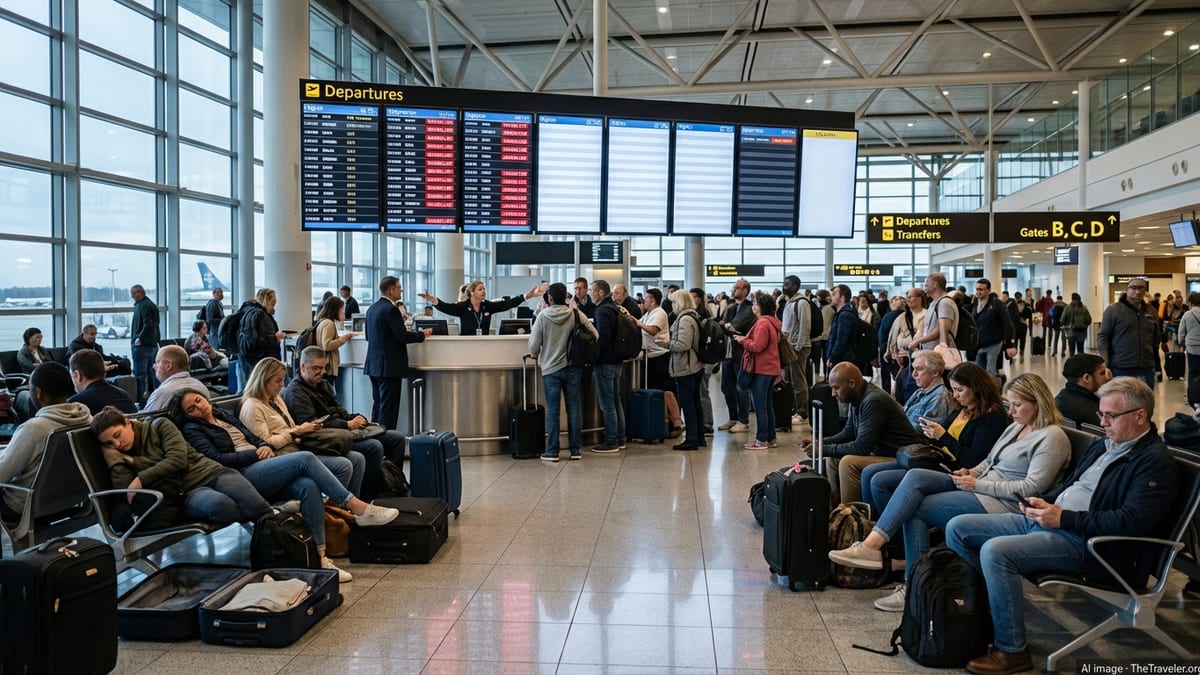
Airspace closures keep pressure on Gulf aviation hubs
Publicly available information shows that large parts of Middle East airspace remain restricted following the escalation of the Iran conflict earlier in 2026. Airspace over Iran, Iraq, Bahrain, Kuwait, Qatar, Syria and parts of the United Arab Emirates has been subject to full or partial closures, forcing airlines to divert or cancel services that would normally cross the region.
Industry briefings indicate that Dubai International Airport, one of the world’s largest international hubs, has not returned to full capacity since the late February closure of UAE airspace. Recent assessments describe operations at the airport running significantly below pre-crisis levels, even as runways and terminals have gradually reopened and some local carriers restore selected routes.
Risk advisories circulated to corporate travel managers highlight that the Gulf region collectively accounts for a sizeable share of global connecting traffic. Continued restrictions around major hubs in the UAE and neighboring states are therefore having an outsized impact on itineraries between Europe, Asia and Africa, with particular disruption on traditional “east–west” trunk routes.
Analysts note that the ongoing limitations are driven not only by physical damage and military activity but also by regulatory and insurance factors. Conflict-zone information bulletins from European and other aviation safety bodies remain in effect for multiple Middle East flight information regions, shaping the risk assessments airlines must apply before planning routings through affected skies.
Global airlines extend suspensions to Dubai and the wider region
According to recent schedules and public notices, a growing list of international airlines has extended earlier, temporary suspensions of flights into Dubai and neighboring Gulf gateways. Carriers from Europe and Asia that initially halted operations for several weeks following the February strikes have moved to push back their planned restart dates into late summer or beyond.
Updates shared with customers show that some European flag carriers have kept Dubai off their networks for the main peak travel months, citing continued uncertainty around airspace availability and routing efficiency. Several have publicly indicated that they will reassess closer to the northern winter season, with tentative dates in late October for a limited resumption if conditions allow.
In parallel, a number of Asian and Australasian airlines have maintained suspensions on direct flights to Dubai and other Gulf points while continuing to serve alternative hubs via longer detours. These airlines are generally routing services over Central Asia, the Indian Ocean or the eastern Mediterranean to avoid conflict-adjacent skies, a strategy that increases flight times and fuel burn and can constrain overall capacity.
Public schedule data also shows that some carriers with traditionally large footprints in the region, including European low-cost operators and long-haul network airlines, have trimmed frequencies or converted nonstops to one-stop services via secondary hubs. For passengers, this has translated into fewer available seats, less choice of departure times and, on many dates, higher fares on remaining options.
Regional carriers juggle network cuts, detours and limited capacity
Middle East airlines based in or near the conflict zone are also operating under extended constraints. Public announcements from Gulf and Levant carriers over recent months describe a mix of outright route suspensions, downgauged aircraft and rerouted services that steer clear of closed or high-risk airspace.
Network bulletins show that some regional carriers have temporarily withdrawn from secondary European and Asian cities to concentrate scarce resources on core routes, particularly those linking to relatively unaffected hubs. Others continue to sell tickets to and from Dubai and Abu Dhabi but with schedules that remain thinner and more subject to last-minute changes than before the crisis.
Operational updates from logistics and express cargo providers underline how fragile the situation remains. While major UAE airports are technically open, route-specific restrictions, congestion in neighboring flight corridors and the knock-on impact of diversions elsewhere are contributing to irregular operations. This has prompted airlines to publish rolling waivers for itinerary changes, and to advise customers to monitor flight status closely in the days before departure.
In some cases, regional low-cost carriers have been quicker to restore limited connectivity into Dubai from nearby markets, using shorter-range aircraft and flexible scheduling to adapt to changing airspace constraints. However, these flights are often subject to longer routings and extended block times, making tight connections more difficult and reducing aircraft utilization.
Longer routings, higher costs and a shifting map of connections
Economic analyses of the conflict emphasize that aviation is absorbing a significant share of the fallout. With direct overflights of key Middle East corridors curtailed, airlines are flying longer paths that increase fuel consumption and crew costs. In a sector already dealing with elevated fuel prices and capacity pressures, these extra miles are feeding through to fares and, in some cases, to the viability of marginal routes.
Public commentary from aviation consultancies notes that some long-haul flights between Europe and South or Southeast Asia, which once relied on overflying the Gulf region, now track further north or south. This can add up to an hour or more to flight times, complicating aircraft rotations and squeezing already tight connection banks at major non-Middle East hubs.
The disruption has also reordered the competitive balance between global gateways. With Dubai, Abu Dhabi and several neighboring airports handling fewer connecting passengers, alternative hubs in Turkey, Central Asia and parts of Europe are absorbing more transfer traffic. Flight-search data and booking trends reported by travel platforms suggest that travelers are increasingly choosing routings via Istanbul, Doha-alternative hubs and secondary European cities when Dubai options are limited or unavailable.
For premium travelers and corporates, the shifting map of reliable connections is prompting short-term changes in preferred carriers and alliance strategies. Some multinational firms are updating internal travel policies to steer employees toward airlines and routings seen as more predictable, even when that means additional travel time or slightly higher fares.
What travelers should expect in the coming weeks
For passengers planning trips that would usually route through Dubai or neighboring hubs, publicly available guidance from airlines and travel intermediaries points to a continued period of uncertainty. Extended flexibility policies from several major carriers allow for date changes, rerouting or refunds on affected Middle East itineraries, yet the exact options vary by airline and ticket type.
Travel advisories issued by a number of governments continue to recommend caution or avoidance of non-essential travel to certain parts of the region. While these advisories do not automatically halt flights, they influence both demand and the risk assessments that airlines and insurers must make when considering network adjustments.
Industry observers expect airlines to keep reviewing their Middle East schedules on a rolling basis, typically in blocks of several weeks at a time. Any further escalation in regional tensions, or conversely a sustained reduction in military activity and a relaxation of airspace notices, could rapidly shift the operating environment and trigger another wave of timetable changes.
For now, travelers are being advised in publicly available commentary to build in extra time for connections, to verify their flight status repeatedly in the days before departure and to familiarize themselves with the rebooking and refund rules of their chosen carrier. With airlines worldwide continuing to extend or modify route suspensions affecting Dubai and the broader Middle East, flexibility and up-to-date information remain essential for anyone planning to cross the region.