


More news on this day
Emirates is preparing a new travel insurance guarantee designed to protect passengers who become stranded en route to or through Dubai, responding to months of disruption and growing gaps in standard insurance coverage.
Get the latest news straight to your inbox!
A New Kind of Protection for Disrupted Itineraries
According to recent industry coverage, Emirates is working with insurance partners on a bespoke policy that would guarantee travelers a way home if they are stranded by route closures, airspace shutdowns or renewed conflict affecting the Gulf. The initiative is expected to apply to journeys to, from and via Dubai, one of the world’s busiest transit hubs, where disruption can quickly ripple through global networks.
Publicly available reports indicate that the product is being structured to go beyond traditional airline rebooking rules. Early descriptions suggest that eligible passengers would be given a defined pathway home, even if that involves being rerouted on another carrier when Emirates cannot operate the remaining legs of a journey. The intention is to provide greater certainty at a time when many travelers have seen insurance exclusions erode their protection.
The guarantee is still in development and detailed terms have not been released, but reports describe it as a travel insurance product rather than a simple customer-service gesture. That framing places it in a different category from ad hoc waivers and rebooking policies that airlines often introduce during short-lived operational crises.
Response to War Exclusions and Stranded Passengers
The move follows a period in which government travel advisories and regional tensions have made it harder for passengers to secure standard insurance for trips involving Dubai and nearby destinations. Published analyses note that many insurers have applied war and conflict exclusions to new policies covering the Gulf, classifying the situation as a known event. As a result, some travelers have found that their usual policies provide limited or no cover if they are stranded mid-journey.
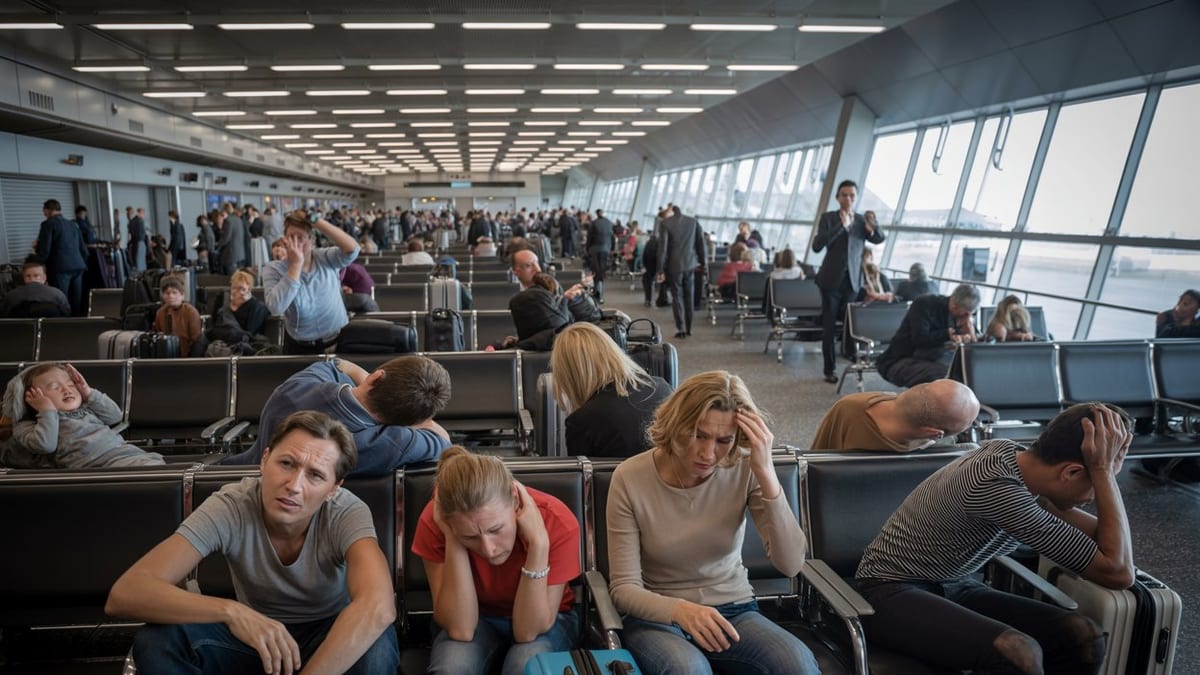
Those gaps became visible earlier this year when airspace closures across the region left thousands of Emirates customers stuck in Dubai or unable to board onward flights. Social media posts and traveler accounts described days-long waits for rebooking options, confusion over who would cover hotel bills and uncertainty about when it was safe or financially viable to rebook trips.
Public commentary from aviation observers suggests that the experience has created reputational pressure on Gulf carriers to demonstrate more robust contingency planning. A formal insurance-backed guarantee, rather than a temporary waiver, is seen by some analysts as a way to reassure cautious travelers who remain wary of booking complex itineraries through the region.
How the Emirates Guarantee Could Work
While Emirates has not yet published full policy wording, available descriptions point to several likely components. The product is expected to focus on repatriation and itinerary completion, with coverage triggering when passengers become stranded due to events outside their control, such as renewed airspace closures or sudden operational suspensions on specific routes.
Reports indicate that the airline wants the flexibility to move policyholders onto other carriers when necessary, a notable departure from typical airline disruption policies that concentrate on rebooking within the same network. For travelers, that could translate into shorter waits and more routing options when only a limited number of flights are operating.
The insurance is described in the trade press as “reasonably priced,” suggesting that Emirates aims to encourage broad uptake rather than positioning it as a niche premium add-on. Analysts expect it to be offered as an optional extra during booking for itineraries involving Dubai, at least initially, so that passengers can weigh the cost against perceived risk in the region.
Positioning Dubai as a Confident Transit Hub Again
Dubai’s status as a global connecting point depends heavily on traveler confidence that complex itineraries will operate reliably. Industry data cited in recent coverage show that transfer traffic through Dubai International fell sharply after the latest round of airspace disruptions, as both leisure and corporate customers reconsidered routings through the Gulf.
A clearly advertised guarantee that stranded passengers will have a structured route home could form part of a broader effort to rebuild that confidence. Travel trade publications suggest that Emirates is pairing the insurance project with its existing waiver policies, rebooking flexibility and ongoing schedule adjustments intended to stabilize operations through Dubai.
By anchoring the promise in a formal insurance product, rather than relying solely on case-by-case customer service decisions, Emirates appears to be signaling that it views the risk of future disruption as a manageable factor that can be priced and planned for, instead of an exceptional event.
Implications for Airline Travel Insurance Worldwide
The planned Emirates guarantee also highlights a wider shift in how airlines and insurers are responding to geopolitical volatility. Industry commentators note that traditional travel insurance has struggled to keep pace with fast-changing advisories and conflict-related exclusions, leaving travelers to navigate complex clauses about what is and is not covered when routes are altered after a booking is made.
If Emirates proceeds with a bespoke policy that explicitly addresses stranding and repatriation in the Gulf, it may set a precedent other carriers feel pressure to match on routes exposed to similar risks. Some analysts predict that large network airlines could increasingly partner with insurers to offer branded products tailored to specific regions or corridors, providing clearer guarantees than generic policies.
For travelers, the development serves as a reminder to scrutinize how any insurance policy handles missed connections, denied boarding, route suspensions and government advisories. While Emirates’ forthcoming guarantee is intended to fill a conspicuous gap for those flying via Dubai, consumer advocates continue to emphasize that each product’s definitions and exclusions will determine how much protection stranded flyers actually receive when plans unravel.