


More news on this day
Bahrain’s fragile air travel recovery has suffered a new setback after Gulf Air cancelled two key long-haul services linking its hub to Singapore and Dhaka, leaving passengers stranded and raising fresh questions about the reliability of regional connections just weeks after severe Gulf airspace disruptions.
Get the latest news straight to your inbox!
New Cancellations Hit Singapore and Dhaka Connections
According to publicly available schedules and booking data, Gulf Air has recently withdrawn a pair of high-demand services that use Bahrain as a connecting hub for traffic between Asia and the Middle East. Travel industry trackers indicate that one affected service links Bahrain with Singapore via a multi-leg itinerary, while another serves the busy Bahrain–Dhaka corridor, a route heavily used by migrant workers and family visitors.
Reports from passengers and aviation forums suggest that the cancellations were communicated close to departure for some travelers, prompting last-minute scrambles for alternatives. Travellers booked on itineraries that included onward connections through Singapore or Dhaka describe receiving revised routings or open-ended vouchers as the airline reworks its post-disruption schedule.
Independent schedule aggregators show that, in the short term, Gulf Air is focusing on restoring a core network from Bahrain while still operating an interim schedule from Dammam in Saudi Arabia, which served as a temporary base during the height of the airspace shutdown. Within this recalibrated network, certain long-haul or lower-frequency services appear to be most vulnerable to suspension, including select flights connected with Singapore and Dhaka.
Aviation analysts note that these particular routes are strategically important because they provide onward links to Southeast Asia and the Indian subcontinent, regions that underpin much of Bahrain’s transit traffic. Their removal, even temporarily, reduces the carrier’s ability to offer competitive one-stop connections between Asia and Europe or the wider Middle East.
Legacy of the Bahrain Airspace Closure
The latest disruption comes against the backdrop of a wider regional aviation crisis triggered by the Iran war earlier this year. Airspace closures across several Gulf states led to thousands of daily cancellations, with Bahrain International Airport among the hardest hit. Publicly available assessments describe Gulf Air suspending all operations from its home base for several weeks and repositioning aircraft to Saudi Arabia, while rival carriers also trimmed schedules or rerouted around restricted corridors.
During March, independent travel and legal advisory sites documented mass cancellations into and out of Bahrain, including flights serving London, New York, Dubai, Doha and Singapore. Some estimates suggested tens of thousands of travelers were left seeking rebooking options as regional hubs from Doha to Dubai struggled with knock-on congestion.
Bangladeshi and Middle Eastern media coverage shows that Dhaka was one of the South Asian cities most impacted by the Gulf-wide turmoil, with more than one hundred flights to Gulf destinations reportedly cancelled over several weeks. Bangladesh responded at times by chartering or arranging special Gulf Air services on selected dates to move stranded expatriate workers between Dhaka, Dammam and Bahrain, underscoring the depth of the disruption on that corridor.
Even as Bahrain’s airspace has reopened and Gulf Air has signalled a phased return to more than 50 destinations by early summer, the system remains fragile. With aircraft and crews still out of normal rotation and demand patterns shifting in response to geopolitical risks, selective cancellations remain a feature of the recovery phase rather than an anomaly.
Stranded Passengers and Patchwork Remedies
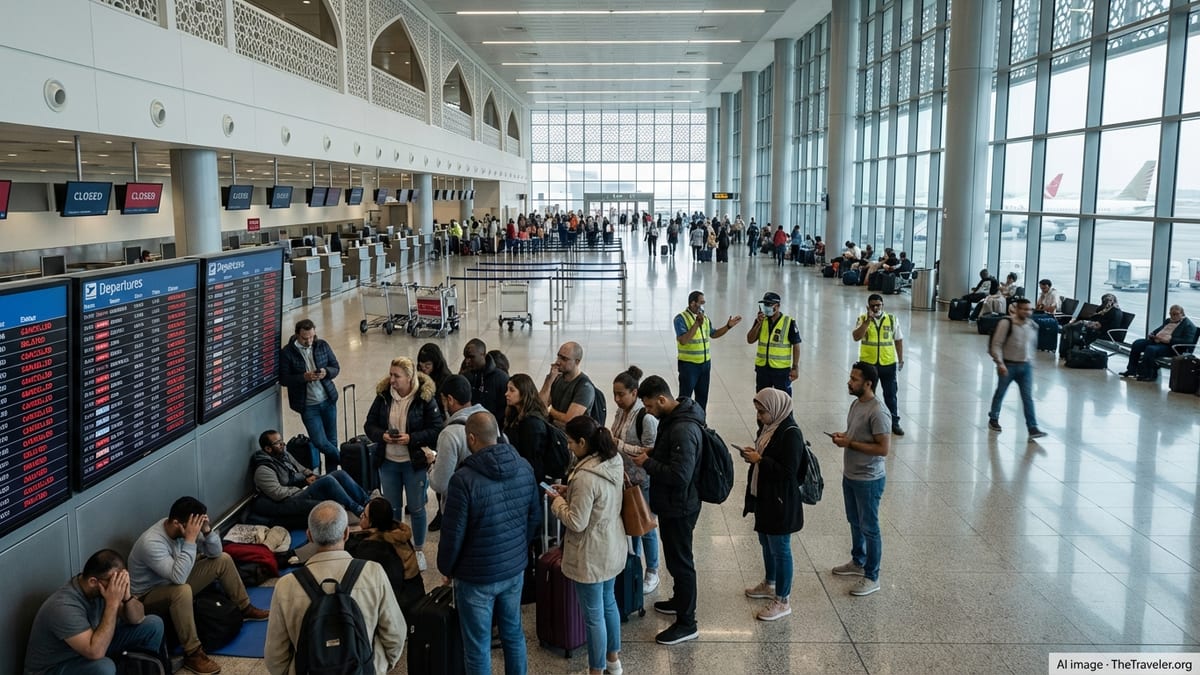
The immediate human impact of the Singapore and Dhaka-linked cancellations is visible in airport images and social media posts showing queues at transfer desks and crowded waiting areas in Dhaka and other regional gateways. Passengers recount overnight waits, repeated rebooking attempts and uncertainty over whether replacement flights will operate as scheduled.
Travel advice platforms and airline circulars published since early March outline a patchwork of options for affected Gulf Air passengers. These typically include free rebooking within a limited travel window, rerouting on alternative Gulf Air services via Dammam or another Gulf hub, or refunds in cases where no reasonable alternative is available. However, the exact remedies depend on when tickets were issued, the original travel dates and the fare rules attached to each booking.
Consumer forums also highlight reports of delays in processing refunds and difficulties reaching call centres at peak times, with some customers turning to online travel agencies or credit card issuers to resolve outstanding claims. For transit passengers bound for destinations such as Singapore, the cancellation of a single Gulf Air leg can unravel complex itineraries involving multiple airlines and separate tickets, complicating both rebooking and compensation discussions.
Legal and passenger-rights commentators caution that protections vary widely by jurisdiction. Flights originating in the European Union or involving EU carriers may trigger specific compensation frameworks, while services beginning in the Middle East or South Asia are instead governed by local regulations and airline contract terms. Travellers on the affected Bahrain–Singapore and Bahrain–Dhaka routings are therefore navigating a patchwork of rules as they seek redress.
Ripple Effects on Regional Connectivity
The removal of even a small number of strategic flights can have outsized effects on network connectivity in the Gulf, where many routes rely on carefully timed banks of arrivals and departures. Analysts point out that Bahrain has historically positioned itself as a nimble, mid-sized hub feeding traffic between Europe, the Gulf and Asia. Interruptions on spokes such as Dhaka and Singapore reduce the number of viable connection combinations and may push travellers toward larger hubs in Dubai, Doha or Abu Dhabi.
Data from flight-tracking and fare-comparison platforms indicates that some passengers originally ticketed on Gulf Air are now rebooking via competitors that still operate stable links between South Asia, Southeast Asia and Europe. Routes via Singapore, Bangkok and other Asian hubs have seen increased demand from travellers unwilling to risk further Gulf-related schedule changes, often at the cost of longer travel times.
For Bangladesh, disruptions on the Bahrain route compound a broader challenge of ensuring reliable air links for millions of expatriate workers in the Gulf. When services to Bahrain or neighbouring states are interrupted, workers often face visa deadlines, contract start dates and limited financial reserves, making delays particularly stressful. Similar concerns apply to business and leisure travellers who had relied on Gulf Air’s Singapore connections for relatively direct access to Southeast Asia.
Industry observers suggest that rebuilding confidence in Bahrain as a connecting hub will require not only the restoration of published schedules but also a sustained period of operational stability. While Gulf Air has announced plans to restore and even expand its network by June, the persistence of ad hoc cancellations on routes such as those touching Singapore and Dhaka may keep some travellers on alternative carriers for months to come.
What Travellers Should Do Now
Travel experts and aviation watchers recommend that anyone booked on Gulf Air itineraries involving Bahrain, Singapore or Dhaka over the next several weeks monitor flight status closely and maintain flexible plans. Schedules remain in flux as the airline balances aircraft availability, crew rotations and shifting demand across its dual operations in Bahrain and Dammam.
Passengers holding upcoming tickets are advised by consumer advocates to check their booking reference directly on the airline’s website or mobile app, rather than relying solely on third-party travel agents. If a flight shows as cancelled or significantly rescheduled, travellers can then review the latest rebooking and refund policies, which have been periodically updated in official tariff bulletins and public passenger notices.
For those yet to book, independent travel guides suggest building extra time into itineraries that require Gulf connections or considering alternative routings that avoid the most affected hubs. Purchasing travel insurance that explicitly covers geopolitical disruption and airspace closures is also being highlighted as a prudent step given the volatility seen across the region since late February.
As Bahrain works to fully reopen its skies and Gulf Air accelerates its phased network restoration, the fate of suspended links to high-profile destinations such as Singapore and high-demand labour corridors like Dhaka will be watched closely. Their return, or prolonged absence, is likely to be a key barometer of how quickly the kingdom can reclaim its role as a reliable bridge between Asia, the Gulf and Europe.