


More news on this day
Operations at Fort Lauderdale-Hollywood International Airport faced fresh disruption today, with around 80 delays and three cancelled departures reported across American Airlines, Allegiant Air, JetBlue, Southwest and other carriers, complicating travel plans for passengers bound for cities across the United States and popular Caribbean beach destinations.
Get the latest news straight to your inbox!
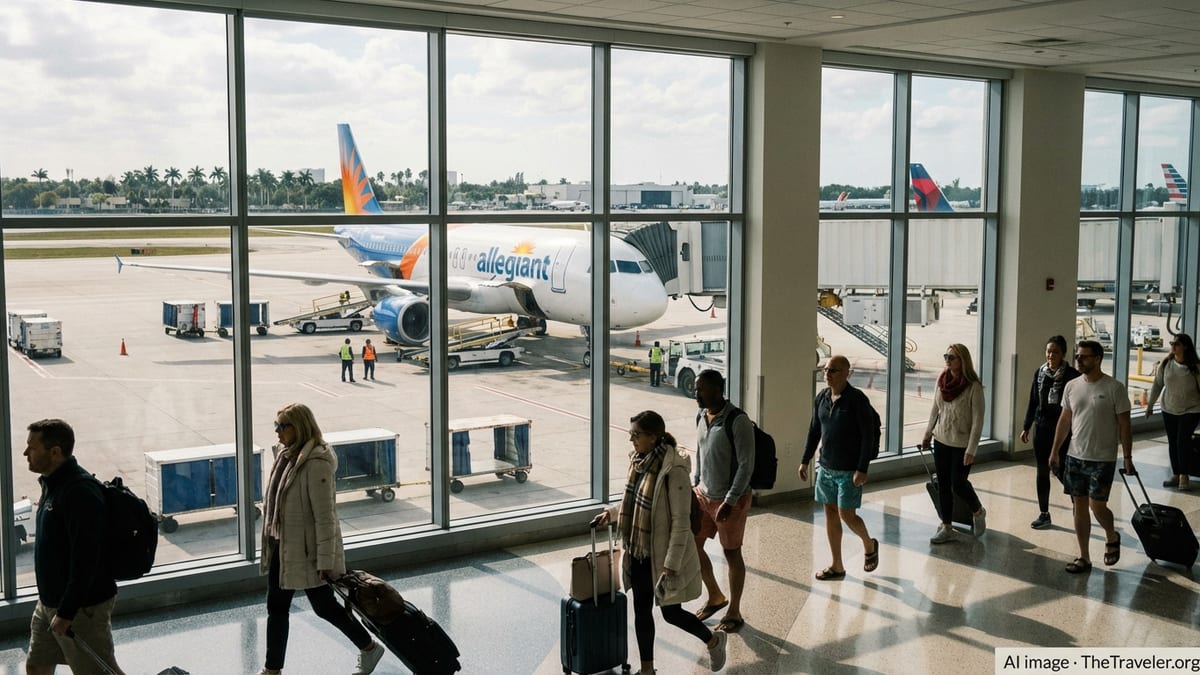
Busy South Florida Hub Faces Another Day Of Disruption
The latest operational snarl comes at a time when Fort Lauderdale-Hollywood International Airport is handling near-record passenger volumes, reinforcing the vulnerability of one of South Florida’s busiest transport gateways to even relatively small schedule shocks. Publicly available airport statistics show that the facility processed more than nine million passengers in the first part of 2026, with JetBlue, Spirit, Southwest, American and Allegiant among the largest operators by market share.
Friday’s wave of delays and a small number of cancellations, although modest compared with major nationwide disruptions, adds pressure to an airport that has already been adjusting to rapid shifts in its airline landscape. Recent months have brought a shutdown of Spirit Airlines and a series of network adjustments by other carriers, including American and Allegiant, alongside aggressive expansion from JetBlue on domestic and Latin American routes.
Fort Lauderdale’s role as a lower cost alternative to Miami International means its operational stumbles can echo across a wide catchment area. Travelers heading to and from Broward and Palm Beach counties frequently route through Fort Lauderdale, as do visitors connecting to cruise departures at Port Everglades. Even limited disruptions can therefore generate knock-on effects in hotel bookings, cruise embarkations and onward ground transport.
While a precise triggering cause for today’s disruptions was not immediately clear from public data, flight tracking boards showed a concentration of delayed departures in the afternoon and evening banks, when turn times are shortest and congestion risk is highest. That pattern suggests a combination of minor schedule slippage building throughout the day and possible weather or air traffic flow constraints in key connecting markets.
Major U.S. Carriers See Delays Spread Across The Network
American Airlines, Southwest and JetBlue, three of the largest domestic operators at Fort Lauderdale, all appeared among the carriers reporting late departures. Publicly available schedules show that these airlines link Fort Lauderdale with dozens of cities across the eastern United States, including New York area airports, Boston, Washington, Atlanta, Dallas and Chicago, as well as long haul flights to hubs such as Los Angeles.
When Fort Lauderdale departures run behind schedule, the impact is rarely confined to South Florida. Aircraft and crews operating out of Fort Lauderdale are typically scheduled to continue to other cities, so a delay on an early segment can degrade on time performance on subsequent legs. Travelers departing from or arriving in distant cities may therefore experience delays that are indirectly tied to congestion or disruptions that began in South Florida.
Southwest’s operation is concentrated in Terminal 1, while American and JetBlue share space in Terminal 3 alongside several competitors. That clustering can introduce additional bottlenecks at security checkpoints, gates and ramp areas during peak departure windows, especially when ground handling teams are working multiple late running flights at once. Visual inspection of today’s departure boards indicated clusters of 30 to 90 minute delays in these terminals during the afternoon peak.
For passengers, the practical consequences included missed connections on multi segment itineraries, later than expected arrivals for business and leisure trips, and tighter timelines for boarding cruise ships or regional commuter flights. Consumer advocacy groups routinely recommend that travelers using South Florida hubs build in extra connection time, particularly during summer storm season, to mitigate the risk of compounding delays.
Allegiant And Leisure Carriers Hit On Key Sun And Beach Routes
Allegiant Air and other leisure oriented airlines were also affected, with delayed departures reported on routes linking Fort Lauderdale to domestic secondary markets and resort destinations. Allegiant has steadily increased its presence at the airport in recent years, focusing on point to point services to cities such as Nashville, Cincinnati and various Midwestern and Southern markets that feed tourist traffic into South Florida.
Because many Allegiant routes operate only a few times per week, even a single cancellation or extended delay can have an outsized impact on passengers. Travelers whose flights are scrubbed often face limited options for same day reaccommodation and may need to accept rerouting via other hubs, overnight stays or partial refunds, complicating weekend getaways and family travel plans.
The timing of today’s disruption arrives as Fort Lauderdale continues to reshape its role as a key leisure gateway after the exit of Spirit Airlines. Allegiant and other low cost carriers, including Frontier and Breeze, have been increasing service to capture price conscious travelers who previously relied on Spirit for frequent, no frills connections. When irregular operations hit this segment, the effects can cascade quickly through a largely discretionary, holiday focused customer base.
Tourism analysts note that delays and cancellations on these routes do not just affect arrivals into South Florida. Many of the same aircraft rotate through popular warm weather destinations in Florida and beyond, meaning schedule problems originating at Fort Lauderdale may also be felt in outbound markets where travelers are beginning or ending Caribbean cruises and beach vacations.
Caribbean Destinations Feel Knock On Effects
JetBlue, American and several regional and international carriers use Fort Lauderdale as a launch pad for service to the Caribbean, including Jamaica, the Dominican Republic, Puerto Rico and parts of Central and South America. According to published schedules, JetBlue alone serves multiple Caribbean gateways from Fort Lauderdale, while other airlines provide links to destinations such as Nassau, Grand Cayman and various resort islands.
Even when today’s delays were concentrated on mainland routes, the disruptions risked spilling over into Caribbean operations as aircraft and crews cycled between domestic and international legs. Short turn times between arrivals from northern U.S. cities and departures to island destinations can leave little margin for recovery if an inbound flight is significantly delayed.
Travelers heading to the Caribbean from Fort Lauderdale often rely on tight connections, especially when linking from smaller U.S. cities served by Allegiant, Southwest or regional affiliates. Delays on those feeder flights can translate into missed departures on once daily or limited frequency Caribbean services, forcing passengers to rebook itineraries and potentially lose prepaid nights at resorts or cruise segments.
Caribbean tourism officials have repeatedly emphasized the importance of reliable air access to sustaining visitor numbers, and Fort Lauderdale’s growing role as a gateway has generally been welcomed. Periodic days of disruption, however, highlight the fragility of networks that depend on a complex mix of low cost and full service carriers using shared gate and runway infrastructure.
Travelers Confront Limited Options And Seek Workarounds
With dozens of flights running late and a handful cancelled outright, many passengers at Fort Lauderdale spent part of the day queuing at service counters, attempting to rearrange connections via other hubs, or searching for scarce seats on later departures. Those whose plans allowed flexibility often shifted to flights from nearby Miami International Airport or considered last minute rental cars and intercity buses to reach destinations within driving distance.
Consumer advocates typically advise travelers caught in similar disruptions to monitor airline apps and departure boards closely, document their delay or cancellation, and explore options such as rebooking on alternative routes or requesting travel credits in line with individual airline policies. While U.S. regulations provide fewer automatic entitlements than some overseas frameworks, carriers at times offer hotel or meal vouchers during significant irregular operations, especially when disruptions are within their control.
For Fort Lauderdale itself, today’s operational challenges underline the pressures on an airport navigating rapid changes in airline lineups, evolving travel demand and the seasonal volatility of Florida weather. As carriers such as JetBlue expand and others recalibrate their presence in the wake of industry consolidation and route restructuring, maintaining resilient day to day operations will remain an ongoing test for one of the country’s most important leisure gateways.
More broadly, the episode serves as another reminder to travelers across the United States and Caribbean that even localized schedule problems at a single hub can reverberate hundreds or thousands of miles away. For those planning summer trips through South Florida, the latest disruptions may reinforce the value of building extra time into itineraries and preparing contingencies for when flights do not operate as planned.