


More news on this day
Another leisure flight has departed without dozens of ticketed passengers on board after border control delays at a European airport, intensifying scrutiny of how new border systems and peak-season staffing shortfalls are converging to disrupt travel plans.
Get the latest news straight to your inbox!
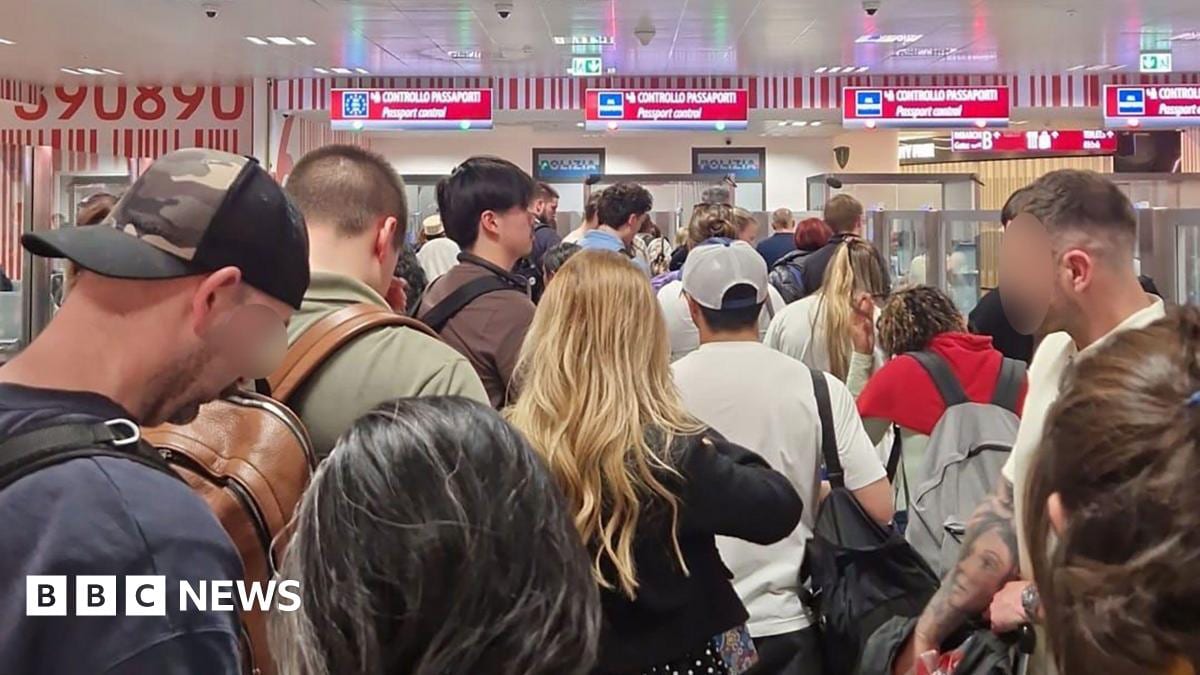
Ryanair Passengers Stranded in Marseille Border Bottleneck
Reports from Marseille Provence Airport on April 20 indicate that 83 passengers booked on a Ryanair service were unable to board after becoming stuck in lengthy passport control queues. The flight, operating from the Schengen zone to a non-Schengen destination, departed with many seats empty while affected travelers remained in the restricted area.
Publicly available information describes significant congestion at exit border checks, where all travelers leaving the Schengen area must undergo passport inspection. As the departure time approached, the line reportedly moved too slowly for dozens of passengers to clear the formalities and reach the gate before the boarding cut-off.
Airport staff and border police were described as attempting to manage the backlog, but by the time the situation stabilized, the aircraft had already left. Those stranded were later escorted out of the secure zone and faced the prospect of rearranging their own travel, including last-minute tickets, accommodation and ground transport.
The Marseille incident follows mounting passenger frustration across Europe, where border queues at peak times are increasingly seen as a weak point in the travel chain, particularly when staffing or new technology fails to keep pace with rising demand.
Earlier EasyJet Disruption in Milan Highlights Emerging Pattern
The events in Marseille echo a separate disruption earlier in April at Milan Linate, where more than 120 EasyJet passengers bound for Manchester missed their flight after long waits at passport control. Published coverage indicates that the aircraft departed with barely a fifth of its booked passengers on board after the majority were still waiting to clear exit checks.
In that case, travelers reported that information screens and boarding messages did not reflect the severity of the border delays, leaving many to believe they still had time to make the flight. By the time they reached the gate, doors were closed and ground handling had already shifted to preparing the aircraft for departure.
Consumer advocates and legal commentators note that these situations occupy a grey zone for passenger rights. When delays stem from airport infrastructure or border-control processes rather than airline operations, compensation entitlements under European regulations may be limited, even if the outcome for travelers is effectively the same as a denied boarding.
Nevertheless, the similarity between the Milan and Marseille events has drawn attention to the shared root causes, including the interaction between new border systems and existing terminal layouts that were not designed for prolonged queues or repeated document checks.
New EU Entry and Exit Rules Under Pressure
Much of the current disruption has been linked to the phased roll-out of the European Union’s new Entry/Exit System, which records biometric and travel data for non-EU nationals crossing the external borders of the Schengen area. Airlines operating from hubs such as Lanzarote, Milan and now Marseille have been affected when passport control processing times spike beyond what traditional schedules can absorb.
Earlier this year, regional business groups in Spain warned that the digital border-control upgrades risked creating serious bottlenecks at peak hours if staffing and training were not scaled accordingly. Local coverage from the Canary Islands described previous incidents in which dozens of Ryanair passengers were left behind in Lanzarote after being delayed at passport control, underlining that the current wave of disruption did not begin in April.
Operationally, the Entry/Exit System adds extra steps to the departure process for many travelers, especially those leaving the Schengen area for the United Kingdom or other non-EU destinations. When terminals are busy with holiday traffic, sports events or school breaks, the additional time per passenger can quickly multiply into hour-long queues that cut across multiple departures.
Industry analysis suggests that the success of the new regime will depend heavily on how quickly airports can recalibrate staffing, equipment and queue management. Without those adjustments, flights that technically leave on time may still do so with a significant share of their passengers stranded in the wrong part of the terminal.
Airlines, Airports and Passengers Share the Fallout
The recent incidents highlight a complex allocation of responsibility. Airlines typically set boarding deadlines to protect on-time performance and aircraft rotations, while airports and border authorities control the speed at which passengers can physically reach the gate. When border delays spill over, it is often passengers who absorb the financial and emotional cost.
Reports from affected travelers in Marseille and Milan describe confusion over whether to prioritize staying in the queue or leaving to seek assistance from airline desks. In crowded terminals, information about the likely waiting time at passport control is often limited or absent, making it difficult for passengers to gauge the risk of missing a flight.
Consumer organizations have urged travelers to document their experience carefully, including photos of queues, timestamps and any written communication from airlines or airports. While formal compensation may be restricted in cases deemed outside airline control, detailed records can support reimbursement claims for additional expenses or help strengthen future regulatory reviews.
For airlines, the reputational damage of leaving large numbers of passengers behind can be significant, even when carriers argue that they complied with all legal obligations. As more such cases surface, pressure is likely to grow for clearer, shared protocols on how to manage departures when border systems grind to a halt.
Calls Grow for Better Planning Ahead of Summer Peak
With Europe’s main summer travel season approaching, aviation analysts are warning that the combination of high demand and untested border regimes could generate further disruption if mitigation measures are not accelerated. Some airports have already begun advising passengers on non-Schengen departures to arrive far earlier than the traditional two-hour guideline.
Policy discussions at the European level are increasingly focused on how to balance border security objectives with the need to maintain a predictable travel experience. Proposals being debated include clearer minimum service standards for border waiting times, improved data sharing between airports and airlines, and more visible real-time queue information for travelers inside terminals.
For now, those planning international trips are being encouraged by travel experts and consumer groups to build in additional buffer time when flying from Schengen airports to destinations outside the bloc, particularly where new systems are being introduced. The recent departures from Milan, Lanzarote and Marseille with dozens of empty seats have become cautionary examples of what can happen when infrastructure and demand fall out of sync.
As border technology continues to evolve, the way these early challenges are handled will likely shape public confidence in the system for years to come. For the passengers left watching their flights take off without them, the priority remains more immediate: finding a way home and ensuring their experience is not repeated on the next departure.