


More news on this day
Dozens of Jet2 passengers were left behind at Manchester Airport after being directed into a boarding stairwell, only to discover that their aircraft had departed without them, according to multiple UK media and aviation reports.
Get the latest news straight to your inbox!
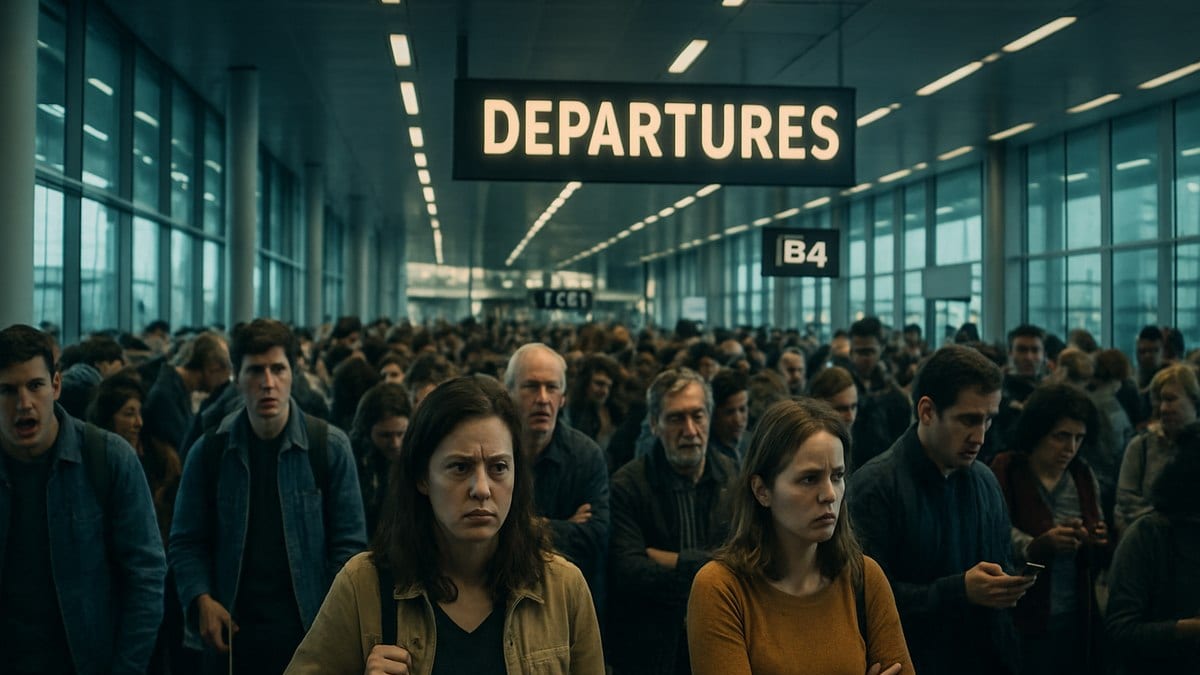
Unusual Boarding Breakdown at Manchester
Reports indicate that the incident occurred on the morning of 19 January 2026, during boarding for a Jet2 flight from Manchester to Spain. Around 35 passengers, described in coverage as part of a final boarding group, had cleared security and were guided toward the aircraft via a stairwell linking the terminal to the apron.
Instead of being led directly onto the aircraft, the group remained in the enclosed stairwell area while the rest of the boarding process continued. Passengers later recounted that they waited without clear communication, assuming they were in a holding area ahead of final checks before stepping onto the plane.
By the time the situation became apparent, the aircraft had already departed. Accounts published in the British and European aviation press state that the group discovered what had happened only when an airport worker accessed the stairwell and queried why they were still there.
The unusual breakdown in coordination has drawn attention because all of the affected customers were reportedly checked in, held boarding passes and had followed airport and airline directions to the gate.
Questions Over Ground Handling and Safety Protocols
The episode is being highlighted within the UK aviation sector as an operational anomaly, particularly because boarding procedures are designed to ensure that no passengers are left in secure access areas once a flight departs. Analysts quoted in trade coverage note that stairwells connecting terminal and apron are considered controlled zones where access and occupancy should be tightly monitored.
Reports suggest that the boarding group was effectively out of sight once they entered the stairwell, raising questions over how headcounts, final cabin tallies and jetload calculations were completed without reconciling their absence. Aviation commentary has pointed out that luggage belonging to some of the stranded group was initially believed to be on board, an issue that, if confirmed, would run counter to standard safety practice that requires baggage to be removed if the associated passenger is not flying.
Specialist outlets have also linked the incident to broader concerns about staffing levels and communication between airport personnel and airline ground handlers. While specific internal procedures remain undisclosed, observers note that such a lapse likely involved more than one point of failure, from gate management to aircraft dispatch.
Industry analysts say the case is now being cited in discussions about how airports supervise secure stairwells and non-jetbridge boarding routes, particularly during busy periods when multiple flights may be boarding simultaneously from adjacent gates or stands.
Passenger Experience and Compensation Rights
Accounts in UK consumer and regional news outlets describe passengers as shocked and frustrated by the sequence of events. Several travellers have claimed that they arrived at the airport within the recommended timeframe and complied with all instructions, only to be left stranded airside with little immediate clarity on how they would be rebooked.
Under European air passenger rules, including the retained UK version of Regulation EC 261, travellers who are denied boarding against their will, or whose flights are delayed or cancelled under certain conditions, may be entitled to assistance and in some cases financial compensation. Publicly available Jet2 customer information summarises these rights and notes that specific entitlements depend on the cause of disruption and whether it is considered within the airline’s control.
In practice, this can include meal vouchers, hotel accommodation if an overnight stay becomes necessary, and re-routing at the earliest opportunity. Commentators say that incidents where passengers are checked in, present at the gate area and then miss the flight due to procedural issues are often scrutinised closely when determining what support is owed.
Consumer advocates quoted in recent coverage argue that clear communication at the time of disruption is as important as any later compensation, pointing to situations like the Manchester stairwell case as examples where information flow appeared to break down under pressure.
Part of a Wider Pattern of Stranded Boarding Groups
The Manchester Jet2 episode is emerging against a backdrop of other recent cases in which groups of passengers have been left behind while their aircraft departed. In the past few weeks, reports from across Europe have documented travellers stranded after delays at border control or security screening meant they could not reach the gate in time, even when they arrived at the airport hours before departure.
Coverage has highlighted examples involving different airlines in Italy, Spain and France, including situations in which only a fraction of a flight’s booked passengers managed to board. In some of those cases, aircraft departed with several dozen or more travellers still stuck in immigration queues or landside bottlenecks, drawing criticism from affected customers and renewed focus on coordination between airports, ground staff and airlines.
Aviation commentators note that while the causes vary, a common thread links these incidents: pressure on airport infrastructure and staffing at key choke points, combined with rigid departure slots and on-time performance targets. When timelines are tight, airlines may face difficult decisions about whether to hold a flight at the risk of knock-on delays, or depart without late-arriving passengers.
Within that context, the Jet2 stairwell case is seen as particularly striking because the stranded group had already passed through the main bottlenecks and were physically within the controlled boarding route to the aircraft when things went wrong.
Operational Lessons for Summer Travel Season
The incident is prompting renewed discussion about how airlines and airports prepare for peak leisure seasons, especially at major UK hubs such as Manchester. Industry reports suggest that carriers are under pressure to maintain tight schedules while simultaneously handling higher passenger volumes and evolving security and border requirements.
Travel experts commenting on the case say clearer protocols for monitoring boarding groups, especially when stairwells and remote stands are used, will likely be a focus in internal reviews. Suggestions include more robust headcount reconciliation, better use of handheld boarding scanners at the aircraft door, and cameras or sensors in enclosed access areas to ensure no passengers remain behind.
For travellers, the episode serves as a reminder of the importance of allowing sufficient time at the airport and staying alert to gate announcements and changes, even when already in a boarding queue. At the same time, observers emphasise that individual passengers cannot reasonably be expected to manage risks arising from internal coordination lapses between different teams and agencies on the ground.
As airlines and airports head into the busy summer period, the Manchester case is likely to feature in broader conversations about resilience, customer care and how to prevent seemingly small communication failures from escalating into high-profile service breakdowns that leave dozens of people stranded within sight of their departing plane.