


More news on this day
Malaysia’s tourism rebound is rapidly reshaping Asia’s air travel map, with Kuala Lumpur emerging as a star performer and Malaysia Airlines flights into the capital becoming some of the region’s hottest tickets.
Get the latest news straight to your inbox!
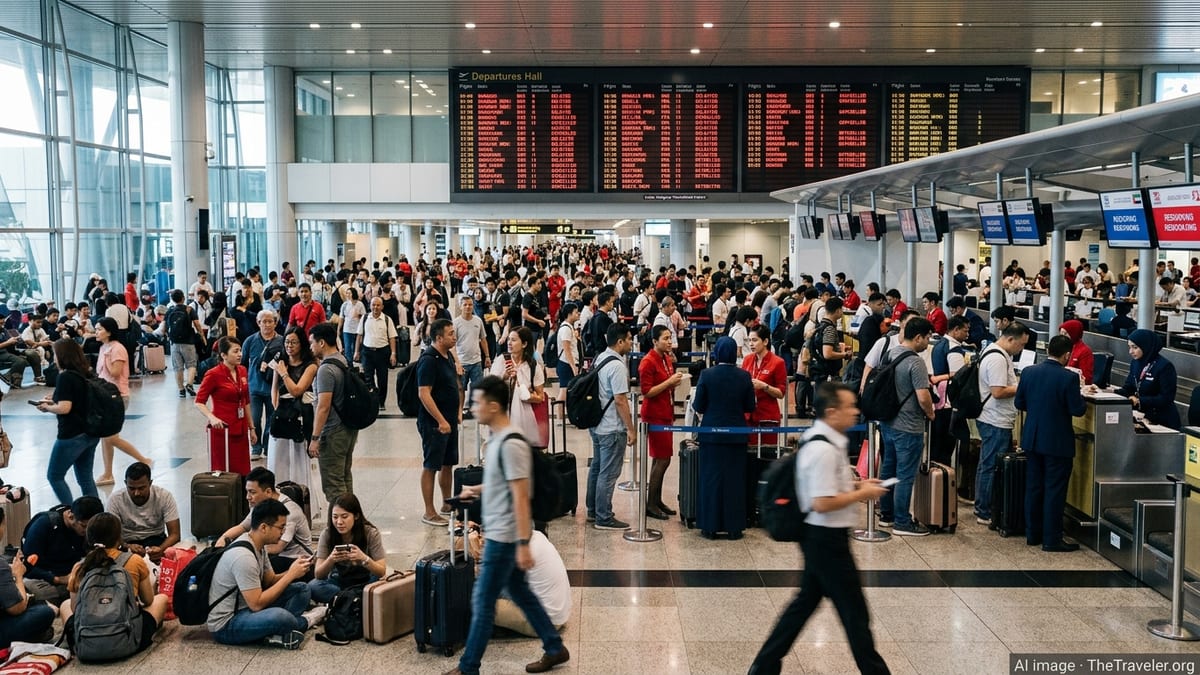
Kuala Lumpur’s Rapid Rise as a Regional Gateway
Kuala Lumpur International Airport has reasserted itself as a major Asian hub, handling more than 57 million passengers in 2024 and placing among the world’s 30 busiest airports by traffic. Recent aviation rankings show that the airport’s throughput has climbed back close to, and in some measures beyond, pre-pandemic levels, highlighting Kuala Lumpur’s growing appeal as both a destination and a transit point.
Across Malaysia’s airport network, passenger volumes have been rising in double digits, with recent data indicating year-on-year growth of around 15 percent in 2024. Airport operator statements point to especially strong momentum on international routes, a trend that is particularly evident at Kuala Lumpur, where long-haul and regional services have been restored and expanded at a brisk pace.
The capital’s pull is also reflected in domestic tourism figures. National statistics for 2024 show Kuala Lumpur ranking near the top among Malaysian destinations by number of domestic visitors, underscoring the city’s dual role as an international gateway and a weekend getaway for residents from across the country.
This combination of strong international connectivity and robust local demand has created ideal conditions for airlines centered on Kuala Lumpur. At the forefront is Malaysia Airlines, which has been rebuilding capacity into and out of the city and is now benefiting from a surge in bookings across key Asian, Australian and Middle Eastern routes.
Visa Policies and VM2026 Ignite Demand
Much of the recent upswing in interest for Kuala Lumpur flights can be traced to Malaysia’s pro-tourism policy moves. Between December 2023 and the end of 2024, citizens of China and India were granted short-term visa-free entry for tourism and selected business activities. Official notices from Malaysia’s foreign missions and subsequent analyses describe the measure as a significant demand catalyst, particularly on routes into Kuala Lumpur, which handles the majority of the country’s long-haul and regional traffic.
Tourism Malaysia and economic research houses report that total international arrivals rebounded strongly in 2024, with inbound visitor numbers edging back toward the high levels seen in 2019. More recent estimates for 2025 point to an increase of more than 11 percent in international arrivals compared with the previous year, suggesting that pent-up demand and marketing efforts are continuing to translate into full flights.
The build-up to Visit Malaysia Year 2026 is further amplifying demand patterns. Government and industry briefings highlight tourism as a key growth engine, noting that the sector contributed more than 15 percent to Malaysia’s gross domestic product in 2024 and is forecast to expand further as authorities target around 47 million international visitors in 2026. Kuala Lumpur, as the primary entry point for most foreign travelers, is expected to capture a large share of that traffic.
Travel analytics firms and card networks note a broad-based recovery in cross-border travel spending into Malaysia, especially from neighboring Southeast Asian markets and East Asia. This aligns with anecdotal reports from online travel agencies that Kuala Lumpur routes, particularly those operated by Malaysia Airlines, have seen a steady firming in fares as advance-booking windows lengthen and leisure travelers compete with returning business traffic.
Malaysia Airlines Rebuilds Its Network Around the Capital
Malaysia Airlines has spent the past two years methodically rebuilding its long-haul and regional network with Kuala Lumpur as its central hub. Publicly available information on its fleet strategy shows that the carrier has brought in new-generation widebody aircraft, including the Airbus A330neo, with the first of these entering service on the Melbourne route in December 2024. The newer jets offer improved fuel efficiency and upgraded cabins, helping to position the airline more competitively on popular medium- and long-haul sectors.
In 2025 the airline also announced a series of commercial agreements with global sales partners, student travel specialists and corporate travel managers. Industry observers interpret these partnerships as an effort to widen distribution and tap higher-yield segments, including international students, small and medium-size enterprises and multinational corporations funneling traffic through Kuala Lumpur.
Malaysia Airlines has increasingly leaned into Kuala Lumpur’s geographic advantages. The city sits roughly midway between Northeast Asia, South Asia, Australia and the Middle East, allowing the carrier to offer one-stop itineraries linking secondary cities across these regions. Schedules filed with aviation data providers show that the airline has focused on reinforcing frequencies to high-demand cities rather than adding large numbers of new destinations, a strategy designed to improve connectivity and reduce transit times at its home hub.
This hub-focused approach is paying off in load factors. While detailed seat-occupancy figures are not always disclosed route by route, route-level analyses by aviation consultancies and booking platforms point to particularly strong performance on Kuala Lumpur services to Singapore, Bangkok, Jakarta, key Indian cities and Australasian gateways. As these flights fill up, economy fares have trended higher during peak travel periods, turning what were once considered good-value options into some of the most sought-after tickets in the region.
Competition, Capacity Constraints and Rising Fares
The boom in demand has coincided with a more cautious restoration of capacity, contributing to tight conditions on Kuala Lumpur routes. Malaysia’s aviation regulator reported that total air passenger traffic reached around 8 million in November 2024 alone, up nearly 16 percent compared with a year earlier, while international segments grew more quickly than domestic ones. Yet overall seat capacity remains below the most aggressive pre-pandemic forecasts, in part because airlines have focused on profit consolidation.
Low-cost carriers based at Kuala Lumpur’s second terminal have rebuilt extensive short-haul networks across Southeast and East Asia, putting pressure on Malaysia Airlines in the budget-conscious segment. However, a discernible shift toward full-service travel has supported the national carrier’s position. Analysts attribute this to changing traveler preferences, with passengers increasingly willing to pay extra for full-service products on longer regional legs after several years of disrupted travel.
Infrastructure constraints also play a role. While Kuala Lumpur International Airport has capacity expansion projects under way and recently received a major regional airport award for connectivity and service levels, peak-hour runway and gate availability remain tight. Airline scheduling data indicates that some carriers have been unable to secure all the desired slots at preferred times, limiting how quickly capacity can be added on popular city pairs.
The result is a marketplace where high-demand dates sell out quickly and fares rise accordingly, especially in premium cabins. Business-class seats on Malaysia Airlines’ flagship routes into Kuala Lumpur have become highly contested during regional holidays, major events and school vacation periods, with travel advisors warning passengers to book well in advance to secure preferred flights.
Strategic Outlook: Kuala Lumpur as a Long-Term Winner
Looking ahead to 2026 and beyond, industry projections suggest that Kuala Lumpur is well positioned to consolidate its status as one of Asia’s key aviation hubs. With tourism targeted as a strategic pillar of economic growth and substantial funding allocated to Visit Malaysia Year 2026 campaigns, marketing for the capital’s shopping, cultural and culinary attractions is set to intensify in priority source markets.
Tourism statistics for 2025 already point to sizable gains, with international arrivals surpassing 42 million and travel-related foreign exchange earnings rising sharply compared with 2024. Economic briefings attribute this not only to volume growth but also to higher average spending per visitor, driven in part by longer stays and increased interest in urban experiences anchored in Kuala Lumpur.
For Malaysia Airlines, the combination of rising inbound tourism, growing transit traffic and a modernizing fleet suggests a supportive environment for further network investment centered on Kuala Lumpur. The airline’s efforts to deepen partnerships, tap niche segments and refresh its onboard product place it in a favorable position to capture premium and connecting traffic as competition intensifies across Asia.
If current trends hold, Kuala Lumpur flights on Malaysia Airlines are likely to remain some of the hottest tickets in the region, supported by a virtuous cycle of policy support, infrastructure investment, and renewed traveler confidence in Malaysia as a safe, convenient and attractive gateway to Southeast Asia.