


More news on this day
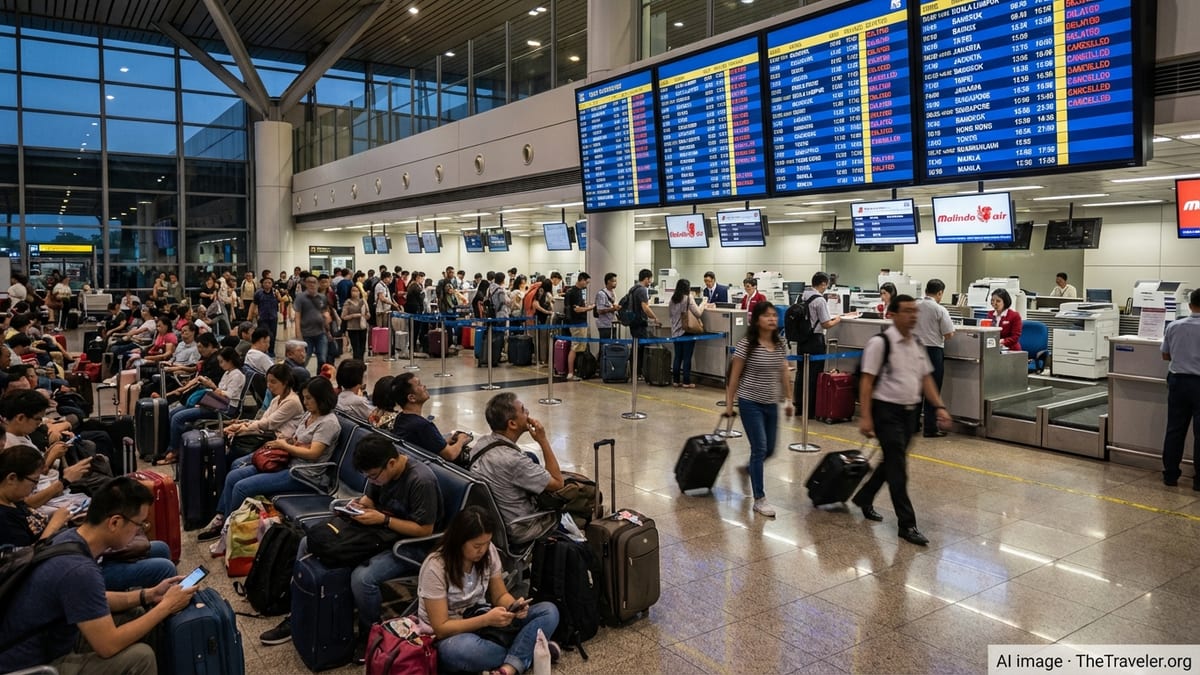
China’s busiest aviation hubs, including Beijing, Shanghai, Shenzhen, Kunming and Xi’an, are contending with a fresh wave of schedule disruption as dozens of flights are withdrawn and hundreds more delayed, fueling rising frustration among domestic and international travelers who rely on these cities as core transit gateways.
Get the latest news straight to your inbox!
What Is Happening Across China’s Biggest Air Corridors
Recent operational data and consumer-rights analyses point to a sharp deterioration in punctuality across several of China’s main hubs, with 60 services reportedly withdrawn from schedules and about 308 additional flights experiencing significant delays. Aggregated figures from flight-compensation platforms and timetable trackers describe a picture of rolling disruption centered on Beijing, Shanghai, Shenzhen and Xi’an, with knock-on effects felt in Kunming and other secondary cities.
Reports indicate that on 11 May 2026 alone, a gridlock event affected more than 400 flights nationwide, including nearly 100 cancellations and over 300 delays concentrated at Beijing Capital and Daxing, Shanghai Pudong, Chengdu’s main airport and Xi’an Xianyang. Shenzhen and Kunming were drawn into the turbulence as delayed aircraft and crew rotations cascaded through the network, leaving aircraft out of position and schedules badly compressed.
While the exact split between formally cancelled services and quietly withdrawn frequencies varies by carrier, publicly available timetables show a thinning of some short haul routes, particularly those linking coastal megacities with inland hubs. At the same time, real time trackers and passenger reports highlight mounting day of travel delays, suggesting that even flights that remain on sale are increasingly vulnerable to disruption.
The result is a system under visible strain. Travelers passing through major hubs report longer queues at check in and security, tighter connection windows and last minute gate changes, all of which compound the stress of flying in one of the world’s busiest domestic aviation markets.
Key Routes Affected Between Beijing, Shanghai, Shenzhen, Kunming and Xi’an
According to route level analysis from flight status databases, some of the most heavily impacted services are those connecting the five featured cities to one another and to other major centers. Routes such as Shenzhen to Beijing, Beijing to Kunming and Kunming to Xi’an show an elevated share of delayed flights on recent operating days, with some services running consistently behind schedule.
On Shenzhen to Beijing, monitoring tools that aggregate historic performance indicate that certain daily services now show delay rates approaching or even reaching the vast majority of operations, suggesting chronic congestion or scheduling pressures on this trunk corridor. Separate performance snapshots for Shenzhen linked services through Beijing also show cancellation flags on select morning departures and arrivals, feeding wider uncertainty for travelers attempting same day connections.
Kunming and Xi’an, traditionally important inland hubs for connections into western China and tourist destinations in Yunnan and Shaanxi, have seen a mixed pattern. Live dashboards for Kunming based carriers show multiple daily services from Shenzhen and eastern cities either arriving late or being cancelled, while some Kunming to Xi’an rotations have been operating on time. Passengers on these routes therefore face an uneven experience, with timings holding on some flights but degrading sharply on others within the same day.
Shanghai’s role as both an origin and transfer point is also significant. Mainstream and low cost carriers have quietly trimmed or re timed some Shanghai links into Kunming and inland markets in recent seasonal timetable updates, reducing the overall frequency available even when a particular flight is not formally listed as a same day cancellation. The combined effect for passengers is fewer options, more crowded remaining flights and greater vulnerability to any single disruption.
Why the Flight Network Is Under Strain
Publicly accessible analyses by aviation data firms and passenger advocacy groups point to a confluence of factors driving the latest breakdown in reliability. Weather remains an underlying risk, particularly in spring when storms and low visibility events can trigger ground holds at Beijing and Shanghai, quickly rippling throughout the system. When aircraft wait on the tarmac, outbound rotations from secondary cities such as Kunming and Xi’an are delayed while crews and equipment remain in the wrong place.
In parallel, China’s domestic market continues to operate at high utilization, with aircraft turned around quickly between sectors. Industry commentators note that in such an environment, even a single late inbound arrival can push subsequent departures further behind schedule, creating chain reaction delays along popular corridors linking the east coast with the interior. Narrow recovery buffers mean there is limited capacity to absorb repeated shocks within a single operational day.
Air traffic control constraints and route saturation in busy airspace corridors also play a role. Published coverage over recent months has flagged recurrent congestion in air routes serving Beijing and Shanghai, where rapidly growing demand for slots has met finite runway and airspace capacity. When temporary restrictions or sequencing requirements are introduced, flights inbound from Shenzhen, Kunming and Xi’an can be forced into holding patterns or departure pauses, further degrading on time performance metrics.
Carriers have responded by selectively withdrawing lower yielding frequencies or consolidating services, especially on routes that were operating at the margins of profitability. While this can stabilize operations over time, it also means travelers are experiencing a noticeable reduction in choice right as delays peak, magnifying perceptions of a system in breakdown.
Impact on Travelers and What Passengers Can Expect
For passengers, the most visible effect of the current turbulence is extended journey times and increased uncertainty. Travelers connecting through Beijing, Shanghai or Shenzhen now face a higher risk that their onward flights to Kunming, Xi’an or other cities will depart late, or that a planned frequency may disappear from the schedule entirely between booking and travel.
Consumer facing platforms tracking the disruptions advise that same day connections with short layovers are particularly vulnerable. Missed connections can lead to overnight stays or reroutes through alternate hubs, especially when withdrawals of 60 services and delays across more than 300 flights reduce available spare capacity. This leaves limited room to accommodate disrupted passengers on later flights, leading to fuller cabins and longer rebooking queues.
Public guidance from passenger rights organizations stresses the importance of retaining documentation such as boarding passes, booking confirmations and screenshots of delay or cancellation notices. Depending on the origin, destination and operating carrier, travelers may have access to meal vouchers, hotel accommodation or partial refunds when flights are significantly delayed or cancelled, although policies vary widely within the Chinese domestic market and for international itineraries touching these hubs.
Travel forums and social media discussions also reflect growing frustration about limited proactive communication, with some travelers learning of cancellations only upon reaching the airport. As a result, passengers are increasingly encouraged to monitor flight status directly via airline channels or independent trackers in the 24 hours before departure, and to build additional buffer time into itineraries involving tight transfers.
How to Navigate Upcoming Trips Through Affected Airports
With the situation still evolving, travelers with upcoming journeys through Beijing, Shanghai, Shenzhen, Kunming or Xi’an may want to adopt more conservative planning strategies. Industry analysts recommend booking longer connection windows, especially when relying on links between coastal hubs and inland airports where aircraft rotations have proved vulnerable to delay.
Where possible, passengers may consider selecting earlier departures in the day, which historically have a slightly higher chance of operating closer to schedule before delays accumulate in the network. Monitoring tools that display historic on time performance for specific flight numbers can also provide useful guidance when choosing between multiple options on the same route, such as Shenzhen to Beijing or Kunming to Xi’an.
Travelers with flexible dates might benefit from shifting trips away from known peak periods, including major public holidays or weekends where demand spikes and spare capacity is scarce. Rebooking to alternative carriers or nearby airports within the same region can sometimes bypass the worst of the congestion, although that option depends on individual travel needs and fare conditions.
For now, the combination of 60 withdrawn services and hundreds of additional delays underscores the fragility of China’s high density flight network at a time of strong demand. Until airlines and airports are able to rebuild buffers into schedules and alleviate congestion, passengers planning to move through Beijing, Shanghai, Shenzhen, Kunming and Xi’an should expect a more challenging experience and prepare accordingly.