


More news on this day
Passenger traffic at London’s Heathrow Airport fell just over five percent in April compared with a year earlier, as the escalating conflict involving Iran disrupted Middle East airspace, forced widespread rerouting of flights, and sent shockwaves through global travel patterns.
Get the latest news straight to your inbox!
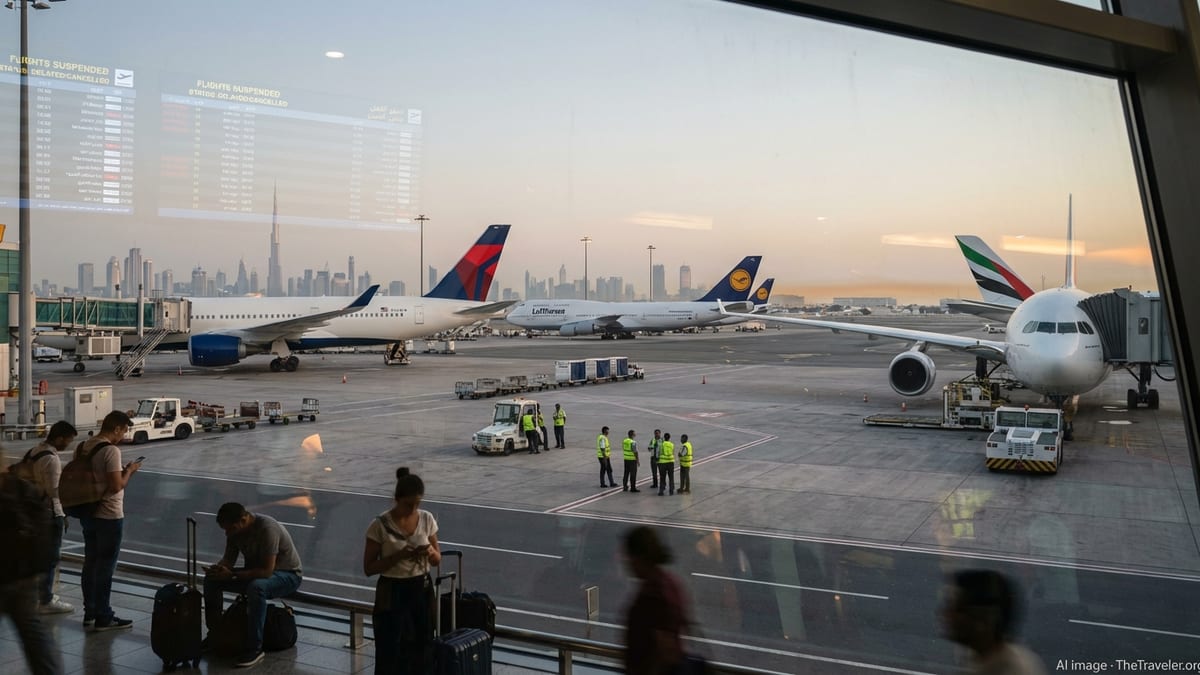
Sharp April Decline Tied to Iran Conflict and Airspace Closures
Publicly available traffic data show that around 6.7 million passengers moved through Heathrow in April, down more than five percent on the same month in 2025. Reports from outlets including Reuters, Anadolu Agency and sector-focused publications indicate that this was Heathrow’s steepest year-on-year monthly decline in more than a year, ending a run of steady recovery in international demand.
The drop is being linked to the war involving Iran, Israel and the United States, which has triggered extensive airspace restrictions across parts of Iran, Iraq and surrounding states. Industry and media analyses describe a sudden collapse in Middle East–bound traffic, with Heathrow’s passenger volumes to the region falling by more than half in both March and April as airlines curtailed services or reprogrammed schedules to avoid high-risk skies.
Heathrow’s own recent communications describe the impact as short-term disruption rather than a reversal of the airport’s broader recovery. Earlier in the year, Heathrow highlighted record levels of hub connectivity and strong overall demand, but it has now signalled that its 2026 passenger forecast will be reassessed in June in light of the evolving geopolitical backdrop.
The latest figures place the Middle East conflict among the most significant geopolitical shocks to hit European aviation since the pandemic, layering on top of existing route changes that followed the closure of Russian airspace to many Western carriers.
Rerouted Long-Haul Flights Turn Heathrow into a Diversion Hub
While point-to-point demand on Middle East routes has weakened sharply, transfer traffic through Heathrow has risen as airlines redesign long-haul corridors between Europe, Asia and Oceania. Published coverage of Heathrow’s March and April performance points to a double-digit rise in connecting passengers, as carriers re-time and reroute flights that once flowed via Gulf megahubs such as Dubai, Doha and Abu Dhabi.
Global aviation briefings from industry bodies and consultants describe how the conflict has effectively narrowed viable air corridors into two main bands: a northern route skirting via the Caucasus and Central Asia, and a southern route looping over Egypt and Saudi Arabia. With several Middle Eastern airports facing intermittent suspensions, scheduling constraints or reduced transfer options, some airlines have leaned more heavily on European hubs, including London Heathrow, to keep long-haul networks stitched together.
This shift has translated into more through-passengers using Heathrow as a stepping stone on journeys between North America, Europe and Asia-Pacific. Analysts note that such rerouting can partially offset the loss of direct Middle Eastern demand, but also introduces tighter connection windows, longer block times and added operational complexity for airlines already managing busy summer schedules.
For travellers, the practical effect has been longer travel times and less predictable itineraries. Comparisons of typical routings between London and destinations such as Dubai, Doha and major South Asian cities show extended flight paths, increased fuel burn and, in many cases, reduced choice of departure times as carriers consolidate services.
Ripple Effects on Global Fares, Schedules and Capacity Planning
The disruption around Iran is reverberating through airline pricing and capacity decisions far beyond the immediate conflict zone. Aviation consultancies tracking booking trends report that the sharp reduction in Middle East connectivity has tightened capacity on some alternative corridors, particularly those running over southern Europe and North Africa, even as demand to the Gulf itself has slumped.
European consumer and business travel media note a patchwork picture for fares. On some short-haul leisure routes within Europe, competition and seasonal dynamics are pulling summer prices down. On long-haul journeys that previously relied on seamless connections through Gulf hubs, however, passengers are facing higher average fares as airlines factor in longer routings, higher fuel costs and reduced aircraft utilisation.
Network planners are being forced into rapid adjustments. Several carriers serving Heathrow have already announced schedule tweaks for late spring and early summer, adding capacity on selected transatlantic and Asia-Pacific routes while trimming or consolidating Middle East services. Industry reports suggest that temporary capacity boosts are also being deployed at alternative hubs such as Istanbul or major South and East Asian gateways to accommodate travellers who would previously have connected in the Gulf.
Analysts caution that if airspace closures and security concerns persist into the peak northern summer season, airlines may face a sustained squeeze on margins. With aircraft and crews already tightly allocated, the scope for further large-scale rerouting without knock-on delays and cancellations is limited, increasing the risk of operational strain during holiday peaks.
Heathrow’s Strategic Position Under Scrutiny
The April numbers arrive at a sensitive moment for Heathrow as it navigates long-running debates over capacity, environmental impact and its standing among global hubs. Before the latest conflict, Heathrow had been climbing back up international rankings, recently regaining a top spot among the world’s busiest airports for international passengers according to airport industry statistics.
The Middle East shock highlights both the strengths and vulnerabilities of a hub-dependent model. On one hand, Heathrow’s broad network and deep pool of alliances allow it to absorb displaced traffic when other hubs are compromised. On the other, its reliance on smooth global connectivity exposes it to sudden swings when entire regions become less accessible or attractive to travellers.
Local business groups and travel industry commentators are closely watching whether the current disruption accelerates or delays longer-term capacity decisions around Heathrow, including contentious proposals related to runway expansion. Some argue that additional capacity would offer more flexibility during crises, while climate campaigners counter that recent volatility underscores the risks of betting heavily on ever-growing air traffic volumes.
For the moment, Heathrow’s management is presenting the downturn as a manageable setback rather than a structural shift. However, the airport’s forthcoming forecast update and any subsequent guidance on investment plans will be scrutinised for clues on how seriously it views the emerging geopolitical risk landscape.
Travellers Face Prolonged Uncertainty Across Key Routes
For passengers, the immediate implication of Heathrow’s April figures is a travel environment defined by uncertainty on certain long-haul routes. Advisories from airlines and travel agencies continue to encourage customers heading to or through the broader Middle East to monitor bookings closely, allow extra time for connections, and remain flexible about routings that may change at short notice.
Travel management firms report that corporate clients are revisiting risk assessments and, in some cases, redirecting staff away from itineraries that rely heavily on Gulf stopovers. Alternative routings via European, Turkish or Asian hubs are being used more frequently, even where that means additional flight segments or overnight layovers.
Leisure travellers, meanwhile, are weighing the appeal of destinations further afield against the potential hassle of complex itineraries. Some long-haul trips are being deferred in favour of nearer European or North African holidays, while others are being rebooked with different departure points or airlines that advertise more stable schedules.
With no clear timeline for a resolution to the conflict, industry observers suggest that the pattern evident in Heathrow’s April data could persist for several months. If that happens, Europe’s leading hubs, including Heathrow, will continue to function as both shock absorbers and pressure points in a global aviation system adjusting to yet another prolonged geopolitical crisis.