


More news on this day
China’s push into high-end rail tourism has entered a new phase with the launch of the Bai Yun Hao Southern Express, a luxury train concept that combines private cabins, hotel-style amenities, and curated sightseeing routes across some of the country’s most scenic regions.
Get the latest news straight to your inbox!
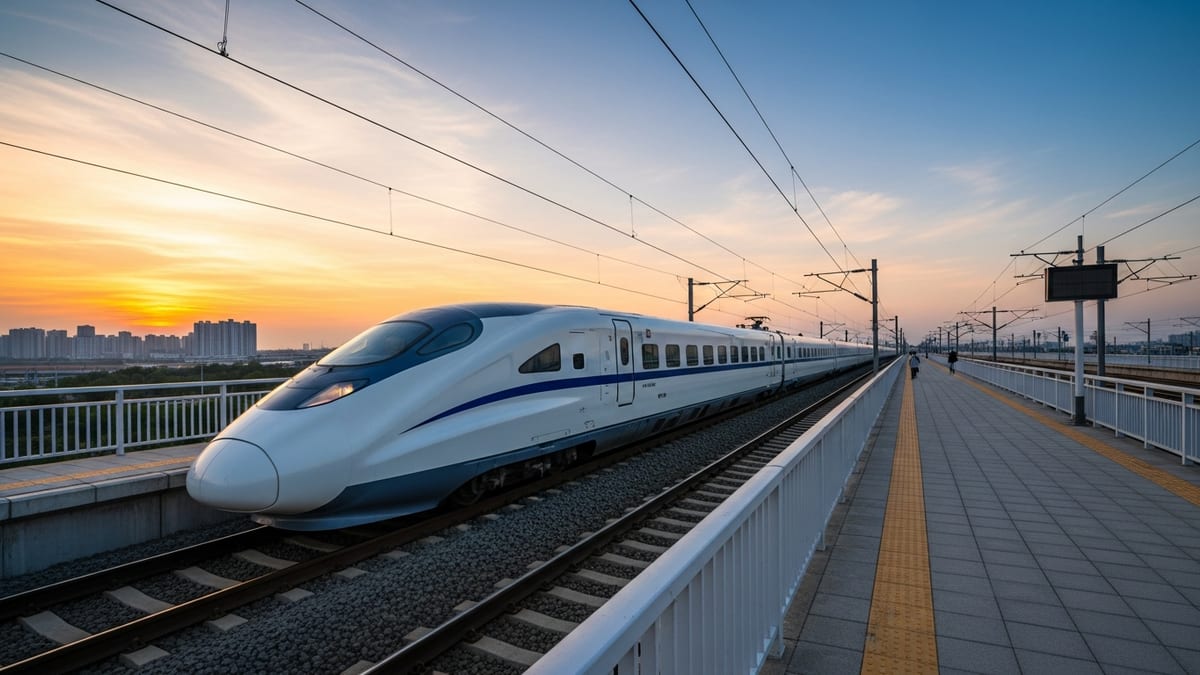
A New Chapter for Luxury Rail Tourism in China
Recent launches and trial runs indicate that Bai Yun Hao, often branded in English as Baiyun Express or White Cloud Express, is emerging as one of the flagship names in China’s rapidly expanding premium train sector. Positioned as a high-end touring product rather than a standard passenger service, the brand focuses on multi-day journeys where travelers sleep on board while the train moves between major cultural and natural attractions.
Publicly available route information shows that the concept is being developed as part of a broader “Southern Express” push that links southern rail hubs such as Guangzhou with destinations in Hunan and beyond, including Zhangjiajie, as well as long-haul tourism products in Xinjiang. A recent trial of the “Bai Yun Hao – Southern Express” into Zhangjiajie West Station was reported as China’s first Chinese-style scholarly-themed premium tourism train, highlighting the role of themed design and curated onboard experiences.
The Bai Yun Hao brand adds to a fast-growing portfolio of luxury and premium tourist trains in China that already includes services such as New Orient Express and other Silk Road-focused products. Industry reporting suggests that demand from domestic high-net-worth travelers, overseas Chinese, and international visitors is encouraging operators to invest in more hotel-like comfort and private spaces on board.
Private Cabins and Hotel-Style Comfort on Board
Information published by booking agencies and the train’s own marketing materials indicates that the Bai Yun Hao Southern Express has been designed around private accommodation with a relatively low passenger density. For Xinjiang-focused departures, for example, overview data describes just 92 berths across an 18-car consist, a much lower capacity than conventional overnight services. This layout allows the majority of guests to stay in en suite cabins while still leaving space for multiple lounges, dining cars, and viewing cars.
Cabin categories highlighted across different language versions of the Baiyun Express website include larger double rooms of around 14 square meters and more compact twin cabins of about 10 square meters. Each is described as having private bathrooms with showers, full-size beds instead of narrow bunks, and panoramic picture windows for uninterrupted views of passing desert, grassland, or karst scenery. The interiors follow a contemporary Chinese aesthetic, with wood detailing and calligraphy-inspired motifs designed to evoke classical study rooms and garden pavilions.
The service model borrows heavily from luxury cruise and boutique hotel standards. Materials aimed at overseas markets refer to butler-style service, round-the-clock assistance, and curated dining that blends regional Chinese cuisine with international options. Operators also emphasize technical upgrades such as enhanced insulation, vibration damping, and climate control intended to keep cabins quiet and comfortable during long runs through regions with large temperature swings.
Themed Design Rooted in Southern Chinese Culture
According to published coverage in provincial tourism bulletins and the project’s own promotional material, the Bai Yun Hao Southern Express is framed around the design concept of “extreme Chinese charm and Eastern elegance.” The decor blends elements of Huxiang culture from Hunan with Lingnan traditions associated with Guangzhou and the Pearl River Delta, using architectural details such as moon gates, colonnades, and latticework to turn corridors and public areas into stylized courtyards.
Carriage plans shared on the official Baiyun Express site identify several distinct public spaces: a welcome car with a four-door reception area, a central tea lounge, Chinese banquet-style dining cars, and a rear observation car designed as a pavilion with wraparound windows. Rather than focusing on entertainment venues such as karaoke rooms, the concept is positioned around quieter pursuits including tea ceremonies, cultural salons, and small-scale performances that complement day excursions.
Brand communications for departures to Xinjiang and other long-distance routes present the train as a “mobile residence,” with carefully coordinated color schemes, lighting, and artwork intended to echo the landscapes outside. This themed approach mirrors a wider trend in Chinese rail tourism, where trains are increasingly marketed as cultural spaces as much as transportation, helping operators differentiate products in a competitive high-end segment.
Curated Itineraries From Southern Gateways to Western Frontiers
Bai Yun Hao’s Southern Express identity is closely tied to its role as a bridge between southern cities and more remote destinations that are difficult to cover comfortably on standard itineraries. For Hunan, official information describes the train as a premium north–south gateway into the Greater Zhangjiajie International Tourism Area, linking Guangzhou Baiyun Railway Station with attractions such as Yuelu Mountain, Orange Isle, and Zhangjiajie’s sandstone pillars while travelers sleep on board between stops.
Separately, booking pages for Xinjiang-focused journeys present an 18-day “panoramic north and south Xinjiang” itinerary that uses Bai Yun Hao equipment for extended loops through deserts, mountain ranges, and Silk Road oases. These products emphasize a one-train, multi-destination model, where guests unpack once and use the train as a base for daily excursions to lakes, canyons, historical towns, and bazaars before returning to the same cabin each night.
Other published route concepts under the broader Baiyun Express brand include shorter themed journeys in southwestern China, with itineraries that reference destinations such as Jianshui, Yuanyang, Mengzi, and Guilin. These offerings are marketed as private charter products for specific seasons, indicating that operators are experimenting with combining intensive sightseeing schedules with the predictability of a fixed onboard home.
Targeting High-End and International Travelers
Travel agency materials and operator statements show that Bai Yun Hao Southern Express products are being pitched squarely at premium travelers, both within China and overseas. Marketing language highlights “high-net-worth individuals,” overseas Chinese, foreign professionals, and visitors from Hong Kong, Macao, and Taiwan as core audiences, with particular attention paid to simplifying travel logistics for guests who may be unfamiliar with long-distance domestic transport.
To support this positioning, product descriptions stress multilingual service offerings and documentation. Examples include bilingual Chinese–English cabin signage, menus, safety information, and printed itineraries, as well as English- and Russian-speaking guides for excursions on some Silk Road routes. This approach is designed to make the train legible and comfortable for international visitors who may be encountering China’s rail network for the first time.
Industry analysis of China’s luxury train segment suggests that Bai Yun Hao Southern Express is arriving at a moment when demand for slower, experience-focused travel is growing alongside the country’s extensive high-speed rail grid. By offering hotel-style private cabins, tightly integrated excursion planning, and a distinct cultural design language, the new services give China a product that can compete more directly with well-known luxury rail experiences in Europe and along the classic Silk Road, while remaining firmly rooted in local aesthetics and landscapes.
Hunan Provincial Government – Zhangjiajie inbound tourism train report
Baiyun Express – official English guide
Xinjiang travel agency – Baiyun Express Xinjiang product overview