


More news on this day
JetBlue’s long-expected move into traditional domestic first class is edging closer, and the workhorse A320 fleet is at the center of the plan. But as more details emerge about the forthcoming BlueFirst cabin, early indications suggest that while premium travelers gain wider seats and enhanced service, economy passengers on the A320 could see fewer extra-legroom rows and more competition for overhead bin space, even if total seat counts technically stay the same.
Get the latest news straight to your inbox!
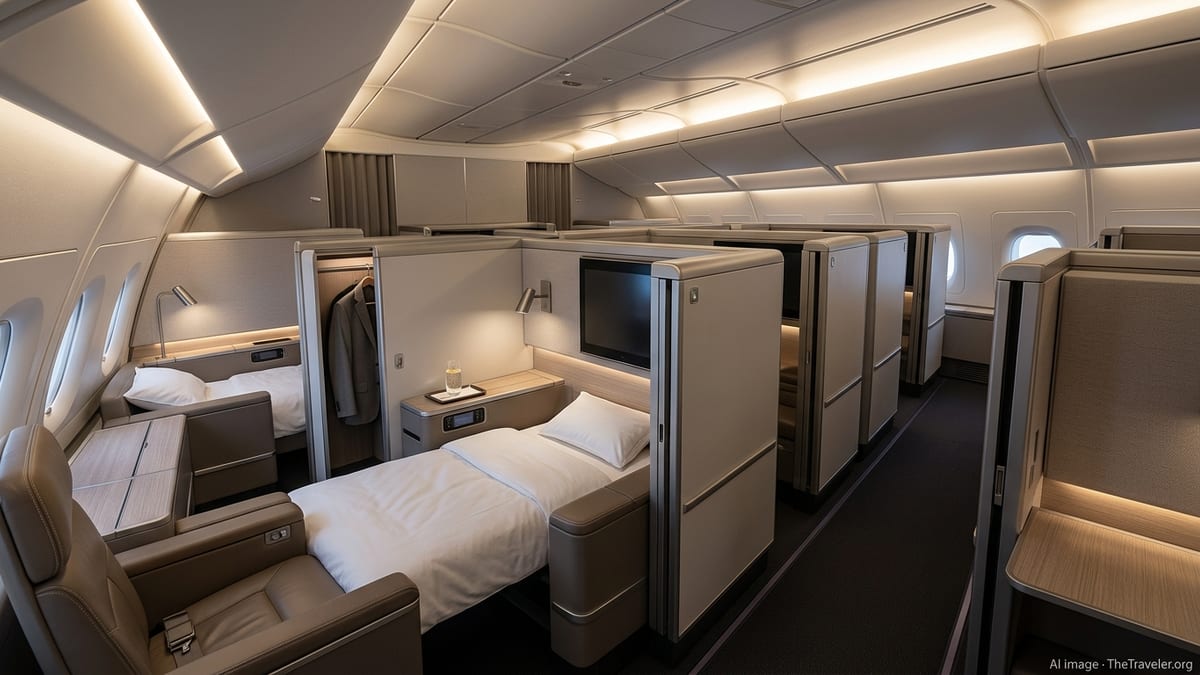
BlueFirst: JetBlue’s New Domestic First Class Concept
JetBlue has been outlining its domestic first class ambitions in investor presentations and earnings materials under the JetForward strategy. Public documents describe BlueFirst as a standalone cabin and fare class, with wider 2-2 seating on non-Mint aircraft beginning in 2026, separate overhead bin allocation and an upgraded service compared with the main cabin. According to these materials, the product is designed to sit alongside rather than replace the airline’s existing Mint business class on select transcontinental and Caribbean routes.
The airline’s second-quarter 2026 results highlighted BlueFirst as a central pillar of revenue growth, noting strong demand for premium experiences and signaling that sales of the new first class product are expected to begin in fall 2026. Investor slides tied to the JetForward plan further indicate that domestic first class will be introduced across the narrow-body fleet, with Airbus A320s and A321s prioritized as core aircraft for the rollout.
Consumer-facing coverage has reported that the new cabin will be branded BlueFirst and positioned similarly to domestic first class products offered by larger legacy competitors, with recliner-style seats in a 2-2 configuration rather than lie-flat beds. Industry reporting has also suggested that JetBlue is likely to use a customized version of a widely adopted Collins Aerospace recliner seat, similar to those seen in premium cabins on other narrow-body aircraft.
In practical terms, BlueFirst should give loyal JetBlue customers a consistent way to book a premium front-cabin seat on domestic routes that currently offer only economy and extra-legroom options. It is also intended to support higher-yield corporate travel, an area where JetBlue has historically been at a disadvantage compared with carriers that already sell first class on most mainline flights.
How the A320 Layout Is Expected to Change
The A320 is the backbone of JetBlue’s network, and the type has already undergone one major interior refresh in recent years. That earlier retrofit increased seat density to around 162 seats on many aircraft while adding modern inflight entertainment screens, power at every seat and so-called Even More Space rows with extra legroom. Published reviews of the redesign emphasized that, despite a seating increase, the airline managed to maintain relatively generous pitch compared with many domestic rivals.
For the BlueFirst era, industry analysis and leaked layout details indicate that the A320 will likely retain a total of around 162 seats but redistribute them between cabins. Reporting from aviation-focused outlets suggests a representative configuration of 12 BlueFirst seats up front, arranged in three rows of 2-2, with roughly 150 seats in the main cabin. That contrasts with the current single-cabin configuration, which typically offers about 42 Even More Space seats and 120 standard core seats, all classified within economy.
This shift does not necessarily mean more passengers overall, but it does mean that some space now dedicated to extra-legroom economy will be converted into first class. The move follows a broader industry pattern in which airlines reallocate cabin real estate to higher-yield seats, seeking to drive revenue growth without adding additional aircraft.
JetBlue has not yet published a final A320 seat map for the BlueFirst configuration, and specific numbers may still evolve as retrofit work begins. However, the general direction is clear from public planning documents and early reporting: more differentiation between cabins, more emphasis on premium seating at the front of the aircraft, and a more segmented product ladder across fares.
What Economy Passengers Stand to Lose
The most immediate change for economy travelers is expected to be a reduction in the number of Even More Space seats on the A320. Aviation industry coverage, citing preliminary layout information, indicates that rows currently designated as extra-legroom will be partially repurposed to create the three-row first class cabin, cutting the Even More Space section from five rows down to roughly three. That would reduce the pool of extra-legroom seats available for purchase or elite upgrades on each A320 flight.
With fewer Even More Space options, competition among passengers seeking additional legroom is likely to increase, especially on business-heavy routes where demand for more comfortable seating is already strong. Travelers who rely on advance purchase of extra-legroom seats or who receive them as a loyalty benefit may find availability tighter, particularly on peak departures and key business travel days.
There are also implications for the standard economy section. While the total number of seats may remain close to current figures, the redistribution of cabin space could slightly alter pitch and perceived roominess in certain rows. Earlier phases of JetBlue’s A320 restyling already pushed seat density higher than the airline’s original layout while keeping pitch competitive; the introduction of BlueFirst adds another layer of optimization that may leave some standard economy rows feeling more conventional by today’s domestic benchmarks.
Overhead storage is another potential pressure point. BlueFirst is marketed in planning documents as having a dedicated overhead bin allocation, which, in practice, means a larger share of the forward bins will be reserved for first class customers. That may concentrate more economy carry-on bags further back in the cabin, increasing the likelihood of gate-checking on fuller flights and shifting some of the bin space crunch toward later-boarding passengers.
Where Economy Still Comes Out Ahead
Despite these tradeoffs, JetBlue’s A320 economy cabin retains several features that distinguish it from many competitors. Previous retrofit programs introduced large seatback entertainment screens with streaming-capable connectivity, power outlets for every passenger and free high-speed Wi-Fi. Published reviews of the refreshed A320 interiors highlight these elements as core strengths for the main cabin experience, and there is no indication from current planning materials that the BlueFirst rollout will reverse those technology upgrades.
The airline has also framed its broader strategy as one that keeps a meaningful gap between basic fares and its more inclusive options, which may help preserve value for travelers who prioritize inflight amenities over cabin segmentation. Reports on JetBlue’s updated fare structure note that the carrier is preparing new, more basic economy-style products at the same time it introduces first class, but these remain layered on top of the existing core experience rather than replacing inflight entertainment or connectivity.
In addition, the presence of a true first class cabin could modestly ease pressure on the most in-demand economy rows. Some travelers who currently purchase Even More Space seats for comfort may shift to booking BlueFirst when fares are competitive, potentially freeing up a limited number of extra-legroom seats in the main cabin. While this effect may be modest, it highlights the complex ways cabin segmentation can redistribute demand rather than purely subtract from economy.
For now, JetBlue’s messaging around JetForward continues to emphasize customer satisfaction scores and the airline’s reputation for a comparatively comfortable coach product, even as it pursues higher revenue from premium travelers. How well the balance holds on the A320 will depend on the final seat maps and on how aggressively the airline prices BlueFirst relative to extra-legroom and standard economy options.
Timeline and What Travelers Should Watch Next
According to publicly available financial filings and strategy presentations, JetBlue plans to begin introducing domestic first class, including on A320 aircraft, in the second half of 2026. Its second-quarter 2026 update stated that sales for the new product are expected to start in the fall, suggesting that retrofitted aircraft could begin appearing on select routes shortly thereafter, with a gradual ramp-up as more airframes exit modification lines.
Aviation commentary indicates that the A320ceo fleet is likely to be among the first to receive the new layout, given the size of the subfleet and its central role in JetBlue’s schedule. Enthusiast tracking forums have previously noted that JetBlue tends to retrofit cabin products in stages, creating a mixed fleet where older and newer interiors coexist for several years, and the BlueFirst rollout is expected to follow a similar pattern.
For passengers, the practical next step will be to watch JetBlue seat maps as they update in booking engines and on third-party tools. Once BlueFirst appears on specific A320 routes, those flights will provide the first clear view of how many extra-legroom economy seats remain, how overhead bins are labeled and whether standard economy pitch has changed in any notable way.
Until then, the emerging picture suggests a familiar tradeoff: more choice and comfort options for those willing to pay for the front of the aircraft, and a slightly leaner set of perks for economy passengers compared with JetBlue’s earlier, more egalitarian A320 configurations, even as the airline maintains a stronger baseline product than many domestic rivals.
JetBlue Q2 2026 earnings and JetForward update
JetForward strategy presentation outlining domestic first class
NerdWallet overview of JetBlue BlueFirst and new fare options
GateChecked analysis of JetBlue domestic first class layouts