


More news on this day
Knock-on delays linked to congestion and adverse weather around Bangkok’s main airports in August 2026 triggered a wave of schedule disruptions, with data and airline updates indicating more than 2,300 delayed services across at least 16 major Asian hubs during the month.
Get the latest news straight to your inbox!
Regional Networks Strain Under Bangkok Bottlenecks
Bangkok’s two main airports, Suvarnabhumi (BKK) and Don Mueang (DMK), handled more than 2,200 commercial flights per day through mid to late August, according to flight statistics published by Thailand’s air navigation service provider. These figures highlight how even modest constraints in the Bangkok Flight Information Region can quickly cascade across the wider Asian network when operations are already running close to capacity.
Daily breakdowns for August 16 to 22 show BKK consistently processing around 1,000 or more flights per day, with DMK handling between roughly 480 and 550 flights. Phuket, Chiang Mai, Samui and several secondary Thai airports added hundreds more services, bringing total daily movements in the Bangkok control area to between about 2,200 and 2,300 flights. This volume left limited slack once convective storms, network maintenance and airline schedule cuts converged during the peak holiday period.
Performance data compiled by independent aviation analytics sites indicates that DMK, in particular, entered August with one of the highest recent cancellation rates among major airports globally. While average delays on many days were measured in only a few minutes, the number of cancelled or heavily disrupted departures over a 30 day window reached several thousand, suggesting that irregular operations were already elevated before the mid August surge in traffic.
Against this backdrop, reports from passengers and flight tracking dashboards point to widespread late running on trunk routes linking Bangkok with Hong Kong, Singapore, Kuala Lumpur, Seoul, Tokyo, and regional points such as Phuket, Chiang Mai and Koh Samui. With many of these flights feeding or receiving connections, a delay on departure from Bangkok frequently translated into missed onward links and subsequent late arrivals at other hubs.
Weather, Network Upgrades and Crew Constraints Combine
Meteorological data for early and mid August shows repeated heavy rainfall events over central Thailand consistent with the seasonal monsoon pattern. Radar composites for the Bangkok region highlight several days of intense convective activity, particularly between August 5 and 10, contributing to temporary flow restrictions and slower arrival and departure rates. These conditions reduced runway throughput, forcing airlines to accept holding, reroutes or revised departure slots.
At the same time, infrastructure and network changes intersected with peak demand. Notices from regional network providers detail planned upgrades around August 21 that affected connectivity in the Bangkok zone and neighboring markets. While such maintenance is designed to be low impact, it often coincides with revised routing, tighter slot windows and short term constraints on certain flows, which can amplify the effect of bad weather and saturated schedules.
Airlines operating from Bangkok also continued to adjust capacity through the summer. Data compiled by industry schedule trackers shows some carriers had already reduced international departures from Thailand by more than 40 percent on selected routes in June and July 2026, reflecting a mix of demand recalibration and resource constraints. These cuts sometimes created thinner schedules with less flexibility for rebooking when disruptions occurred, leaving passengers with fewer same day alternatives once flights slipped out of their scheduled windows.
Human resource pressures within air traffic management and airline operations further limited resilience. Regional industry bodies have repeatedly highlighted controller and crew shortages across Asia Pacific, citing long training pipelines and an aging workforce. With rosters already stretched, recovering from a day of heavy delays often required extended knock on adjustments over several days, pushing a localized issue in Bangkok into a multi airport event affecting destinations as far apart as Tokyo, Mumbai and Sydney.
Evidence of Systemic Strain Across 16 Asian Hubs
Tracking of individual flights into and out of Bangkok during August shows a pattern of late departures that propagated through at least 16 major Asian hubs. Services linking BKK with Hong Kong, Singapore, Kuala Lumpur, Taipei, Seoul, Shanghai, Tokyo, Ho Chi Minh City, Phnom Penh and key Indian gateways all recorded clusters of delays in the first three weeks of the month, according to publicly available flight status boards and airline tools.
Bangkok’s domestic and regional spokes were not immune. Routes to Koh Samui saw reduced frequencies and tight seat availability throughout August, with travelers reporting difficulty securing direct Bangkok Samui options and being rebooked via Phuket or other intermediate points. Posts from affected passengers describe last minute schedule changes, significantly earlier departure times and rerouting that extended overall travel times by several hours beyond the original itineraries.
These changes reverberated at secondary airports along the network. Increased reliance on multi leg routings meant that disruption on a single Bangkok based sector could generate inventory imbalances and crew positioning issues at outstations. In practice, this led to rolling waves of delays across at least 16 airports in Thailand, Southeast Asia, North Asia and the Indian subcontinent, building toward a cumulative total that industry trackers estimate at more than 2,300 delayed flights during the month.
Performance rankings published at the start of August already placed DMK among the airports with the world’s highest cancellation rates, reinforcing the view that the system was operating close to its limits. The concentration of August demand on leisure and visiting friends and relatives traffic, often clustered around weekend peaks, further increased the probability that localized weather or operational incidents around Bangkok would translate into region wide schedule instability.
Knock on Effects for Passengers and Airlines
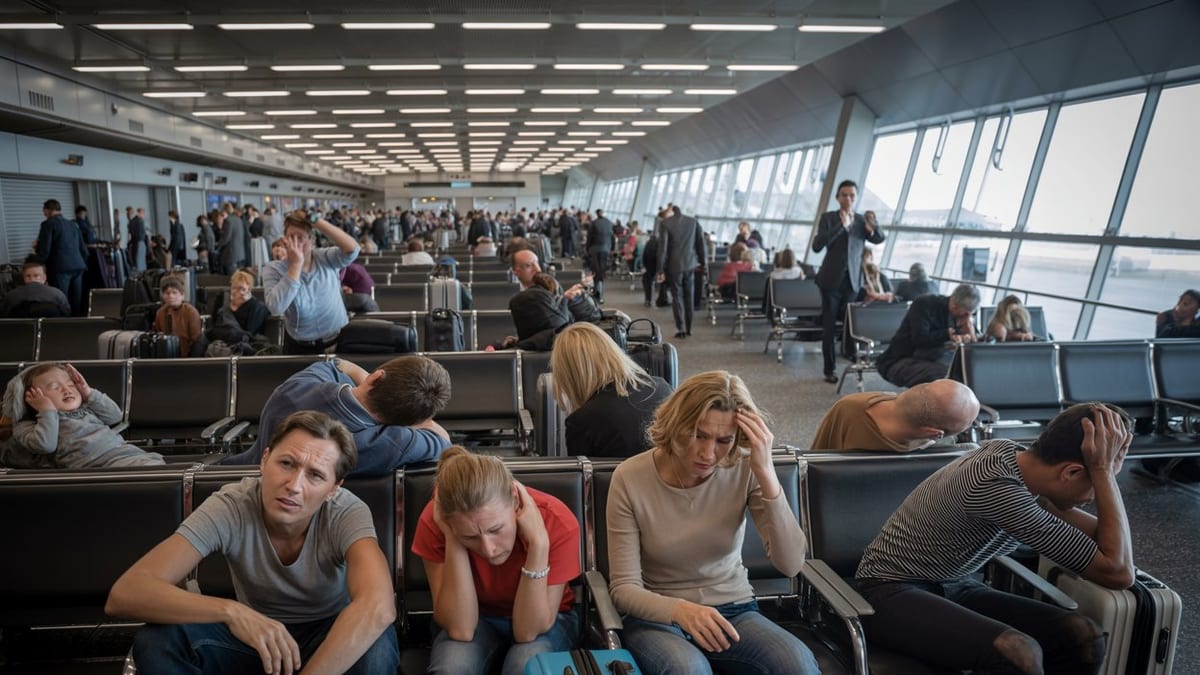
For passengers, the most visible impact of the Bangkok centered disruptions was extended journey times, missed connections and short notice rebookings. Accounts shared on consumer forums detail instances of travelers arriving in Bangkok several hours later than scheduled and missing onward flights, including long haul sectors to Europe and Australia. Some airlines responded with meal vouchers and overnight accommodation where required, but many customers still faced lengthy airport waits or unplanned overnight stays.
Travelers on popular regional routes, such as Bangkok to Koh Samui, reported diminished choice and a higher reliance on early morning departures, with some itineraries reconfigured to include additional domestic segments. Others noted that even when their flights operated, congestion at the airports and pressure on ground handling and immigration services lengthened the overall time needed to clear formalities and reach the city.
For airlines, the disruption translated into additional costs for fuel, crew, ground handling and passenger care, alongside lost revenue from missed connections and displaced customers. Network planners had to juggle aircraft rotations, ensuring that aircraft and crews remained in position for subsequent flights despite repeated late arrivals. Combined with structural schedule cuts already in place for parts of the summer season, these irregular operations suggested a fragile equilibrium between demand and available capacity in and out of Bangkok.
Industry observers note that airlines serving Bangkok may increasingly look to adjust block times, add schedule buffers or re time certain departures to periods of lower congestion in an effort to reduce knock on delays. However, such changes can take months to implement, and the August experience indicates that until additional runway, terminal and airspace capacity comes online, the risk of large scale disruption across connected Asian hubs will remain elevated.
Capacity Upgrades and Policy Responses on the Horizon
Looking ahead, Thai authorities and airport operators have outlined a series of capacity and service upgrades intended to improve resilience at Bangkok’s main gateways. Suvarnabhumi is advancing plans to expand automated passport control gates to more nationalities by the end of August 2026, in an effort to reduce processing times and ease congestion in immigration halls during peak bank arrivals. Parallel terminal improvements and apron enhancements are also in various stages of planning or delivery.
On the air traffic management side, publicly accessible portals for the Bangkok Air Traffic Flow Management Unit show ongoing refinement of demand and capacity balancing tools, including real time displays of scheduled and actual runway use across major Thai airports. The aim is to smooth traffic peaks and better align arrival and departure flows with available capacity, especially during periods of convective weather or temporary infrastructure constraints.
Industry groups across Asia Pacific continue to highlight the need for sustained investment in controller training, recruitment and technology, noting that traffic in many markets has returned to or exceeded pre pandemic levels. With daily commercial movements in the Bangkok Flight Information Region already exceeding 2,200 flights on multiple days in August, even modest traffic growth could compound the strain without corresponding expansion in capacity and staffing.
For travelers, the experience of August 2026 underlines the value of building additional buffer into itineraries that rely on tight connections through Bangkok or neighboring hubs, particularly during the monsoon months. While airlines and airports work on long term upgrades, publicly available performance data suggests that regional networks will remain vulnerable to disruption whenever adverse weather, infrastructure work and resource constraints converge.
Aeronautical Radio of Thailand daily flight statistics
Airport cancellation performance data for Bangkok Don Mueang