


Barcelona El Prat Airport is busy, sprawling and, at peak times, a little chaotic. With a bit of advance knowledge, though, it becomes a straightforward gateway to the city instead of a stressful obstacle. The following practical tips are based on the current layout, services and real experiences of travelers passing through Barcelona in 2025 and 2026, so you can plan with confidence.
Get the latest updates straight to your inbox!
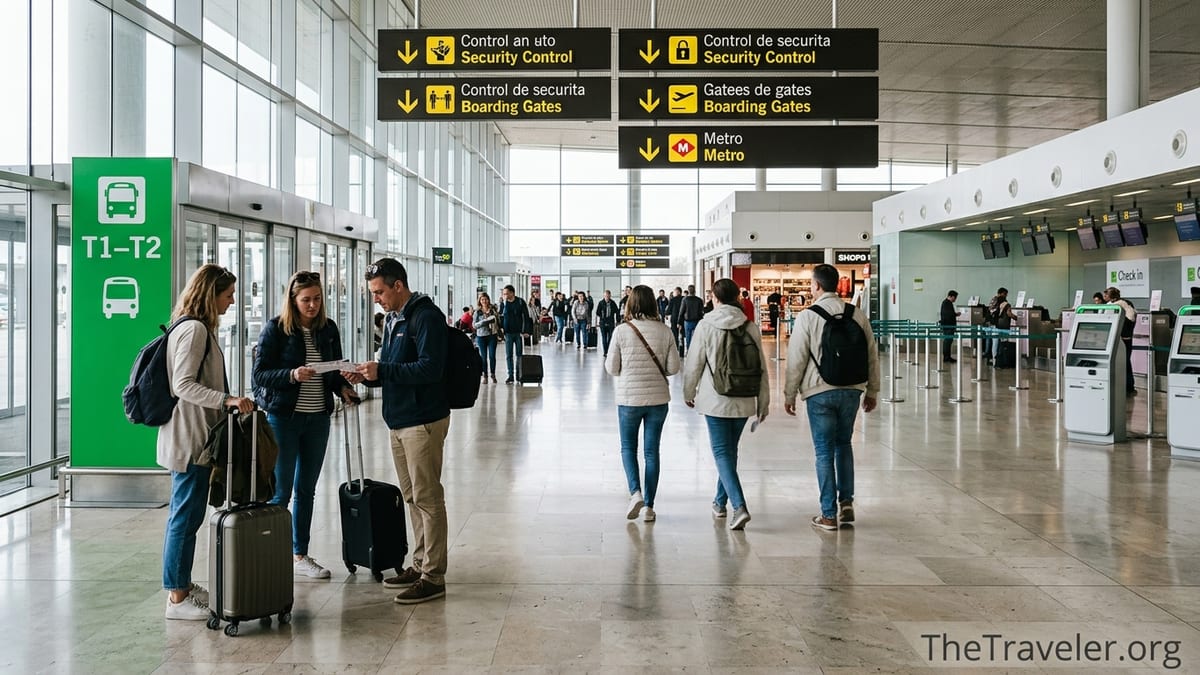
Understand the Two-Terminal Layout Before You Land
Barcelona El Prat has two main terminals, T1 and T2, and knowing which one you are using will save you a lot of time. T1 is the large, modern terminal mostly used by full-service and major European airlines, including Vueling, Iberia, Lufthansa and Emirates. T2 is older and split into T2A, T2B and T2C, and today it mainly serves low-cost and regional carriers, such as Ryanair, easyJet and some charter airlines. Your booking or boarding pass will show the terminal, but it is worth double checking the day before you fly in case of changes.
If you arrive at the wrong terminal or have a self-transfer involving different terminals, use the free green shuttle bus that connects T1 and T2 around the clock. Buses run roughly every 5 to 10 minutes during the day and are clearly marked for “Bus Transit.” The ride between terminals takes about 10 to 15 minutes. For example, if you land with Ryanair in T2B and later depart with Vueling from T1, you should allow at least 45 to 60 minutes from the moment you leave baggage reclaim to reach the correct check in desks in T1.
Inside T1, departures and arrivals are on different levels, with a spacious main departures hall, while T2 feels more compact and can be crowded at busy times. In practice, that means check in and security queues at T2 can feel more intense in high season. If you are flying from T2 on an early Friday evening in July or August, aim to arrive even earlier than usual, as families heading to the Costa Brava and Balearic Islands often fill the hall.
Once you know your terminal, you can already plan basic logistics such as where to meet a taxi, which metro stop to use and where to find services like left luggage or car rentals. Many car hire companies have desks in both T1 and T2, but their pick up parking areas differ, so checking your voucher for the correct terminal can prevent dragging bags across the airport later.
Be Smart About Security, Schengen Controls and New EES Queues
Security at Barcelona El Prat is generally efficient, but peaks can create queues, especially at the start and end of holiday periods, major trade fairs or football matches. A commonly recommended rule for this airport is to arrive about two hours before a European flight and at least three hours before a long haul departure. On summer Saturdays or Easter week, consider adding an extra 30 minutes, especially if you are checking bags or traveling with children who need additional time.
Security rules for liquids and electronics remain similar to most European Union airports. In practice that means liquids in containers of up to 100 ml, inside a single one liter transparent bag, plus laptops and large electronics removed from your baggage at screening unless staff tell you otherwise. Do not count on being allowed through with a large water bottle; buy or refill one airside instead. Many travelers report that staff at El Prat are strict but efficient, and you will move faster if you prepare before reaching the trays.
Border control is where surprises are more likely. For passengers arriving or departing to non Schengen destinations, new biometric checks and the gradual roll out of the EU Entry/Exit System have created longer lines at some airports. Travelers describing arrivals at Barcelona in spring 2025 and early 2026 frequently mention waiting significantly longer than before at passport control, particularly for non EU passports in the evenings when several long haul flights land close together. If you are connecting onward on separate tickets, avoid tight margins and give yourself at least three hours between scheduled arrival and your next departure if you will need to clear immigration, collect luggage and recheck.
For departing passengers, Schengen flights usually clear immigration at the destination, so you will only face security checks at Barcelona. Non Schengen flights add passport control, where queues can vary from a few minutes to more than half an hour. Families with small children and passengers with EU biometric passports sometimes move faster through automated gates, but do not count on it during system outages or busy holiday weekends. If you have a tight departure window and a non Schengen flight, heading directly to the passport control area after security rather than lingering in the main shopping zone is a simple way to protect yourself from surprise bottlenecks.
Choose the Best Way Into Barcelona for Your Budget and Schedule
Reaching the city from the airport is straightforward once you understand your options. The most visible choice leaving T1 is the blue Aerobús express service, which runs between T1 and the city center with a separate A2 line serving T2. The buses stop at key central points such as Plaça Espanya and Plaça de Catalunya, and tickets are bought from vending machines or staff near the bus stop. As of 2025, a one way ticket costs a bit more than a standard city bus, but still represents good value for travelers carrying luggage who want a simple, direct route without navigating local lines.
The metro is another popular option. Line L9 Sud connects both T1 and T2 with the city, running roughly every 7 minutes. Rather than going directly to the historic center, it links to other lines at stations such as Torrassa, Collblanc and Zona Universitària, where you can transfer to reach Sants station, Passeig de Gràcia or the Gothic Quarter. The airport metro ticket is a dedicated fare that costs more than a single city ticket, and standard multi trip cards like the traditional T 10 are not valid for boarding at the airport stops. If you are traveling light and do not mind one change, the metro is convenient and avoids traffic jams on the ring roads, particularly at rush hour.
For many visitors, the suburban train on line R2 Nord from the Aeroport T2 station to the city is the most economical option, especially if they are heading to Sants, Passeig de Gràcia or El Clot. The train at T2 usually runs every 30 minutes and accepts integrated transport passes, which can represent excellent value for a city break. The main catch is that if you land at T1 you will need to take the free shuttle bus to T2 first, which can add 20 to 30 minutes to the overall journey. It is still worth it for budget conscious travelers staying several days who plan to use public transport frequently.
Taxis remain the simplest choice door to door, particularly at night, with heavy luggage or when traveling in a group. Official Barcelona taxis are black and yellow and queue outside both terminals. A ride to central neighborhoods such as Eixample or the Gothic Quarter typically takes 20 to 35 minutes depending on traffic. There is usually a small airport supplement added to the meter, so do not be surprised if the fare from T1 to a centrally located hotel comes to something in the low 30 euro range under current conditions. Ride hailing apps such as Uber, Cabify and FreeNow also operate at the airport, often showing a fixed price before pickup, which some travelers prefer for peace of mind.
Make the Most of Lounges, Wi Fi and Quiet Corners
Barcelona El Prat offers several AENA operated VIP lounges across T1 and T2, and for many travelers they transform a stressful wait into a productive or relaxing pause. In T1, you find multiple lounges airside for both Schengen and non Schengen departures, plus the Premium VIP Lounge in the Barcelona Madrid shuttle area. Lounges typically offer snacks, light hot food, soft drinks, wine, beer, Wi Fi, power outlets and comfortable seating. Opening hours vary, but many are available from early morning until late evening, roughly from 6:00 or 7:00 to around 21:00 or 22:00, making them useful for most daytime departures.
Access to these lounges is often possible in several ways: business or flexible tickets on certain airlines, elite frequent flyer status, lounge membership programs and paid single entry. Travelers passing through in 2025 report walk up prices in the rough range of thirty to forty euros per adult for a three hour stay, with reduced rates for children. If you have a long layover, are arriving from an overnight flight or need to work, the cost can be worthwhile. For example, a traveler landing from Latin America early in the morning and waiting for a midday connection within Europe may find that lounge access, with showers and quieter space, is far more comfortable than sitting in the main hall for five hours.
Free Wi Fi is available throughout both terminals, although performance can slow during busy peaks when everyone is streaming or making calls. It is a good idea to download offline maps of Barcelona and your accommodation details before you land, so you are not dependent on a congested connection. Power outlets and USB charging points are scattered around the gates, but they are not always plentiful. If your phone or laptop battery is low, securing a seat near an outlet early is a practical move, especially in T2 where competition for sockets can be fierce.
For those who prefer quiet corners without paying for lounge access, T1 generally feels more spacious, with seating areas slightly away from shops and food courts where you can rest. Some travelers report that T2 can feel noisy and cramped when several low cost flights board at once, so noise cancelling headphones or earplugs are useful to pack if you are sensitive to sound. Overnight, parts of the airport stay open, and budget travelers occasionally stretch out on benches, but lighting stays bright and announcements continue, so it is more “survivable” than comfortable sleep.
Nail Your Baggage, Left Luggage and Shopping Strategy
Planning how you will handle luggage at Barcelona El Prat can remove a lot of friction from your day. Checked bags for many airlines open for drop off around two to three hours before departure, and some low cost carriers in T2 strictly enforce timing and cabin baggage rules. If you are flying home with a cabin bag packed full of souvenirs, keep in mind that gate agents on routes popular with tourists often check the size and weight of hand luggage carefully. Wearing your heavier coat and placing dense items in a jacket pocket or personal item can tip the balance in your favor when the cabin bag allowance is tight.
For travelers with long gaps between flights or late check in at city accommodation, the airport’s left luggage facilities can be extremely handy. There are staffed luggage storage offices in both T1 and T2, typically requiring bags to be X rayed for security before acceptance. Prices are generally per bag per day and vary depending on size, with larger suitcases costing more than small backpacks. For example, storing a medium suitcase from Friday morning to Sunday afternoon will usually be charged as two full days, so it is worth comparing that cost to city center luggage storage services if you plan to explore Barcelona in between.
An alternative that has become increasingly popular is on demand luggage collection, where a local company meets you at the terminal, collects your bags and delivers them later to your accommodation or another point in the city. Travelers using such services at Barcelona in 2025 highlight the advantage of skipping both the queue at traditional storage counters and the need to return to the airport. This can be especially valuable if you are only in town for one day and want every hour free to wander the Gothic Quarter, visit Sagrada Família or relax at Barceloneta beach without dragging a suitcase.
Shopping at Barcelona El Prat is broad but quite focused on international brands, duty free goods and the usual mix of fashion, electronics and local products like cava and turrón. Prices for everyday items such as bottled water or sandwiches inside security can be noticeably higher than in the city, so if you are traveling on a tight budget, consider grabbing a snack at a supermarket before heading to the airport. That said, for last minute gifts a small box of Catalan sweets or a locally produced olive oil from one of the specialty shops in T1 can be a charming way to bring home a taste of Barcelona.
Time Your Arrival and Transfers for Early Flights and Late Nights
Many flights from Barcelona El Prat depart early in the morning, especially low cost routes to other European cities. If you have a 7:00 departure to cities such as London, Paris or Berlin, you should aim to be at the terminal between 4:30 and 5:00, which may rule out the first metro or suburban train of the day. In that case, Aerobús night services, early morning city buses or taxis become your main options. Sharing a taxi with a friend or partner often ends up close in price to two individual Aerobús tickets and is substantially more comfortable at 4:00 in the morning.
Late night arrivals also require a bit of planning. If you land at 23:30 and still need to reach a hotel in the center, underground services may be about to finish for the night or already closed, depending on the day of the week and any special timetables. Night buses and the Aerobús can fill the gap, but taxis are typically the most straightforward option, especially if you are unfamiliar with the city. Many visitors prefer paying a bit more for a direct taxi ride than experimenting with multiple night buses with luggage after midnight.
If you are facing a very long overnight layover, you have several strategies. Some travelers choose to stay at one of the hotels located close to the airport, connected by shuttle or short taxi rides, to get real sleep and a shower. Others stay inside the terminals. Experiences vary: people report acceptable but basic rest on benches in quieter corners of T1, while T2 can feel brighter and more crowded. Keep valuables close, use your bag as a makeshift pillow and remember that cleaning staff and loudspeaker announcements operate through the night, so earplugs and an eye mask are a good idea if you plan to sleep in the building.
For daytime connections on separate tickets, always factor in the possibility of delays, longer security or passport queues and terminal transfers. A connection planned with only 90 minutes between landing from a non Schengen flight and departing for another destination, especially on different airlines, carries real risk. Giving yourself three to four hours, even if it means a longer wait, is safer at a busy hub like Barcelona, particularly during summer or major events when queues and traffic around the airport can both be unpredictable.
The Takeaway
Barcelona El Prat Airport is far from the most complicated hub in Europe, but it has its quirks. Understanding the split between T1 and T2, planning generous time for security and border checks, and choosing the right transport into the city will take most of the stress out of your trip. Lounges, decent Wi Fi and practical luggage solutions make long waits much more comfortable, while smart timing for early morning and late night movements avoids unpleasant surprises.
Above all, treat Barcelona El Prat as the busy Mediterranean gateway it is. Build in buffers, expect crowds at peak holiday times and have a backup plan if your first choice of transport or service is busy or temporarily unavailable. With that mindset, the airport becomes just one more part of your journey, not an obstacle, and you can step into Barcelona ready to enjoy its architecture, food and beaches rather than exhausted from the trip in.
FAQ
Q1. How early should I arrive at Barcelona El Prat Airport for my flight?
For most European flights, plan to arrive about two hours before departure, and for long haul or peak holiday periods, aim for at least three hours. If you are checking bags, flying from T2 with a low cost carrier or traveling during busy school holidays, adding an extra 30 minutes is a sensible buffer.
Q2. What is the easiest way to get from Barcelona El Prat to the city center?
The Aerobús express bus and official black and yellow taxis are the simplest options for first time visitors, offering direct routes to central squares like Plaça de Catalunya. Budget travelers or those staying several days often prefer the R2 Nord suburban train from T2 or the L9 Sud metro line, especially when combined with integrated transport passes.
Q3. Are T1 and T2 connected inside the airport building?
No, T1 and T2 are separate terminal complexes, but a free green shuttle bus runs 24 hours a day between them. The ride takes around 10 to 15 minutes, so if you need to transfer between terminals, allow at least 45 to 60 minutes in total to account for walking, waiting and possible queues.
Q4. Does Barcelona El Prat Airport have free Wi Fi?
Yes, there is free Wi Fi available throughout both terminals. The connection is usually good enough for messaging, checking emails and light browsing, although it can slow at very busy times. For critical tasks or work calls, consider downloading key documents in advance and having mobile data as a backup.
Q5. Can I store my luggage at Barcelona El Prat Airport?
Yes, both T1 and T2 have staffed left luggage facilities where you can store bags for several hours or multiple days for a per bag fee. As an alternative, private luggage collection services can meet you at the terminal, take your bags into the city and deliver them later to your accommodation, which is useful if you want to start sightseeing immediately.
Q6. Is Barcelona El Prat Airport a good place for an overnight layover?
It is manageable but not especially comfortable. Parts of T1 stay open and some travelers sleep on benches, but the lights remain bright and announcements continue all night. For better rest, many people choose a nearby airport hotel and return for their morning flight by shuttle or taxi.
Q7. Are there lounges I can pay to enter even if I am flying economy?
Yes, several AENA operated VIP lounges in T1 and T2 allow paid entry regardless of airline or cabin class, subject to space and opening hours. Prices for walk up access are typically in the range of a few dozen euros for a three hour stay and include food, drinks, Wi Fi and more comfortable seating.
Q8. What is the best option for late night arrivals after public transport has reduced?
If you arrive around or after midnight, the simplest option is usually an official taxi from the rank outside your terminal. Night buses and some Aerobús services may still run, but they require more navigation when you are tired and carrying luggage, so many travelers find the extra cost of a taxi worthwhile at that hour.
Q9. Are there any special security rules I should know about at Barcelona El Prat?
The airport follows standard European Union security rules for liquids and electronics, with liquids limited to 100 ml containers in a one liter transparent bag. You will usually need to remove laptops and large devices at screening. Expect normal checks plus possible extra attention during peak seasons or when new systems such as biometric verification are being rolled out.
Q10. How much does a taxi from the airport to central Barcelona usually cost?
Fares vary with traffic, time of day and exact destination, but a typical ride from T1 or T2 to neighborhoods like Eixample, the Gothic Quarter or near Plaça de Catalunya often falls in the low 30 euro range, including an airport supplement. Sharing a taxi between two or three people can therefore be good value compared with individual airport bus tickets.