


More news on this day
Travel across Southeast and East Asia has been hit by significant disruption on July 3, 2026, after Jakarta’s Soekarno-Hatta International Airport reported 16 flight cancellations and 136 delays, with Batik Air emerging as the most affected carrier and knock-on impacts spreading to services linking Indonesia with Malaysia, Singapore, China, Hong Kong and Saudi Arabia.
Get the latest news straight to your inbox!
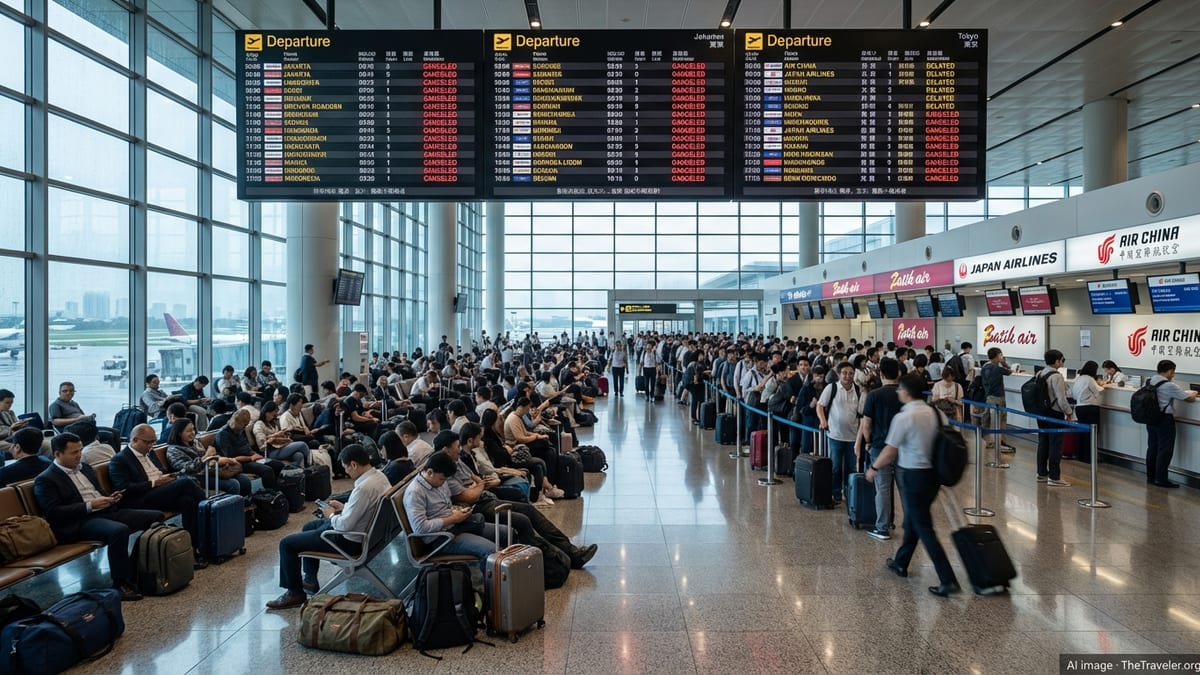
Batik Air Leads Cancellations in a Crowded Sky
Publicly available operational data for July 3 indicates that Batik Air accounted for 14 of the 16 cancellations recorded at Soekarno-Hatta, Indonesia’s busiest gateway. The remaining cancellations involved other regional operators, but the concentration of scrapped flights within one airline group has drawn particular attention from passengers and analysts watching the carrier’s performance this northern summer.
Reports from schedule trackers and airport information boards show Batik Air services scrubbed across a mix of domestic and international routes, including flights serving major Indonesian cities and nearby regional hubs. While the exact reasons for each cancellation have not been detailed in airline statements, observers note that today’s issues follow a period of frequent schedule changes and retimings across parts of the airline’s network.
Travel forums and aviation data services have, in recent months, highlighted a pattern of rolling delays and occasional last minute cancellations for some Batik Air operations. On July 3, the combination of grounded flights and tight airport capacity at Soekarno-Hatta turned that pattern into a visible shock to the day’s timetable, amplifying disruption during a peak travel period for domestic and outbound Indonesian traffic.
Ripple Effects Across Indonesia and Key Regional Gateways
The 136 delays recorded at Soekarno-Hatta on July 3 are affecting a broad mix of domestic and international sectors, with services to cities such as Yogyakarta, Semarang and Batam running behind schedule alongside regional links to Kuala Lumpur, Singapore, Hong Kong, China and Saudi Arabia. Flight-tracking records show some Jakarta departures and arrivals operating with relatively modest delays, while others have experienced more substantial schedule slippage.
Indonesia’s tightly interconnected domestic network means that a delay at Jakarta often cascades into subsequent sectors. Aircraft and crew planned for quick turnarounds at Soekarno-Hatta can arrive late from one city and then depart late for the next, compounding disruption as the day progresses. Passengers connecting from smaller Indonesian airports into international flights out of Jakarta are especially vulnerable when buffer times are short.
Internationally, the impact is being felt on routes linking Jakarta with major regional gateways. Flights between Indonesia and Malaysia, Singapore, China and Hong Kong are among those reporting adjusted departure or arrival times, creating additional uncertainty for travelers with onward connections. Services to Saudi Arabia, a key market for religious and labor travel, are also within the group of affected routes, adding further pressure to an already complex day of operations.
Passengers Confront Long Waits, Missed Connections and Limited Clarity
For travelers on the ground, the operational statistics translate into long queues, crowded departure halls and a steady stream of boarding gate announcements. Social media posts and traveler discussions indicate passengers facing several hours of waiting, with some describing multiple reissued boarding times as airlines attempt to reshuffle aircraft rotations and secure departure slots.
Missed connections are a particular concern for those traveling on multi-sector itineraries. Travelers routing through Jakarta onward to regional destinations or long haul services report anxiety over tight transfer windows and uncertainty about rebooking options. When disruptions cluster within a specific carrier, passengers on single-ticket itineraries may receive automatic rebooking, while those on separate tickets often find themselves searching for last minute alternatives at their own expense.
Information consistency remains a recurring theme in traveler feedback surrounding the current situation. While airport displays provide live departure and arrival status, some passengers report a lag between gate announcements, mobile notifications and airline websites. In a rapidly changing operational environment, the pace of schedule updates can leave travelers feeling reactive rather than in control of their options for rerouting, refunds or overnight stays.
Operational Strains, Seasonal Weather and Network Complexity
Aviation observers point to several overlapping factors that can fuel the kind of disruption seen at Soekarno-Hatta on July 3. July marks a busy travel period across Asia, combining school holidays, tourism demand and business traffic. High utilization of aircraft and crews, while efficient in normal conditions, leaves little margin when unexpected technical checks, crew availability problems or regional weather systems intervene.
Monsoon patterns and localized storms in parts of Southeast and East Asia can temporarily close arrival and departure windows, forcing holding patterns, diversions or ground stops that reverberate through airline schedules. Even relatively short weather-related closures or air traffic restrictions can cause knock-on delays lasting for hours, especially at high-volume hubs such as Jakarta.
For Batik Air, the current episode comes at a time when the carrier and its affiliated brands have been working to balance growth with reliability. Industry commentary frequently notes the challenge of maintaining on-time performance when operating mixed domestic and international networks, particularly across crowded air corridors and airports with limited spare capacity.
What Today’s Disruptions Mean for Future Travelers
While the cancellations and delays on July 3 represent a snapshot in time, the experience offers practical lessons for travelers planning to pass through Jakarta or connect on Batik Air and other regional carriers in the coming weeks. Analysts recommend building generous connection buffers, particularly when moving between separate tickets or shifting between domestic and international terminals at Soekarno-Hatta.
Travel planning resources commonly suggest monitoring flight status closely in the 24 to 48 hours before departure, as schedule adjustments may be communicated by email, SMS or app notifications. For itineraries involving critical deadlines, such as cruises, tours or events, some travelers are opting to arrive at their final destination a day early to absorb potential disruption.
From a wider perspective, the day’s events at Jakarta highlight how quickly operational strain at a single hub and within a single airline group can spread across multiple countries and markets. As Batik Air and other carriers work to stabilize their schedules following the latest wave of disruptions, passengers across Indonesia, Malaysia, Singapore, China, Hong Kong and Saudi Arabia are likely to keep a close eye on performance metrics and real time updates before committing to tight connections or same-day onward plans.